Česká republika
 Deutschland
 Österreich
 United Kingdom
 Suomi
 France
 Magyarország
 Italia
 Polska
 România
 Україна
 Europe

Emergency Kit UK: What the Government Recommends Keeping at Home for 72 Hours
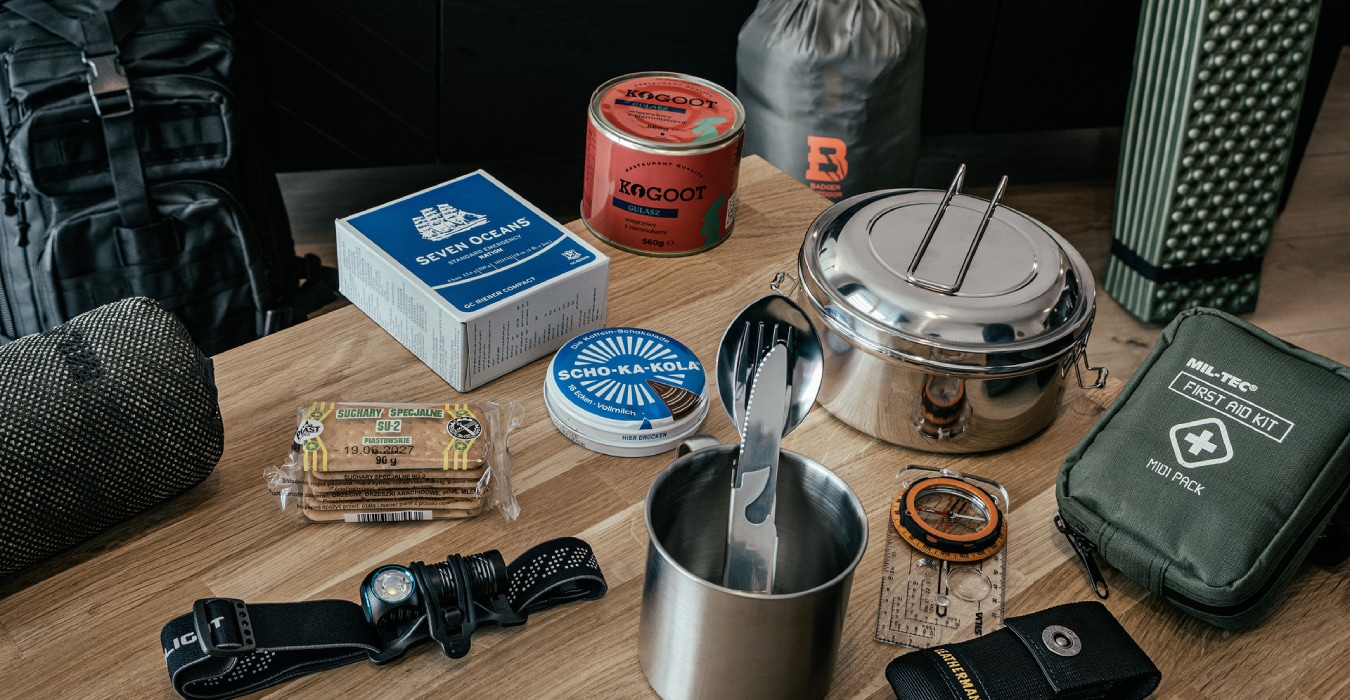
Power cuts, water outages, storms and severe flooding can leave any UK household without essential services – sometimes for days. That’s why the UK Government’s Be Ready campaign encourages every home to be self-sufficient for at least 3 days while emergency services focus on those most in need. The good news? Building an emergency kit is simpler than you might think, and you probably already have some of the essentials in your cupboards.
In this guide, we explain what the government recommends for a 72 hour emergency kit, how to build a home emergency kit step by step, how it differs from an emergency grab bag, and where to buy reliable emergency supplies in the UK – from water and long-life food to a wind-up emergency radio and torch.
What Does the UK Government Recommend for a 72-Hour Emergency Kit?
The UK Government’s official Be Ready campaign advises every household to be prepared to manage on its own for 3 days during an emergency such as a power cut, water outage, flooding or extreme weather. Being self-sufficient for 72 hours means emergency responders can focus on the people who need help most urgently. The government’s checklist covers seven key areas: water, food, hygiene, light and warmth, communication, money and documents, and medical supplies – plus extras for babies and pets where needed.
Importantly, you don’t need to buy everything at once. The government recommends starting by checking what you already have at home, noting what your household is missing (for example medication, baby formula or pet food), and adding an item or two during your regular shopping to spread the cost. Once your kit is ready, review it every six months to replace anything past its expiry date.
72-Hour Emergency Kit Checklist
| Category | Items to check off |
|---|---|
| Water | |
| Food | |
| Medical and health | |
| Light and warmth | |
| Communication and information | |
| Money and documents | |
| Tools | |
| Hygiene | |
| Baby products | |
| Pet products |
How to Build a Home Emergency Kit – Essential Supplies Explained
The government checklist tells you what to keep at home – but choosing the right kit makes a real difference when the power goes out or the taps run dry. Below, we explain what to look for in each category and why certain items are worth investing in. A good home emergency kit doesn’t need to be expensive, but every item in it should be reliable, easy to use and ready when you need it.
Water and food
Water is the single most important part of your emergency supplies. Storing bottled water is the simplest option – check the best-before dates and rotate your stock every six months. For extra security, add water purification tablets or a portable water filter. They take up very little space and allow you to make tap water safe if the supply becomes contaminated, which can happen after flooding. Collapsible water containers and hydration reservoirs are also handy for storing extra water when a supply interruption is announced.
When it comes to food, the key is long shelf life and minimal preparation. Tinned food is a good start, but freeze-dried meals are one of the smartest additions to an emergency kit UK households can make. They are lightweight, compact, keep for years and only need hot (or in some cases cold) water to prepare. Military ration packs and emergency food bars from the long-life food range are another great choice – many contain a complete, calorie-dense meal in a single sealed pack. To heat food and water without electricity, consider a compact gas stove or solid fuel cooker from the camp kitchen range, along with a mess tin and spork.

Emergency radio
During a widespread power cut, mobile networks and internet access can fail within hours, leaving the radio as your most dependable source of official information and local updates. That’s why an emergency radio is one of the essentials the government recommends.
When choosing an emergency radio UK users should look for a model with FM reception (and ideally AM/DAB), plus more than one power source. The most practical options combine a hand crank (wind-up dynamo), a solar panel and battery or USB charging, so you’re never left without power. Many emergency radios also feature a built-in torch, an SOS alarm and a USB output to top up your phone. Check the radio before storing it and write down your local station frequencies on a piece of paper kept with your kit.

Light and power
A reliable light source is essential – and far safer than candles, which are a fire risk. A good LED torch offers long battery life and plenty of brightness for moving safely around the house. A head torch is particularly useful because it keeps your hands free for cooking, caring for children or dealing with repairs. For lighting a whole room, battery-powered lamps and lanterns work better than a single beam.
Think about power as well. A fully charged power bank keeps your phone running for several days, while rechargeable torches and torches with a built-in power bank combine two functions in one device. Store spare batteries that match all your devices and check them regularly. Glow sticks are a cheap, safe backup – especially for children.

First aid kit
During an emergency, getting medical help may take longer than usual, so a well-equipped first aid kit is a must. A ready-made first aid kit is the easiest option, as it comes neatly organised and contains all the basics. Look for a durable, water-resistant case with clearly labelled compartments, so you can find what you need quickly.
Check that your kit includes plasters, bandages, sterile dressings, medical tape, antiseptic wipes, disposable gloves, scissors and tweezers. It’s worth adding a foil thermal blanket, which helps prevent hypothermia, and a supply of any personal medication. Check the kit every six months and replace anything used or out of date.
Staying warm
In the UK, many emergencies – from winter storms to network failures – happen in cold weather. Without heating, a home can become uncomfortably cold within a few hours, which is particularly dangerous for older people, babies and anyone with health conditions.
A good-quality sleeping bag is one of the most effective ways to keep warm – choose one with a comfort temperature suited to unheated indoor conditions. Layering is key, so keep thermal base layers, fleeces, warm socks and hats with your kit. Chemical hand warmers and other products from the fire and warmth range provide quick, safe heat without electricity, while a thermal flask keeps drinks hot for hours.

Cash, documents, hygiene and tools
When card terminals and cash machines go offline, cash becomes essential – keep a small amount in coins and notes for buying supplies locally. Store copies of your passport, insurance policies, emergency contacts and medication list in a waterproof pouch or organiser, so everything is protected and easy to grab.
Hygiene is easy to overlook, but it matters when water is limited. Hand sanitiser, wet wipes, toilet roll and bin bags should all be in your kit. Compact travel hygiene products such as biodegradable soap, quick-dry towels and wash wipes help you stay clean without using much water. Finally, a multitool is a small item that solves many problems – from opening tins to making simple repairs around the house.

Home Emergency Kit vs Emergency Grab Bag – What’s the Difference?
Although the two are often confused, a home emergency kit and an emergency grab bag serve different purposes. A home emergency kit is designed to help you stay safely at home during a power cut, water outage or severe storm. Because it stays in one place, it can be larger and heavier, with several days’ worth of bottled water, tinned and freeze-dried food, blankets, a first aid kit and an emergency radio – usually kept in a sturdy box or cupboard.
An emergency grab bag (often called a bug out bag) is for situations when you’re asked to leave home quickly, for example due to flooding, a fire or a gas leak. It needs to be compact, light and ready to go at a moment’s notice. A typical grab bag contains water and a water filter, high-energy food, a compact first aid kit, a head torch, a power bank, copies of important documents, cash, a change of clothes, a waterproof jacket and a multitool. The Be Ready campaign also suggests keeping a spare bag with essentials in case you need to evacuate.
If you’d rather not assemble one yourself, browse our range of ready-made bug out bags with equipment or choose a durable backpack to build your own. For a full packing list, see our guide Bug Out Bag – A Complete List of Equipment for a Crisis.
Emergency Kit UK – Frequently Asked Questions
What should be in a 72-hour emergency kit?
A 72-hour emergency kit should cover your household’s basic needs for three days without electricity, running water or access to shops. The essentials are bottled water, long-life food, a torch with spare batteries, a wind-up or battery-powered radio, a first aid kit, essential medication, warm blankets, cash, copies of important documents and hygiene products. Add baby or pet supplies if needed.
How much water do I need for 72 hours?
The UK Government recommends at least 3 litres of drinking water per person per day – so 9 litres per person for three days. A family of four needs around 36 litres just for drinking. Keep extra water for cooking and basic hygiene, and consider water purification tablets or a filter as a backup.
What food should I keep in an emergency kit?
Choose food that has a long shelf life and doesn’t need refrigeration or cooking, such as tinned fish, meat and vegetables, nuts, dried fruit and energy bars. Freeze-dried meals and military ration packs are ideal because they’re light, compact and last for years. Stick to food your family actually likes eating.
Do I need an emergency radio for power cuts?
Yes – a radio is one of the most important items in any home emergency kit. During a long power cut, mobile networks and the internet may stop working, while radio broadcasts continue to provide official updates. A wind-up or solar emergency radio works without mains power or batteries, and many models can also charge your phone.
What is the difference between an emergency kit and a survival kit?
An emergency kit is designed to help your household cope at home during disruption such as power cuts, flooding or storms. A survival kit is usually smaller and more outdoor-focused, containing items like a fire starter, compass, emergency blanket, knife and signalling whistle. In the UK, a survival kit is often kept in a car, backpack or grab bag rather than at home.
Should I prepare an emergency grab bag?
It’s a good idea, especially if you live in an area at risk of flooding. A grab bag holds the essentials you’d need if you were asked to leave home quickly – water, snacks, a torch, a first aid kit, medication, documents, cash and a phone charger. Keep it near the front door so it’s easy to take with you.
How often should I check my emergency supplies?
Check your emergency supplies at least every six months. Replace food, water and medication that are close to their expiry date, test torches and radios, recharge power banks and update your kit if your household’s needs have changed – for example, after the birth of a baby or getting a pet.
Do I need to buy a ready-made emergency kit?
No – you can build your kit gradually using items you already have at home and adding a few things during regular shopping trips. However, a ready-made kit or bug out bag with equipment can save time and ensures nothing important is missing. Many people combine both approaches, starting with a ready-made set and adding personal items.
Where to Buy Emergency Kit Essentials in the UK? Explore MILITARY
Building a home emergency kit doesn’t have to happen overnight. Start with what you already have and add a few items at a time. Step by step, your household will become ready for power cuts, water outages and severe weather.
At MILITARY, you’ll find a wide range of reliable emergency supplies in one place. Browse torches and head torches, emergency radios, long-life and freeze-dried food, first aid kits and a dedicated selection of power cut essentials. You can also choose a ready-made bug out bag with equipment if you prefer a complete solution.
Be ready before the next emergency: explore the full range at MILITARY and start building your emergency kit today.