Česká republika
 Deutschland
 Österreich
 United Kingdom
 Suomi
 France
 Magyarország
 Italia
 Polska
 România
 Україна
 Europe

MOLLE System – What It Is and How It Works

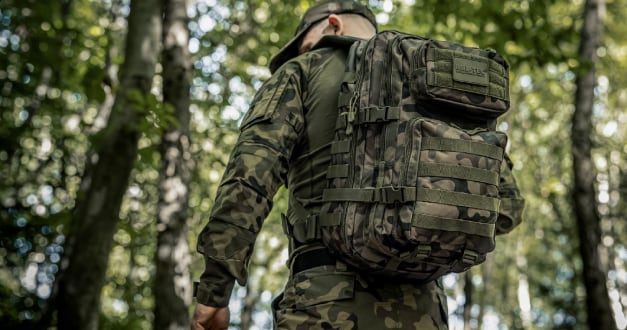
Those rows of horizontal webbing you see on backpacks, tactical vests, belts and bags aren’t just for looks. They’re part of the MOLLE system – a modular setup that lets you expand your gear yourself and put extra pouches exactly where you need them most. MOLLE is standard on military and tactical equipment, but it works just as well for hiking, survival or an everyday carry backpack.
So what exactly is MOLLE, how is it different from PALS, and how do you attach a MOLLE pouch the right way? Here’s a step-by-step breakdown.
What is the MOLLE system?
MOLLE stands for Modular Lightweight Load-carrying Equipment. It was introduced by the US military in the late 1990s to replace the older ALICE system. Its biggest advantage is that you can configure your loadout yourself, based on exactly what you need.
Instead of relying only on the pockets that come sewn onto a backpack or vest, you can add extra components such as utility pouches, organizers, first aid kits, sheaths or cargo pouches. You can move them around at any time, so the same backpack or vest can be set up for completely different jobs. That’s exactly why MOLLE is called a modular system: you decide which attachments go on and where.
MOLLE vs PALS – what’s the difference?
Two terms often get mixed up here: MOLLE and PALS.
PALS, short for Pouch Attachment Ladder System, is the characteristic grid of horizontal webbing (or matching slots) that compatible gear attaches to. Standard PALS webbing is 1 inch wide, with rows spaced 1 inch apart and stitched every 1.5 inches. MOLLE, on the other hand, is the broader load-carrying system that uses PALS as its attachment method.
In everyday use, terms like “MOLLE webbing,” “MOLLE straps” and “MOLLE panel” are common and widely understood – even though, technically, the webbing grid you see on a backpack is PALS.


How does the MOLLE system work?
The idea is simple: a platform with rows of PALS webbing is connected to a compatible pouch that has mounting straps on the back.
Those straps shouldn’t just be slid vertically behind a few rows of webbing on the backpack. The correct method is to weave them alternately through the webbing on the platform and the webbing on the pouch.
This creates a much stiffer connection. The pouch sits tighter against the backpack or vest, shifts less and doesn’t flop around when you walk, run or change position.
This weaving technique is one of the most important parts of using MOLLE properly.
How to attach MOLLE pouches correctly – step by step
Mounting a pouch isn’t complicated, but it’s worth taking your time. A poorly attached pouch can shift along with its contents and get in the way when you need your gear.
- Pick the spot. Hold the pouch against your backpack, vest or belt, check how many PALS rows it covers and make sure it won’t block access to other gear once it’s attached.
- Thread the straps through the first row. Feed the MOLLE straps on the back of the pouch through the matching webbing on the platform.
- Weave the straps back through the pouch. Then run them through the next loop of webbing on the back of the pouch.
- Keep weaving. Repeat the alternating pattern – platform, pouch, platform, pouch – until you’ve used all the available rows.
- Secure the ends. Depending on the design, the strap ends snap closed, tuck into the last piece of webbing or lock with the manufacturer’s own system.
- Check that it’s solid. Once it’s mounted, give the pouch a firm shake. A properly attached pouch should sit tight against the platform and not slide from side to side.
One of the most common mistakes is running the straps through just a few rows on the backpack without weaving them through the pouch’s own webbing. It’s quicker, but the result is far less stable.
MOLLE attachments and accessories – what can you mount?
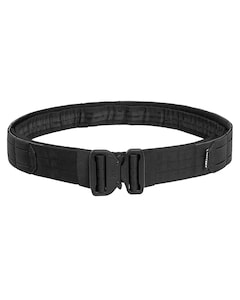
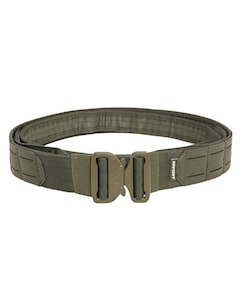
Backpacks, tactical vests, battle belts and other gear with PALS webbing or laser-cut slots can take a wide range of MOLLE-compatible accessories.
The most popular MOLLE attachments include:
- magazine pouches and other gear pouches,
- individual first aid kits (IFAK) and tourniquet pouches,
- MOLLE holsters and holders for a knife, flashlight or multitool,
- admin pouches for documents, maps and small items,
- pouches for a radio, water bottle or canteen,
- dump pouches for empty magazines and small gear,
- side pouches and MOLLE panels that add capacity to your backpack.
MOLLE lets you arrange your gear so the items you use most are always within easy reach, while the whole setup stays stable on the move. Before you buy, check how many rows a pouch takes up and what attachment method it uses (e.g. MOLLE straps, Malice clips, Tac-Ties). Also keep in mind that too many extra pouches add weight and bulk – it’s best to mount only what you’ll actually use.

Mil-Tec Fanny Pack MOLLE Black waist pack with PALS webbing for attaching extra accessories
Frequently Asked Questions about the MOLLE System (FAQ)
PALS (Pouch Attachment Ladder System) is the grid of horizontal webbing or slots that pouches attach to. MOLLE is the overall modular load-carrying system that uses PALS as its attachment method. In practice, most people simply say “MOLLE webbing” or “MOLLE panel.” Both terms describe the same flexible way of mounting gear.
Weave the pouch’s MOLLE straps alternately through the platform’s webbing and the pouch’s webbing: platform, pouch, platform, pouch. Then secure the ends with the snap or locking system. Give the pouch a firm shake to make sure it’s solid. Simply sliding the straps behind the backpack’s webbing creates a much weaker connection.
Not always. The pouch has to be PALS/MOLLE-compatible, and the backpack needs properly spaced webbing or mounting slots. The number of rows the pouch covers and its width matter too. That’s why it’s worth checking how both pieces attach before you buy.
ALICE is an older US military load-carrying system that was used before MOLLE replaced it. It relies on a different way of attaching pouches and offers far fewer configuration options. MOLLE is built on PALS, which makes it easy to rearrange your gear. The result is much more modular, customizable setups.
With laser-cut MOLLE, traditional sewn-on webbing is replaced by slots precision-cut into the fabric. These slots do the same job as standard PALS rows. They also cut weight and give the gear a flatter, more streamlined profile. Compatible pouches attach to them the same way as to regular webbing.
No. Although MOLLE was developed for the military, it’s now widely used on tactical, outdoor and EDC gear as well. You’ll find it on hiking backpacks, bags, belts and organizers. It lets you expand your loadout with exactly the accessories you need.
Shop MOLLE gear at MILITARY
Want to upgrade your backpack, vest or belt with extra pouches and accessories? Check out the MOLLE-compatible gear at MILITARY – from MOLLE pouches and utility packs to organizers and battle belts. Build your MOLLE system around exactly what you need.