 Česká republika
  Deutschland
  Austria
  United Kingdom
  Suomi
Suomi  France
  Magyarország
  Italia
  Polska
  România
  Україна
  Europe
What is a flint and how to use it? - practical guide
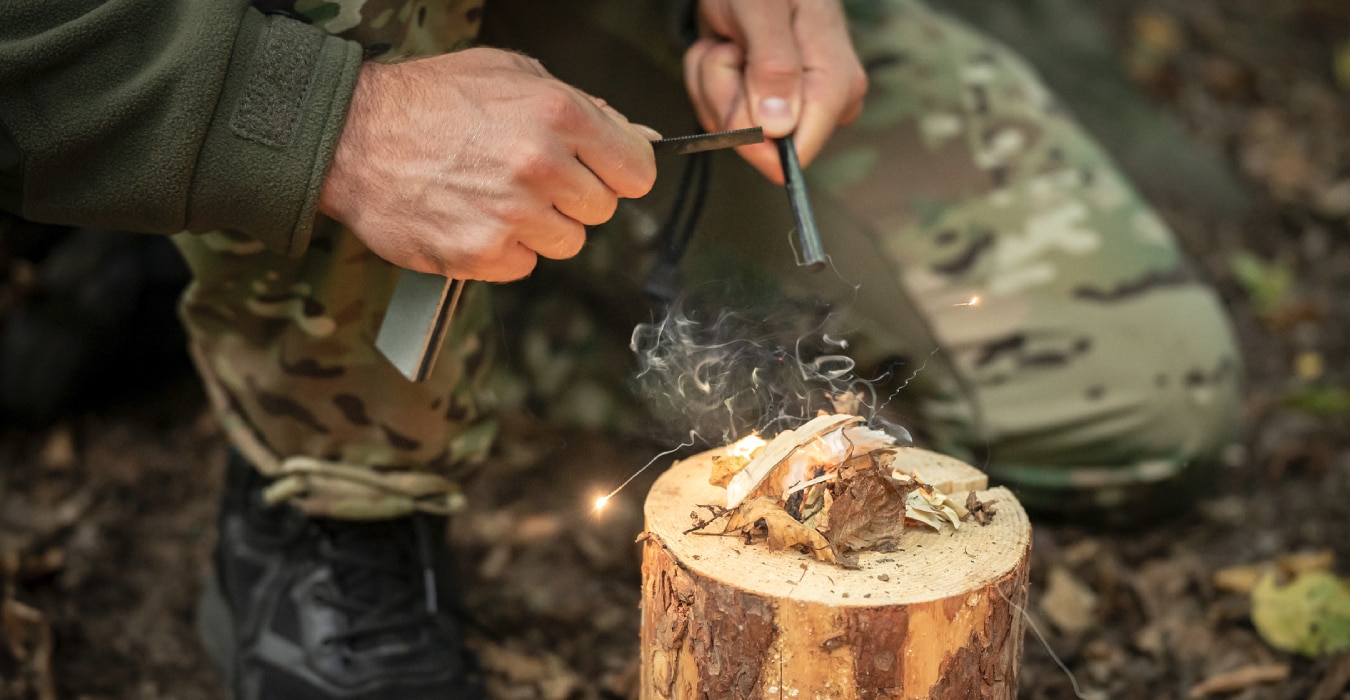
A flint is a reliable tool for starting a fire, highly valued especially by those practicing bushcraft and survival. It is a great alternative to matches and lighters. It is resistant to moisture and harsh weather conditions, with one flint lasting for even several thousand ignitions.
Read this guide to learn exactly what a flint is, understanding its different types — this will make it easier for you to choose a model best suited to your needs. You will also find practical tips on how to use a flint to light a fire. Contrary to popular belief, starting a fire using a flint is not difficult — it just takes a bit of practice.
What types of flints are there?
Flints can be divided based on the type of metal alloy used and their construction. The main types include:
- ferrocerium flints,
- magnesium flints,
- traditional (blacksmith) flints.
Ferrocerium flint
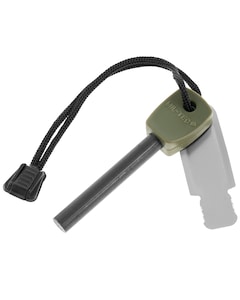
This type of flint is a modern product consisting of two main components: a ferrocerium rod and an ergonomic handle. Ferrocerium, a metal alloy, was developed in 1903 by Austrian inventor Carl Auer von Welsbach and was originally used for producing igniters in lighters.
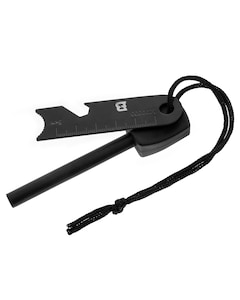
The operation of such flints is based on the rapid scraping off of ferrocerium rod particles using a hard blade, e.g., steel or a knife. The detached ferrocerium particles immediately oxidize, creating sparks with a temperature reaching up to 3000°C, allowing for easy ignition of a fire. Interestingly, manufacturers now offer ferrocerium flints equipped with additional components such as a small compass, emergency whistle, paracord lanyard, and sometimes even a striker to facilitate spark creation.
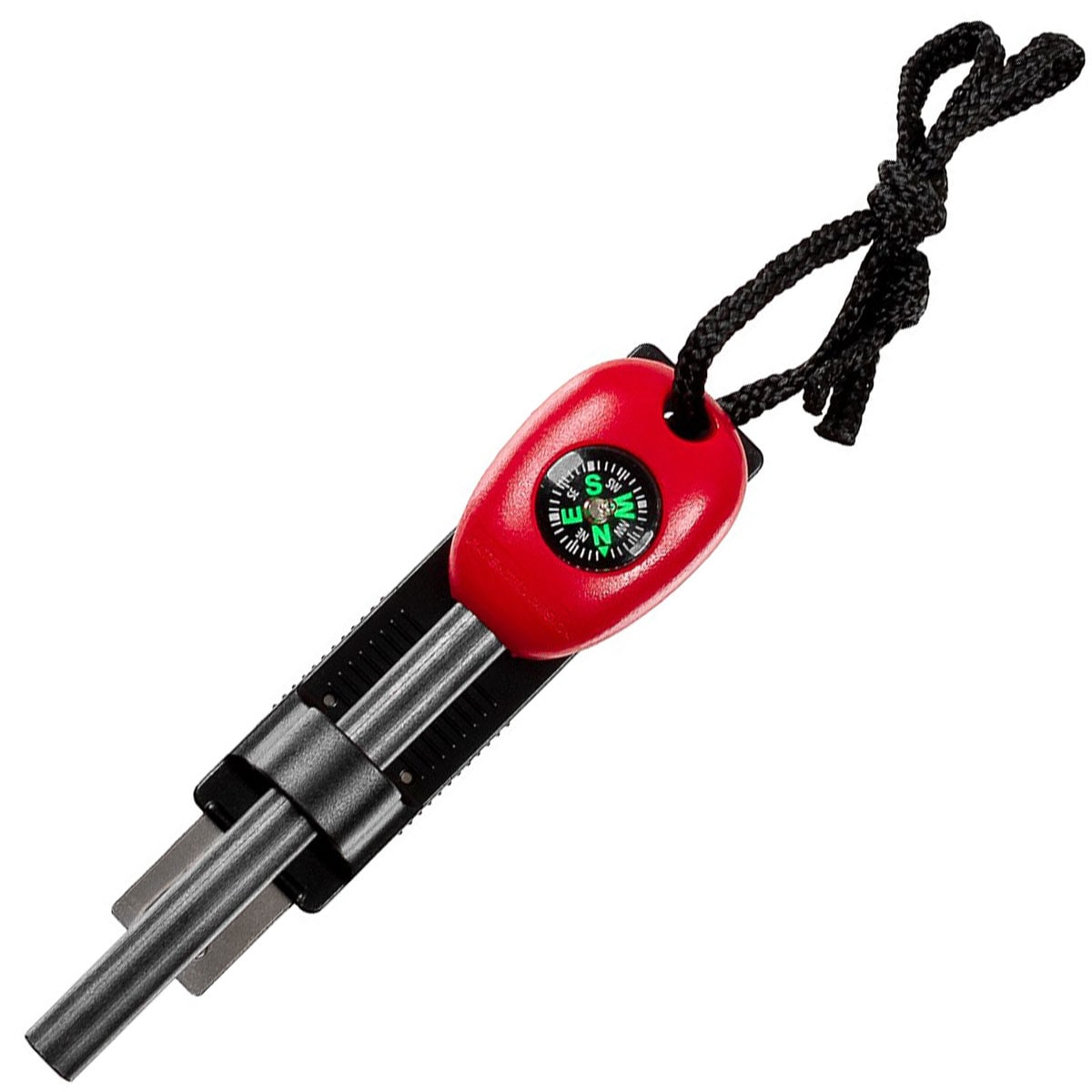
- ferrocerium rod
- lightweight
- striker included
- lifespan up to several thousand uses
Magnesium flint
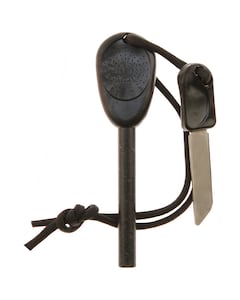
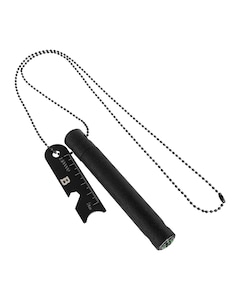
A magnesium flint is a fire-starting tool that combines a ferrocerium rod with a magnesium block. Its operation involves first scraping magnesium shavings from the block using a striker, knife, or other sharp tool, then striking the ferrocerium rod to create sparks that ignite the shavings easily. This flame further kindles a fire starter such as dry bark or cotton.
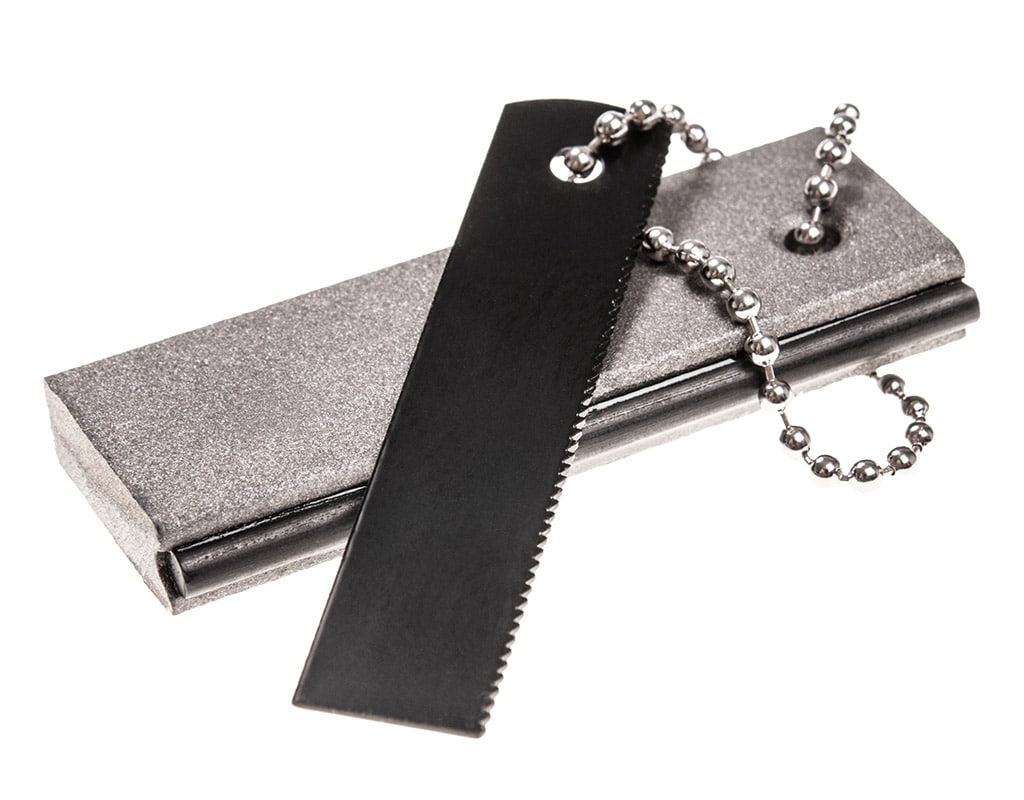
- magnesium block
- ball chain linking striker to block
- striker included
- lightweight
Traditional (blacksmith) flint
Blacksmith flint was commonly used for starting fires from the Iron Age until the mid-19th century. It consisted of a piece of hardened high-carbon steel struck against a flint stone, producing sparks capable of igniting flammable material known as tinder.
Such flints were handmade by blacksmiths using hardened steel and were often given various shapes and decorations. Traditional flint typically had a "C" or "U" shape, providing a comfortable and firm grip when starting a fire.
Nowadays, these types of flints are still used, although they are somewhat less popular than other types. They are often purchased by people interested in historical reenactments or cosplay, but some still take them into the field.
Which flint to choose?
If you are wondering which flint to choose after reading the above descriptions, the answer is: it depends on your needs. In practice, however, most people opt for ferrocerium flints, which are today considered the most versatile and convenient to use.
Magnesium flints, on the other hand, are sometimes seen as less practical — they require prior scraping of magnesium shavings, which takes time, and often have a smaller ferrocerium rod than classic models. Ferrocerium models are not only easier to handle but also often come with practical add-ons like a compass, whistle, or paracord lanyard, all of which can be very useful in the field.
When choosing a ferrocerium or magnesium flint, it is worth paying attention to the length and thickness of the rod. A longer rod produces more sparks, making it easier to start a fire, and a thicker one lasts for more uses.
How to use a flint to start a fire?
First, you need to choose the right material to serve as a fire starter. In a forest, you could find something like birch bark (even if it's wet on the outside, it can be dry inside), pine needles, or moss (well-dried). Dry fern leaves, pine cones, and the interior of dead yet intact trees — called fatwood, rich in resin — can also prove useful. If you don’t want to rely solely on what you find in the field, you can bring prepared fire starter, such as:
- tissues,
- cotton pads soaked in wax or petroleum jelly,
- cotton wool,
- cotton string (e.g., from paracord) that can be combed into fibers,
- dry survival kindling available at outdoor shops.
If the bonfire site and kindling are ready, you can move to the next step — creating sparks using the striker, which is usually included with the tool. If there is no striker, you can use a knife or a saw (e.g., one in a pocket knife).
First technique for using a flint to start a fire
One of the most effective methods of starting a fire with a flint is to set the rod at an angle of about 45 degrees, so its end rests stably on the ground and is just above the prepared kindling. This gives you greater control over the direction and concentration of sparks. The flint can also be braced against the tip of a boot for greater stability. To create sparks, you can use a striker, the back edge of a knife, or, as a last resort, the cutting edge — although the latter option is less recommended as it can dull the knife and increase the risk of injury.
A few energetic, decisive movements along the rod should suffice to produce a large shower of sparks. It is worth remembering that you are not moving the striker so much as pulling the flint rod backward while keeping the striker still — this helps maintain accuracy and prevent scattering the kindling.
Second technique for using a flint to start a fire
The second technique involves holding the flint rod about 3–5 cm above the prepared kindling and applying the sharp edge of the striker (or back of a knife) to it. In this method, the striker remains still, and the sparking motion is done by moving the rod along the edge of the striker — backward, upwards. The sparks readily fall onto the prepared kindling below. A significant advantage of this technique is that delicate elements of the kindling like cotton, dry grass, or birch bark stay in place and are not accidentally disturbed or scattered during sparking. This method is ideal for those learning to ignite fires with a flint.
Note! The above methods pertain to ferrocerium flints. Traditional (blacksmith) and magnesium flints are used differently.
Flint offerings at MILITARY.EU
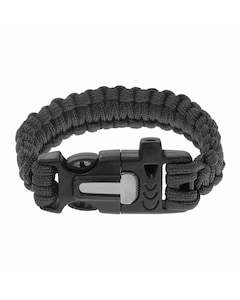
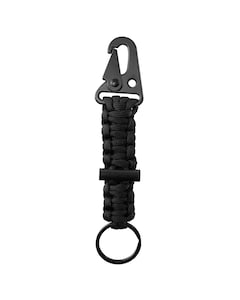
In our offer, you'll find various flints, including magnesium and ferrocerium models that work well in all conditions. Besides classic flints, we also offer practical keychains and bracelets equipped with a flint. A flint bracelet is a great gadget as it's made of paracord — a special, very strong cord that in emergency situations can be used, for example, to build a shelter.
It's worth equipping yourself with a flint as it is significantly more effective and reliable than matches or a lighter, especially in difficult conditions. A flint works even after getting wet, in low temperatures, and in strong winds.