 Česká republika
  Deutschland
  United Kingdom
  Finland
  France
  Magyarország
  Italy
Italy  Polska
  România
  Україна
  Europe
Paracord – what is it and what is it used for? A complete guide
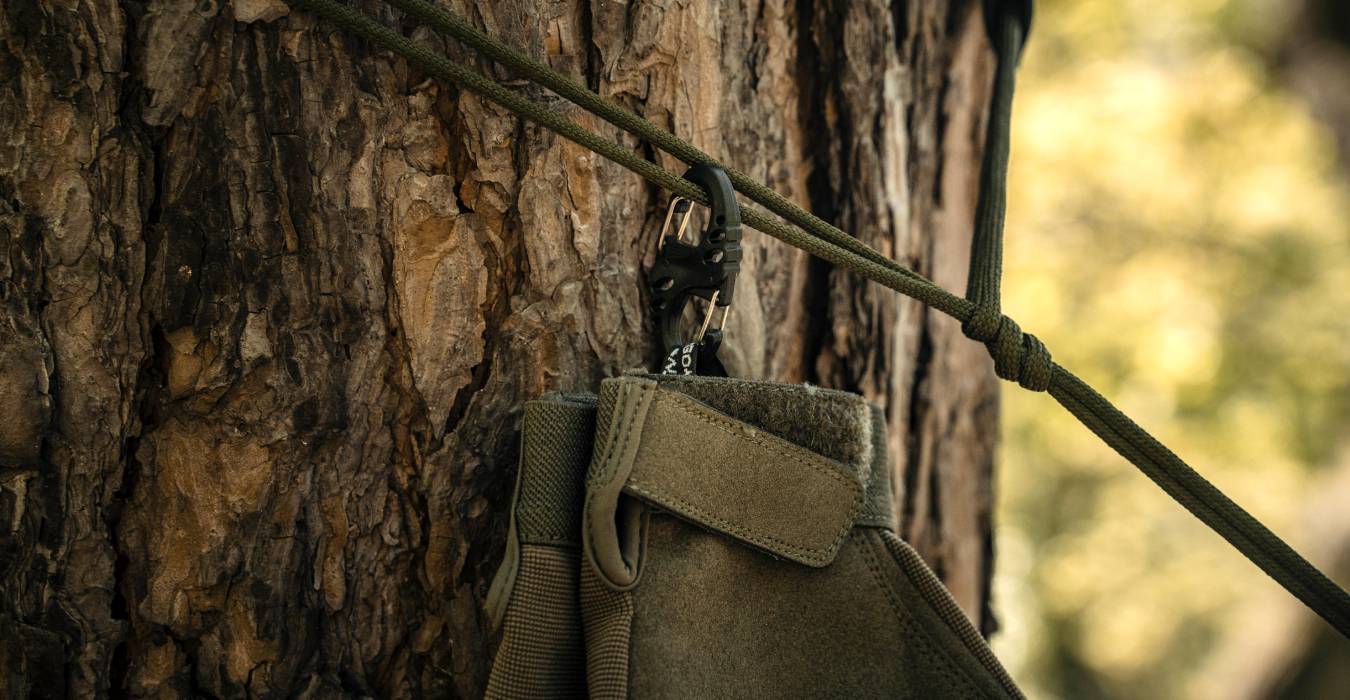
Few pieces of kit pack as much utility into as little weight as paracord. Originally engineered for a single purpose — connecting parachute canopies to their harnesses in World War II — it was quickly repurposed by soldiers who found hundreds of additional uses for it before they even left the drop zone. Today it shows up in survival and bushcraft kits, emergency packs, military loadouts, and everyday carry. This guide covers what paracord actually is, how its construction gives it such remarkable versatility, the different types available, and the most practical ways to use it in the field.
In short (TL;DR)
- What it is: a kernmantle nylon rope with a woven outer sheath and 7 inner core strands — each strand itself made of 2–3 twisted yarns, giving you up to 21 separate threads from a single length of cord.
- Type III (550 cord) is the standard: 550 lb breaking strength, 7 core strands, the type used by military and recommended for almost all outdoor and survival applications.
- 550 lb is breaking strength, not working load: the safe working load for static use is closer to 110 lb (50 kg). Don't rely on it for fall protection or rappelling.
- The inner strands matter: gut the cord and you get fine threads ideal for fishing line, snares, sutures, and delicate lashing — without wasting the outer sheath.
- Mil-Spec vs commercial: genuine MIL-C-5040H paracord is manufactured to strict US military standards; quality commercial 550 cord is sufficient for most civilian uses.
- Core uses: shelter building, gear repair, bootlaces, bear hang, fire-starting bow drill, fishing line, medical improvisation, trail marking.
- Carry at least 30 metres (100 ft): enough for a ridgeline, a bear hang and a few repairs in the same trip.
- UV degrades nylon: store paracord away from direct sunlight; prolonged exposure can reduce tensile strength by around 25% over six months.
What is paracord? Construction and origin
Paracord — short for parachute cord — is a lightweight kernmantle rope originally developed for the suspension lines of military parachutes during World War II. The US military classified it under MIL-C-5040, and it quickly became standard-issue across airborne units. Its combination of strength, light weight and flexibility meant that soldiers started using it for everything beyond parachuting: bootlaces, rifle slings, gear lashing, tent guy lines and improvised repairs.
The term kernmantle describes the construction: a twisted or braided inner core (the kern) encased in a woven outer sheath (the mantle). In Type III paracord, the kern consists of 7 individual strands, each made up of 2–3 twisted yarns — meaning a single length of paracord contains anywhere from 14 to 21 individual threads that can be separated and used independently. This hidden reserve of fine cordage is one of the most underappreciated features of paracord and the reason experienced outdoor practitioners never throw away a length that's been stripped.
Types of paracord: I, II, III and IV
Paracord comes in several types, each rated to a different breaking strength and suited to different tasks. Understanding the differences prevents both over-engineering (carrying heavier cord than you need) and under-engineering (using decorative cord for load-bearing work).
| Type | Breaking strength | Core strands | Best for |
|---|---|---|---|
| Type I | 95 lb (43 kg) | 1 | Light lashing, crafts, decorative use |
| Type II | 425 lb (193 kg) | 4–7 | General outdoor use, lighter loads |
| Type III (550) | 550 lb (249 kg) | 7–9 | Survival, bushcraft, military, everyday carry — the standard |
| Type IV | 750 lb (340 kg) | 11 | Heavy-duty load bearing, expedition use |
In most outdoor and survivalist circles, Type III — commonly called 550 cord — is the only type considered genuine paracord for practical use. It strikes the best balance between breaking strength, diameter (approximately 4 mm), weight, and workability. Type IV is rarely necessary; the extra strength adds weight and bulk without meaningfully improving most field applications. Type I is best understood as decorative cord that happens to share the name.
Mil-Spec vs commercial paracord — does it matter?
Genuine Mil-Spec paracord must meet the MIL-C-5040H specification, covering core strand count, minimum tensile strength, elongation limits, and the requirement that the nylon sheath be braided, not knitted. Only a small number of US manufacturers are certified to produce it.
For most civilian uses — camping, hiking, bushcraft, gear repair — quality commercial 550 cord from a reputable manufacturer is more than adequate. The practical difference shows up mainly in consistency: Mil-Spec cord is tested batch by batch to a documented standard, whereas commercial cord varies more between manufacturers and between price points. The risk with cheap, unverified "550 cord" sold online is that the advertised breaking strength may not reflect real performance. If you're purchasing paracord for emergency or load-bearing use, buy from established outdoor brands and verify that the strand count matches Type III specifications — seven core strands is the key indicator.
The inner strands: paracord's hidden resource
Stripping the outer sheath from a length of paracord reveals the inner kern — seven individual strands, each composed of 2–3 twisted yarns. These can be separated and used independently for tasks that don't require the full cord's strength, effectively multiplying the utility of a single length:
- Fishing line: a single inner yarn is thin and strong enough for improvised angling, especially when baited with an improvised lure made from a frayed end.
- Small-game snares: fine strands work well for wire-substitute trigger snares and simple loop traps.
- Sewing thread: the finest individual yarns from the inner strands can close wounds in the absence of medical sutures — a genuine last-resort field skill.
- Tinder: nylon burns; fraying the inner strands into a loose bundle creates a combustible nest that catches sparks from a ferro rod or tinder from a bow drill.
- Fine lashing: securing small components — splint fragments, shelter stakes, arrowhead lashing — without the bulk of the full cord.
Once the inner strands are removed, the hollow outer sheath remains usable: it makes a tighter, cleaner bootlace than the full cord, and can be used for wrapping handles or gear.
Practical uses for paracord in the field
Shelter building
The single most common outdoor use. A ridgeline strung between two trees provides the backbone for a tarp shelter, a rain fly, or a lean-to. Paracord handles the tension without stretching significantly under load, and its 4 mm diameter ties and unties easily even when wet. Carry at least 15 metres (50 ft) dedicated to shelter if you're planning overnight stays in the field — a ridgeline alone can use 10 metres depending on tree spacing.
Gear repair
Broken pack straps, snapped compression straps, damaged webbing — paracord handles most field repairs that would otherwise end a trip. Replace worn bootlaces with paracord before you leave rather than waiting for a failure in the field; standard factory laces have a fraction of paracord's tensile strength and durability. Wrap knife handles, walking pole grips, or torch bodies in paracord using a whipping knot to improve grip and maintain a reserve of cordage.
Bear hang and food storage
In areas with bear activity, hanging food at least 4 metres (12 ft) off the ground and 1.5 metres out from the trunk keeps it safe from bears and other camp raiders. Tie a length of paracord to a weighted throw-bag, toss it over a high branch, attach the food bag, and hoist. Brightly coloured paracord makes it easier to locate your food line in low light.
Fire starting
Two methods: first, use the full cord as a bow drill string — the nylon sheath provides enough friction when wrapped around the drill spindle, though wrapping twice gives better grip on the spindle. Second, separate out the inner strands and fray them into a fine bundle for tinder; nylon burns reliably even when damp, making this a useful backup when natural tinder is scarce.
Medical improvisation
As a last resort, paracord has several emergency medical applications: improvised tourniquet (use only when a proper tourniquet is unavailable and as a genuine last resort), splint binding by lashing sticks or branches alongside a fracture, and arm sling support by rigging a length around the neck. These are stopgap measures, not replacements for proper medical equipment. Carry an IFAK or first aid kit as the primary solution.
Trail marking and navigation
Brightly coloured paracord tied at intervals marks a route back to camp, flags hazards, or helps rescuers locate you. In dense woodland or whiteout conditions, a physical cord trail from a fixed reference point allows you to navigate even without visibility. Tie lengths at eye height and at consistent intervals — typically every 20–30 metres.
Everyday carry and wearable paracord
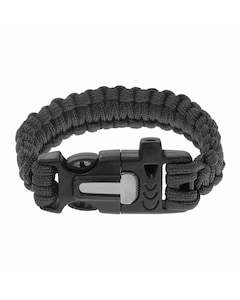
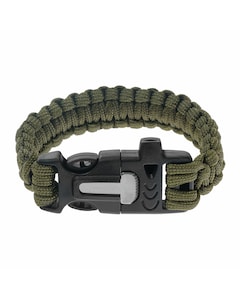
Paracord bracelets, lanyards, belts and key fobs put 2–10 metres of usable cord within reach at all times. A standard bracelet typically contains 3–4 metres when unravelled. Wrist-worn paracord has genuine utility, not just aesthetic appeal — the cord is immediately available without digging through a pack.


How much paracord to carry and how to store it
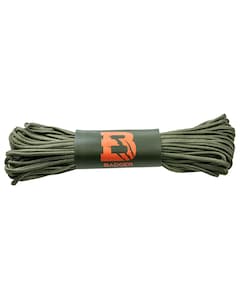
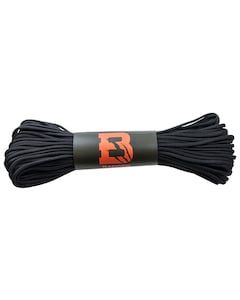
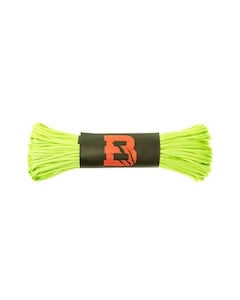
As a baseline, 30 metres (100 ft) covers a shelter ridgeline, a bear hang and a few emergency repairs on the same trip. Add more for multi-day expeditions or any mission where cordage might be your primary tool. Paracord is light enough that carrying extra costs little: 30 metres of Type III weighs approximately 80–90 g.
Storage matters more than most people expect. Nylon degrades under UV exposure — prolonged direct sunlight can reduce tensile strength by around 25% after six months. Store paracord in a dry, dark location, ideally coiled without tight kinks that stress the core. Inspect it annually for brittleness, discolouration, or sheath abrasion; replace any cord that shows degradation before using it in a situation where failure has real consequences.
FAQ
Is 550 paracord the same as Type III paracord?
Yes. The "550" refers to the 550 lb minimum breaking strength, which is the defining characteristic of Type III
under the MIL-C-5040H specification. Both terms refer to the same cord. Type III with 7 core strands is the standard
recommended for outdoor, survival and military applications.
Can paracord be used as a climbing rope?
No. Paracord is not rated for fall arrest or dynamic load-bearing applications like climbing or rappelling. Its 550
lb breaking strength sounds substantial, but climbing rope is rated under dynamic conditions with certified
elongation and impact force limits that paracord doesn't meet. Use purpose-built, CE-certified climbing rope for
anything involving falls.
How do you melt the ends of paracord to stop it fraying?
Hold the cut end briefly over a lighter flame until the nylon melts, then press the melted end flat with a fingertip
or the side of the lighter (quickly — it stays hot for a moment). This fuses the sheath and core together and
prevents unravelling. Work in a ventilated space; burning nylon produces fumes.
What's the difference between paracord and regular rope?
Standard twisted or braided rope of similar diameter typically has a lower strength-to-weight ratio than paracord,
doesn't include separable inner strands, and may be less resistant to abrasion and moisture. Paracord's kernmantle
construction gives it a distinctly higher breaking strength for its weight and diameter than most general-purpose
rope, which is why it became a military standard and a survival staple.
How long does paracord last?
Stored correctly — dry, dark, away from UV — quality nylon paracord can last 10 years or more without significant
degradation. UV exposure, repeated wetting and drying, chemical contact (especially chlorine or petroleum products),
and abrasion are the main degradation factors. Inspect before use and replace any cord showing brittleness,
significant fading, or sheath damage.