 Česká republika
  Deutschland
  Austria
  United Kingdom
  Suomi
Suomi  France
  Magyarország
  Italia
  Polska
  România
  Україна
  Europe
How Does a Hand Warmer Work? Types, Operating Principle and How to Use It
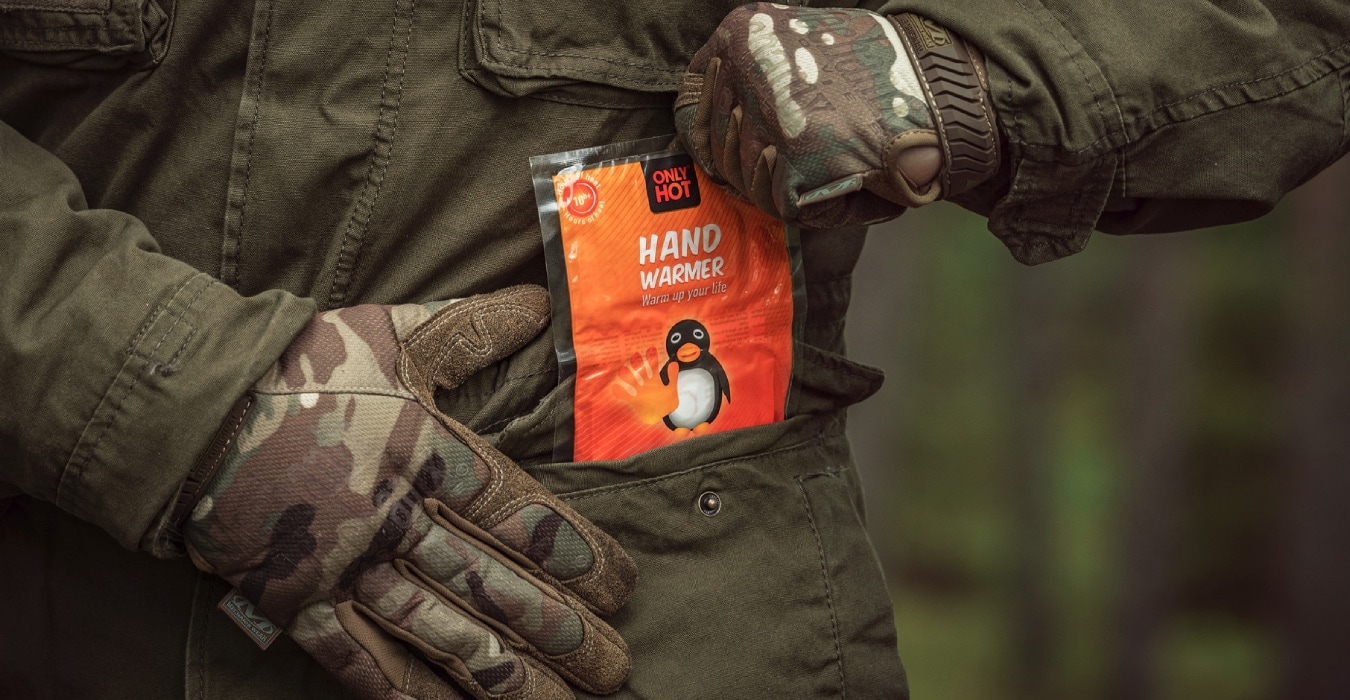
Cold temperatures, wind, and long periods outdoors can make even good gloves insufficient to keep your hands warm. Whether you are hiking in the Peak District, watching sport in the stands, walking the dog on a January morning, or working outside in winter, hand warmers are a useful addition to your cold-weather kit. Once activated, they generate heat that sits in your pocket or glove for hours.
There are several types of hand warmers on the market. The most popular are disposable hand warmers based on iron oxidation, reusable hand warmers using sodium acetate gel, and rechargeable hand warmers powered by a USB-charged battery. They differ in how they work, how long they last, and how — or whether — they can be used again.
TL;DR
- Hand warmers complement your winter kit when even good gloves are not enough — useful for hiking, camping, fishing, winter sports, and outdoor work.
- The most popular types in the UK are disposable hand warmers (iron oxidation) and reusable hand warmers (sodium acetate crystallisation).
- Rechargeable hand warmers charged via USB are the most versatile option — reusable hundreds of times and often doubling as a power bank for your phone.
- Catalytic (lighter fuel) and charcoal hand warmers offer longer sustained heat and are popular for fieldwork and fishing.
- A disposable hand warmer provides heat for several to over ten hours but cannot be used again.
- A reusable gel hand warmer heats for a shorter time — minutes to about one hour — but can be regenerated in hot water repeatedly.
- Do not cut or puncture the pouch, and avoid prolonged direct contact of a hot warmer with bare skin.
What types of hand warmers are there?
Hand warmers differ primarily in how they generate heat and their energy source. In the MILITARY range you will find disposable chemical, reusable gel, electric rechargeable, fuel and catalytic, and charcoal hand warmers. Each type works best in slightly different conditions — and the right choice for a day's hillwalking in Scotland is different from the right choice for an evening on the terraces or a week-long winter expedition.
Disposable hand warmers
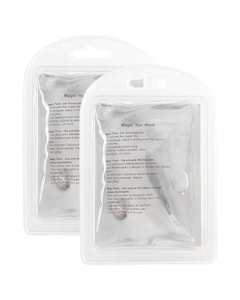
These are lightweight, easy-to-use pouches activated simply by opening the airtight packaging. Heat is produced by the rapid oxidation of iron — an exothermic reaction that releases warmth for many hours. Disposable hand warmers require no power source, fuel, or preparation beyond removing them from the packet, which makes them well suited to trekking, camping, skiing, and any situation where simplicity and reliability matter. The MILITARY range includes models designed for warming hands, feet, and other body areas.
Reusable hand warmers
These come as a pouch filled with a supersaturated sodium acetate solution containing a small metal plate. Clicking or bending the plate triggers crystallisation, releasing heat rapidly. Once cooled, a reusable hand warmer can be regenerated by heating the pouch in hot water until the crystals fully dissolve — a process that can be repeated many times. Popular with hillwalkers, commuters, and anyone who wants a sustainable, waste-free option for shorter outings.
Rechargeable hand warmers
A rechargeable hand warmer — also known as a USB hand warmer or electric hand warmer — uses a built-in battery to power a heating element. It charges via USB or USB-C and typically offers two or three adjustable heat settings. Unlike disposable models, it can be switched on and off as needed and recharged hundreds of times. Many models also function as a power bank, letting you top up your phone or GPS device on the go — a practical feature for multi-day trips and winter camping where charging access is limited.
Fuel and catalytic hand warmers
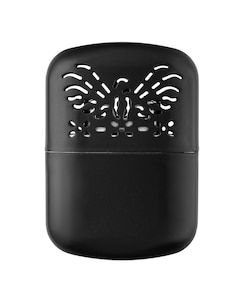
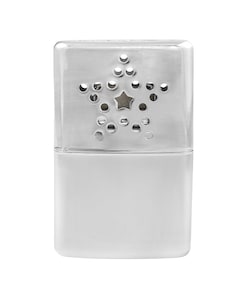
These hand warmers are designed for longer use in the field. They work by safe, flameless slow oxidation (catalysis) of lighter fuel, which evaporates from the tank and reacts with oxygen in the presence of a platinum catalyst. A Zippo hand warmer is one of the best-known examples, capable of running for up to 12 hours on a single fill with no open flame. The MILITARY range also includes models from Mil-Tec and MFH, which are popular with anglers and people working outdoors for extended periods.
Charcoal hand warmers
In charcoal hand warmers, the heat source is a solid fuel insert — typically a compressed charcoal briquette — placed in a closed but not completely airtight casing lined with insulating material. After lighting, the insert glows in a controlled way without an open flame, gradually transferring heat to the outer casing for around six hours. Once the insert burns out, it is simply replaced with a new one, so the device itself can be used repeatedly.



How does a hand warmer work?
Disposable hand warmers are the most widely used type, so it is worth understanding the chemistry behind them. Inside the pouch there is, among other things, powdered iron. While the hand warmer remains in its airtight packaging, oxygen cannot reach the iron and the pouch stays cold.
Once the packaging is opened, oxygen begins to pass through the permeable material of the pouch. The iron reacts with it and gradually oxidises, releasing heat as it does — the same process as rusting, but significantly accelerated and controlled. The heat produced is exothermic: energy is released as the iron bonds with oxygen to form iron oxide.
The hand warmer does not reach full temperature immediately — it typically needs a few minutes to warm up, after which it delivers steady heat for several hours. No batteries, charging, or preparation are required beyond opening the packet and allowing air in.
What is inside a disposable hand warmer?
The exact composition varies by manufacturer, but a typical disposable hand warmer contains:
- powdered iron — oxidises to produce the heat,
- salt — acts as an electrolyte to support the reaction,
- activated carbon — helps distribute heat evenly across the pouch,
- vermiculite or similar porous material — stabilises the mixture and maintains the correct moisture level,
- water — participates in the processes that enable the reaction to proceed correctly.
The mixture is sealed in an air-permeable outer pouch that allows oxygen to enter gradually while keeping the contents inside. The pouch should never be cut, punctured, or opened.
How do you activate a hand warmer?
The activation method depends on the type. The key differences are shown in the table below.
| Type of hand warmer | Activation method | Approximate heating time |
|---|---|---|
| Disposable hand warmer | Remove from the sealed packaging and expose to air. Contact with oxygen triggers the oxidation reaction — no shaking required. | Several to over ten hours, depending on the model |
| Reusable gel hand warmer | Bend or click the metal plate inside the pouch to start sodium acetate crystallisation and heat release. | Several minutes to about one hour, depending on size and model |
| Rechargeable hand warmer (USB) | Charge via USB or USB-C cable, then press the power button. Select your preferred heat setting. | Up to ten hours or more per charge, depending on battery capacity and setting |
Can a hand warmer be reused?
Whether a hand warmer can be reused depends entirely on its type. The key differences are shown below.
| Type of hand warmer | Can it be reused? | Method of re-preparation |
|---|---|---|
| Disposable iron-based hand warmer | No | Once the oxidation reaction is complete, the warmer cannot be restored. Resealing or heating the pouch does not revive it. |
| Reusable gel hand warmer | Yes | Heat in water until all crystals dissolve completely, then leave to cool fully before activating again. |
| Rechargeable hand warmer (USB) | Yes | Recharge via USB or USB-C cable. Most models support several hundred charge cycles. |
How to regenerate a reusable gel hand warmer
Always follow the manufacturer's instructions first — the procedure varies slightly between models. In most cases, regeneration works as follows:
- Place the crystallised hand warmer in a saucepan or heat-safe container of water.
- Heat the water according to the manufacturer's guidance — usually to a steady simmer or full boil.
- Wait until all the crystals have completely dissolved and the contents of the pouch are liquid and clear.
- Carefully remove the warmer from the water.
- Leave it to cool completely on a flat surface before activating again.
Once fully cooled, the reusable gel hand warmer is ready to activate again. Do not use a microwave, oven, or any heating method the manufacturer does not explicitly permit.
Hand warmers — frequently asked questions
Why isn't my hand warmer heating up?
Disposable hand warmer not getting warm
The most common cause is restricted airflow. Iron oxidation requires a steady supply of oxygen — a hand warmer kept tightly inside a sealed glove or pressed between layers of fabric may work less intensively. Try squeezing and exposing it to open air for a moment.
The packaging may also have been compromised during storage: if air reached the pouch before use, part of the reaction may have already occurred. Check the expiry date and storage conditions — disposable hand warmers have a shelf life, typically two to four years when stored sealed.
Reusable gel hand warmer not reacting when clicked
Incomplete regeneration is the usual cause — if crystals remain in the pouch from a previous use, the device cannot cycle again reliably. Reheat it in hot water following the manufacturer's instructions until all crystals dissolve, then allow it to cool fully. A pouch that is damaged or leaking should not be used.
How long does a hand warmer last?
Duration varies by type, size, and model. Disposable hand warmers typically provide heat for several hours, with some larger models lasting over ten hours — long enough for a full day on the hill or a marathon fishing session. Reusable gel hand warmers heat for a shorter time, usually from several minutes to about one hour, depending on size.
Rechargeable hand warmers can provide up to ten or more hours per charge depending on battery capacity and heat setting. Their key advantage in UK conditions is that they can be switched off when not needed — during a warm stretch or while indoors — and switched back on without losing heat time the way a disposable would.
What temperature does a hand warmer reach?
Most hand warmers reach surface temperatures in the range of 40–65 °C (104–149 °F) depending on type. Catalytic warmers typically sit around 50 °C on the casing surface, while rechargeable electric models often offer adjustable settings from around 40 °C to 55 °C. Disposable warmers peak early and gradually taper off.
Avoid prolonged direct contact of a very hot warmer with bare skin. Long-term heat exposure — particularly during sleep or if sensation is reduced — can cause contact burns or skin irritation even at temperatures that feel comfortable initially.
How do I use a hand warmer safely?
A few straightforward rules cover most situations:
- follow the manufacturer's instructions for your specific model,
- do not cut, puncture, or open the pouch of a chemical or gel hand warmer,
- do not use a damaged or leaking product,
- avoid prolonged direct contact of a hot warmer with bare skin,
- take extra care with children, elderly users, or anyone with reduced temperature sensation,
- do not sleep with a hand warmer pressed firmly against your body,
- regenerate reusable gel models only using the method specified by the manufacturer.
If a hand warmer is damaged, leaking, or behaving unexpectedly during use, stop using it immediately.
When is it worth using a hand warmer?
Hand warmers are not a substitute for properly chosen gloves or suitable winter clothing, but they are an effective complement when prolonged exposure to cold reduces what even good layering can achieve. They work particularly well when physical activity is low and the body generates less heat — standing still in the cold is far more demanding on your hands than walking briskly.
Situations where hand warmers are especially useful in the UK: winter hillwalking and wild camping, skiing and other winter sports, fishing in cold weather, outdoor work and manual tasks in winter, watching outdoor sport, long cold commutes, and waiting in exposed conditions.
A disposable hand warmer is the right choice when you need long operating time and no charging or preparation. A reusable gel warmer suits situations where you need short bursts of warmth and want a zero-waste option. A rechargeable electric hand warmer — with adjustable heat and optional power bank function — is the most versatile choice for everyday and multi-day use.
Which hand warmer should you choose?
The right type of hand warmer depends on how and where you plan to use it. Disposable models deliver long, reliable heat with no preparation — ideal for a full day in the hills or on the water. Reusable gel hand warmers are the sustainable choice for repeated short-duration use, regenerated quickly in the kitchen. Rechargeable hand warmers offer the greatest flexibility for everyday use, with adjustable settings, hundreds of charge cycles, and often a built-in power bank for topping up your phone. Catalytic and charcoal hand warmers suit those who spend extended time outdoors and prefer a fuel-based solution that runs independently of electricity.
When choosing, consider operating time, method of activation, reusability, and the specific conditions you will be using it in. The MILITARY range of hand warmers covers outdoor, tourist, and everyday use — from single-use disposable heat packets and reusable gel warmers to rechargeable electric hand warmers and Zippo catalytic models.