 Česká republika
  Deutschland
  Austria
  United Kingdom
  Suomi
Suomi  France
  Magyarország
  Italia
  Polska
  România
  Україна
  Europe
Best Pocket Knife — Which One to Choose?
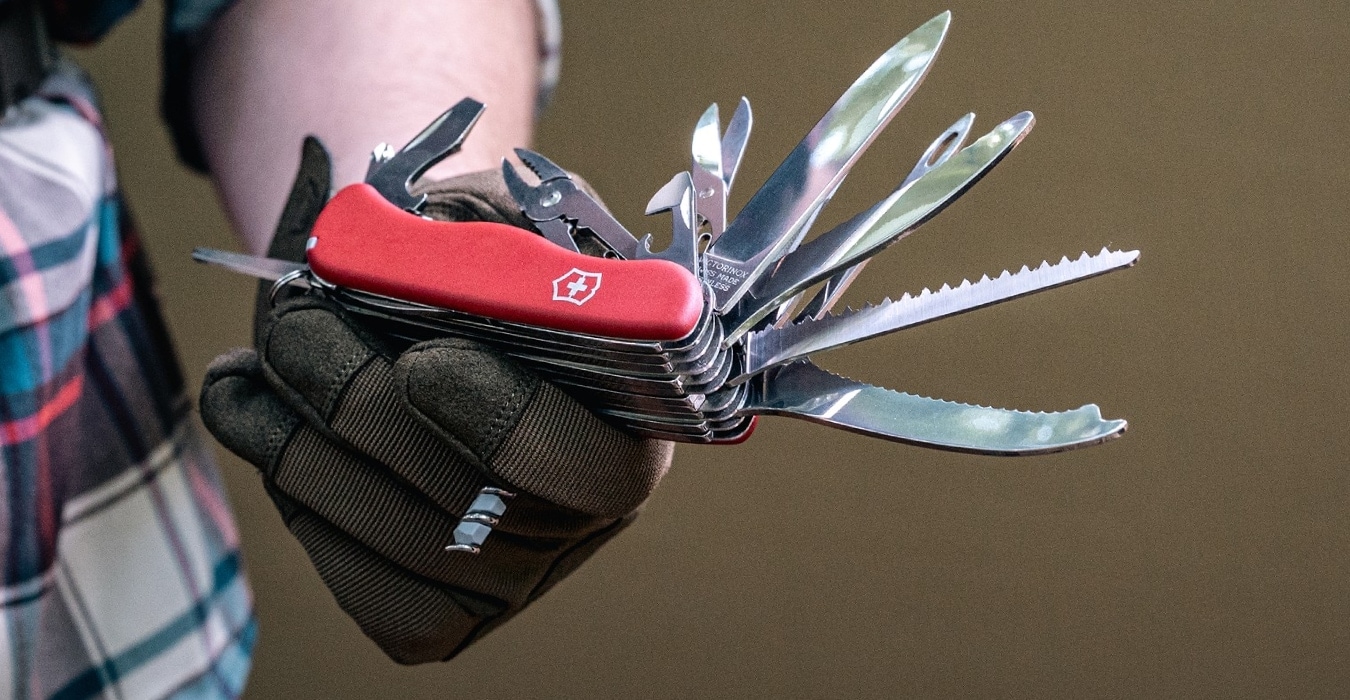
A good pocket knife — whether a classic Swiss Army knife or a simple folding blade — can replace several full-size tools. When folded, it fits easily in a jacket pocket, rucksack or waist pack. It earns its place on everyday tasks, travel, camping, fishing, and all kinds of outdoor work — cutting cord, opening a parcel, tightening a loose screw, preparing a meal, or sorting a minor repair without reaching for a full toolkit.
In this guide we explain what makes the best pocket knife for different uses, which features to look for, and how UK carry law affects your choice. We walk through the main types of Swiss Army knife and other pocket knives, cover practical carry options, and finish with a ranked selection of Victorinox models to help you find the right fit.
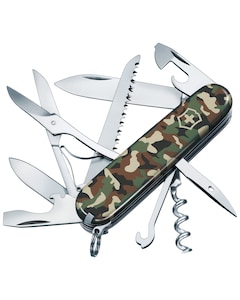


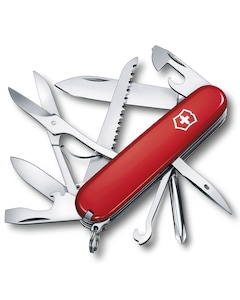


Pocket knife UK law — what you can legally carry
Before choosing a pocket knife, it is worth understanding what you can legally carry in public in the UK. The rule in England, Scotland, and Wales is straightforward: a non-locking folding knife with a blade of 3 inches (7.62 cm) or less can be carried in a public place without any specific reason. Most standard Swiss Army knife blades — typically 70 mm (2.76") — fall comfortably within this limit, which is one reason the Victorinox range has always been popular as a UK legal EDC knife.
A locking blade, regardless of length, or any blade longer than 3 inches requires a legitimate reason to carry in public — work, a specific outdoor activity, or a hobby where the tool is genuinely needed. The Rangergrip series, for example, has a locking blade: a solid choice for field and outdoor use, but not one to carry in a trouser pocket in town without purpose. When in doubt, carry the knife in a bag rather than on your person.
What to look for when choosing a pocket knife — criteria that matter
Tools and functions
The blade is the foundation of almost every pocket knife, but the right set of additional tools is what shapes its real-world usefulness. For everyday carry, the most practical additions are scissors, screwdrivers, a bottle opener, tweezers, and a file. For field and outdoor use, a wood saw, awl, reamer, and can opener become more important. Before buying, think honestly about which tools you will actually reach for — a knife with 15 functions you use is more useful than one with 25 you ignore.
Size and weight
Small keychain models are lightweight and easy to clip to keys; they handle simple everyday tasks but are not designed for work requiring any significant force. The classic 91 mm (3.58") format — the backbone of the Victorinox range — offers a full set of tools while remaining comfortable for all-day carry. Larger models such as the 130 mm Rangergrip handle outdoor tasks better, with a longer blade and a more secure grip, but they weigh noticeably more and are less suited to daily carry in a pocket.
Handle material and shape
Smooth Cellidor polymer scales are light, easy to clean, and can hold extras like tweezers and a toothpick — standard on most classic Victorinox models. ALOX aluminium scales are thinner and more wear-resistant, making them a popular choice for slim EDC models. Textured polyamide or G10 handles improve grip security on larger knives, particularly in wet conditions or when wearing gloves. Always check that the handle feels comfortable with the tool you use most frequently deployed — a thick knife packed with functions is often less practical for sustained cutting than a simpler, slimmer model.
Build quality
In a well-made Swiss Army knife, all tools should open smoothly and without excessive play or rubbing against neighbouring elements. Precise fit of the scales, appropriate spring tension, and the ability to pull out each tool cleanly are equally important. It is also worth checking the availability of spare parts and accessories — Victorinox tools are widely stocked and easy to service.
Types of Swiss Army knife and pocket knife — which suits your use case?
Keychain and compact EDC pocket knives
The smallest Swiss Army knives and EDC pocket knives are built for everyday carry with minimal footprint. They clip to keys, slip into a small pocket, or tuck into an organiser. A short blade, scissors, a file, and a small screwdriver cover most light daily tasks. Their main advantage is weight — typically well under 50 g — though they are not built for tasks requiring real force.
Classic multifunction Swiss Army knives
This is the most versatile and widely carried group. In addition to one or two blades, these models may include scissors, can and bottle openers, screwdrivers, a corkscrew, an awl, a multipurpose hook, and a wood saw. They work equally well at home, travelling, in the garden, and at camp — and the 91 mm format means most models are UK legal to carry in public without any additional justification.
Tourist and outdoor pocket knives
Outdoor-focused models are generally larger, with a more secure grip and a more capable tool set. A locking blade, a wood saw, a can opener, and stronger screwdrivers make them better suited to preparing food in the field, cutting cord, whittling, and setting up camp. Bear in mind that a locking blade requires a legitimate reason for public carry in the UK.
Technical and workshop pocket knives
In this category, the key tools are screwdrivers, pliers, wire cutters, files, and implements for minor repairs. Useful for DIY, cyclists, technicians, and anyone building a compact everyday carry toolkit without stepping up to a full multitool.
Specialist pocket knives
Some models are configured for specific activities. Fishing pocket knives may include hook removers, a measuring scale, and line-cutting tools. Rescue-oriented models feature a seatbelt cutter and window breaker. Models aimed at technical or workshop use carry a more extensive screwdriver and file set. Choose a specialist model only if its configuration matches a consistent real-world need.
Victorinox Swiss Army knife ranking — selected models
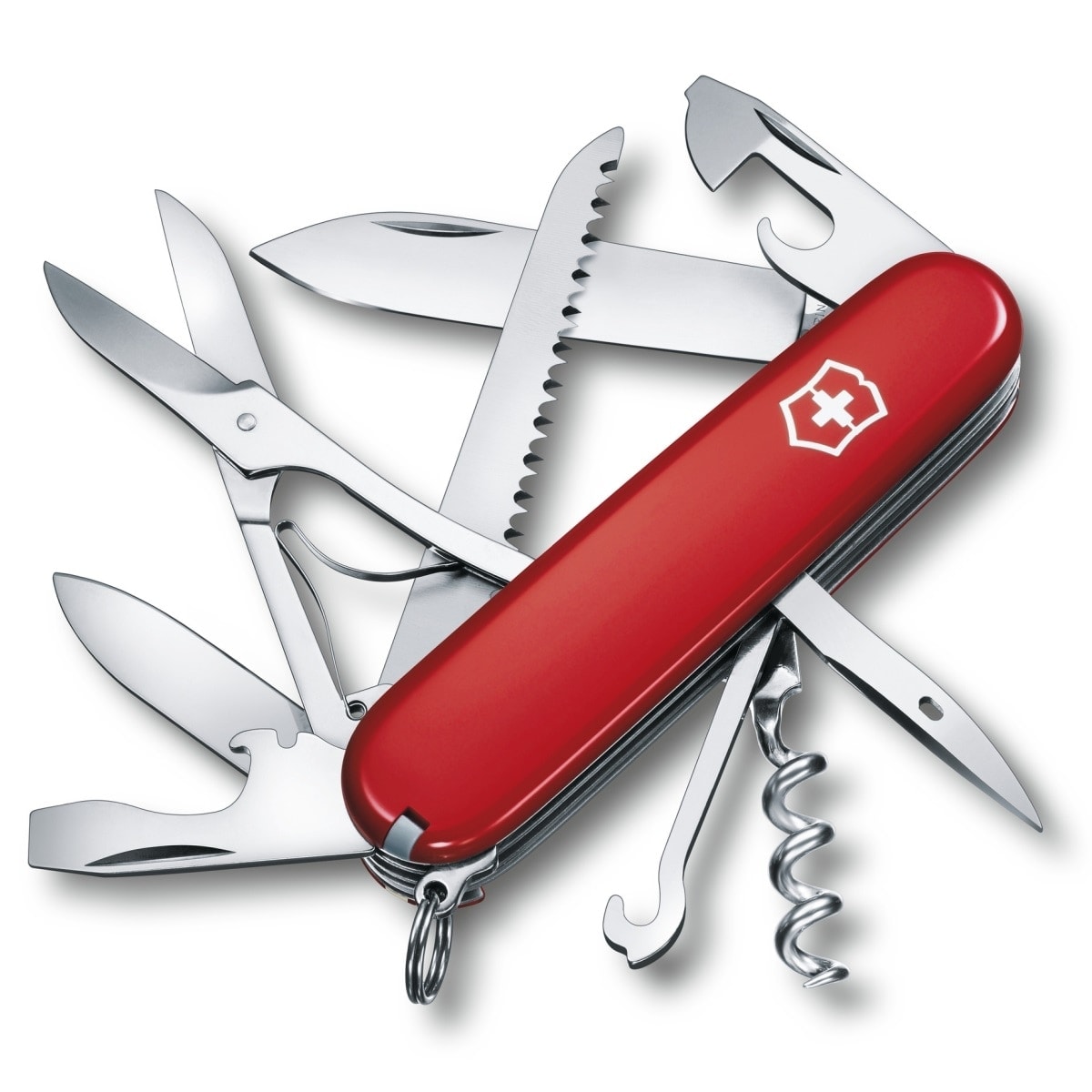
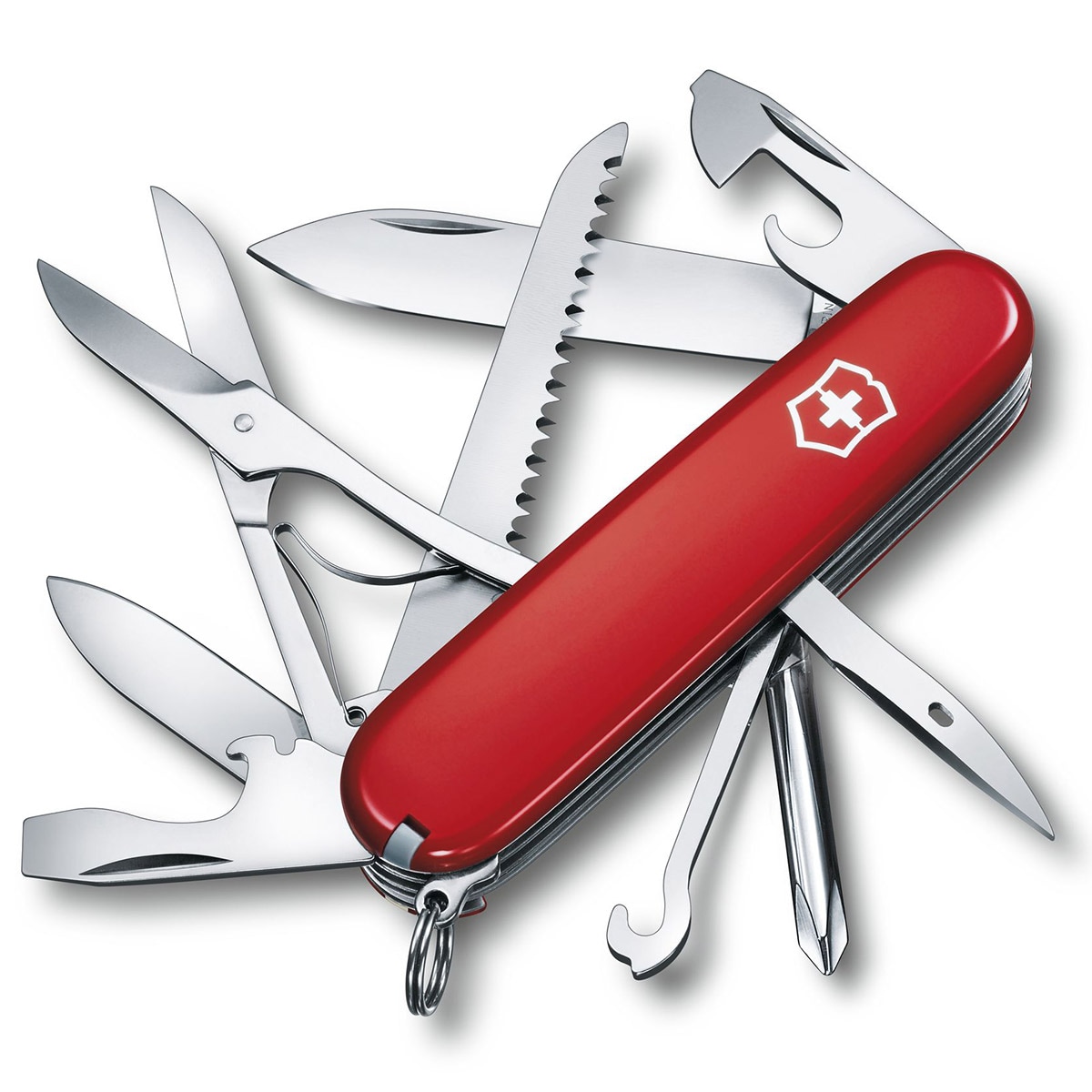
Below is our pick of the best Victorinox Swiss Army knife models for different uses — from compact EDC options to larger knives built for fieldwork. All 91 mm models listed here carry a non-locking blade of 70 mm (2.76"), keeping them within UK legal everyday carry limits without any additional justification needed.
Advantages
|
Disadvantages
|
Advantages
|
Disadvantages
|
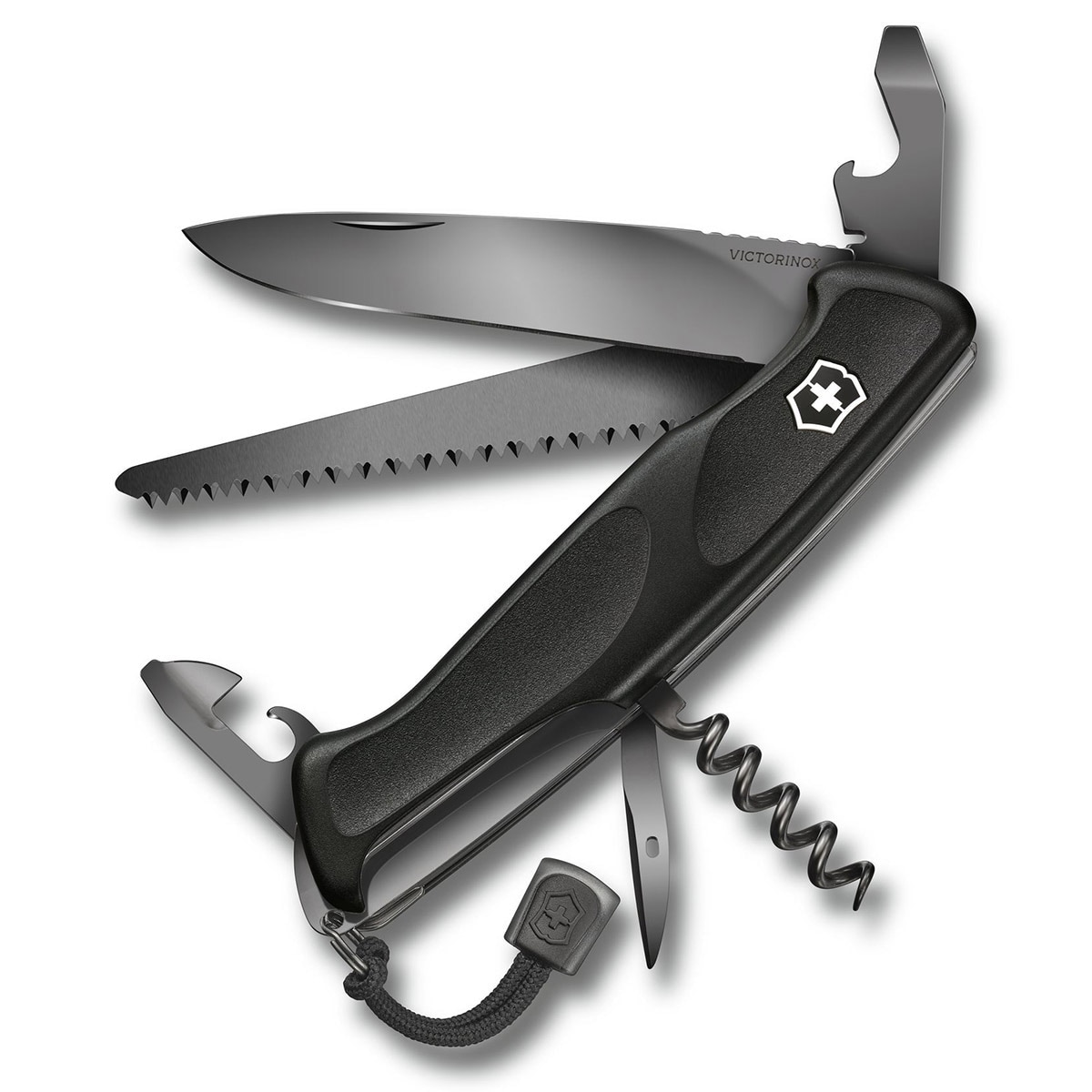
Advantages
|
Disadvantages
|
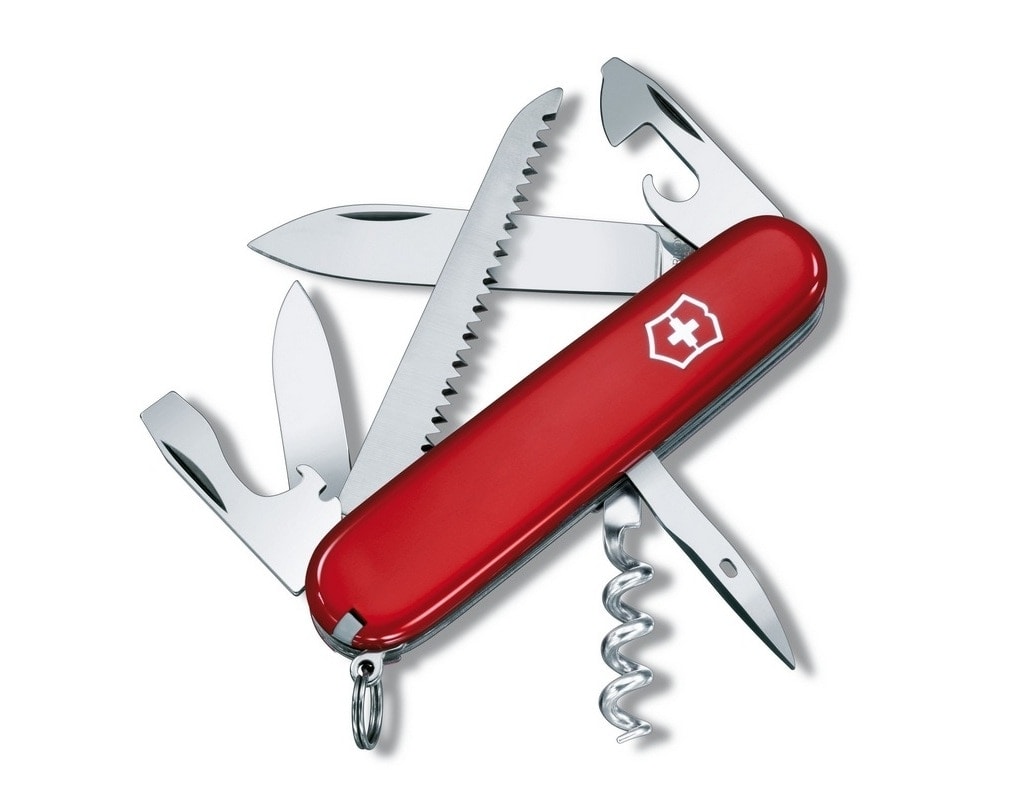
Advantages
|
Disadvantages
|
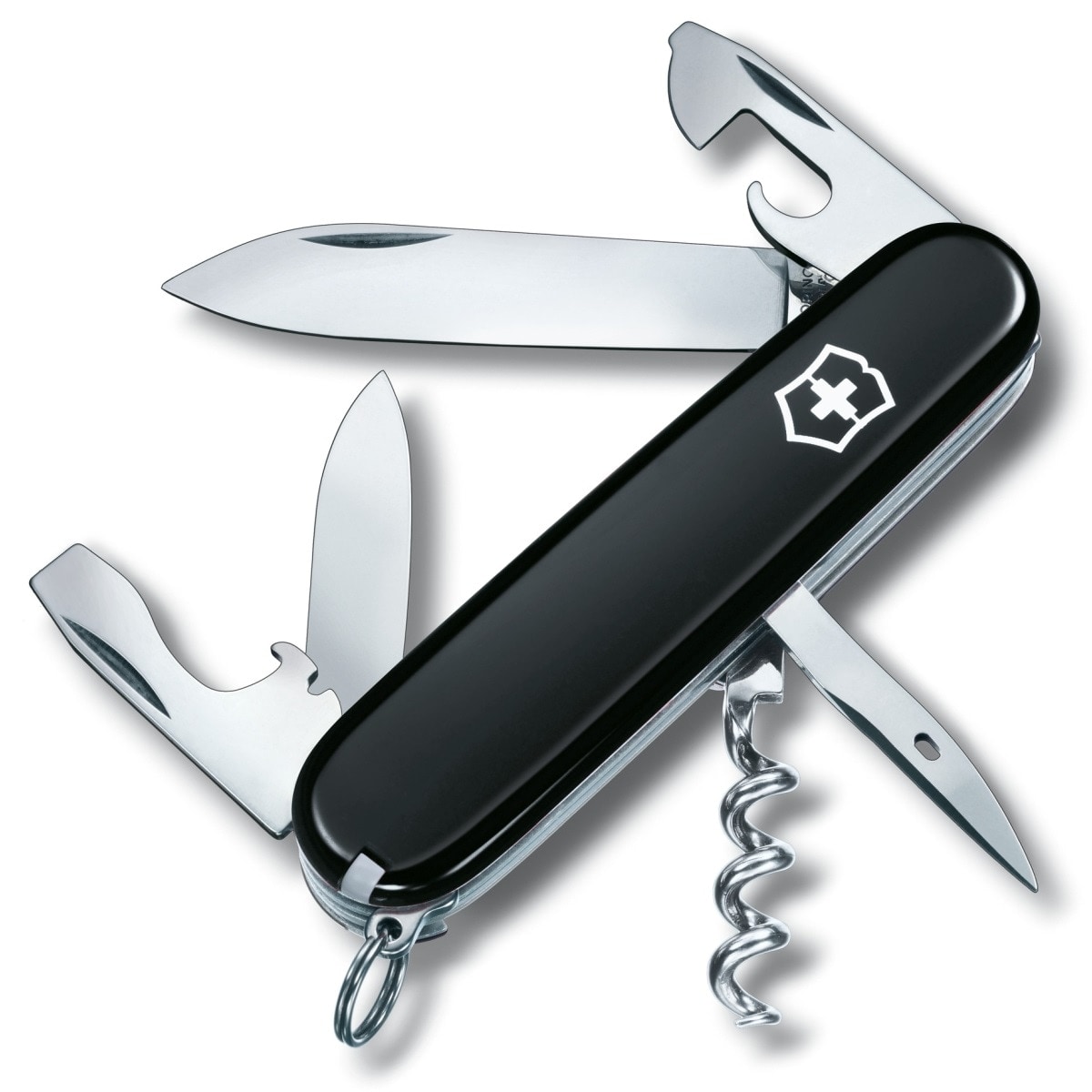
Advantages
|
Disadvantages
|
TOP 5 Victorinox pocket knives — technical specifications
| Parameter | Huntsman Red | Fieldmaster Red | Rangergrip 55 Black | Camper | Spartan Black |
|---|---|---|---|---|---|
| Length closed | 91 mm (3.58") | 91 mm (3.58") | 130 mm (5.12") | 91 mm (3.58") | 91 mm (3.58") |
| Main blade length | 70 mm (2.76") | — | 80 mm (3.15") | 70 mm (2.76") | 70 mm (2.76") |
| Weight | 97 g (3.4 oz) | 100 g (3.5 oz) | 166 g (5.9 oz) | 74 g (2.6 oz) | 59 g (2.1 oz) |
| Number of tools | 15 | 15 | 12 | 13 | 12 |
| Locking blade | No | No | Yes | No | No |
| UK legal public carry | Yes | Yes | With reason | Yes | Yes |
| Corkscrew | Yes | No | Yes | Yes | Yes |
| Scissors | Yes | Yes | No | No | No |
| Wood saw | Yes | Yes | Yes | Yes | No |
| Blade steel | Stainless | Stainless | Stainless | Stainless | Stainless |
| Scale material | Cellidor | Cellidor | Polyamide | Cellidor | ABS / Cellidor |
| Colour | Red | Red | Black | Red | Black |
How to carry a pocket knife — pouches, clips and holsters
A small pocket knife can be carried loose in a jacket pocket, but keep it away from items that could scratch the scales or make it awkward to retrieve. Keychain models clip directly to your keys, and the steel ring also accepts a lanyard or short safety cord.
Larger and heavier pocket knives are more comfortable in a belt pouch. The pouch keeps the knife protected from dirt and accidental loss while keeping it within easy reach — a practical option for the Rangergrip and other outdoor models.
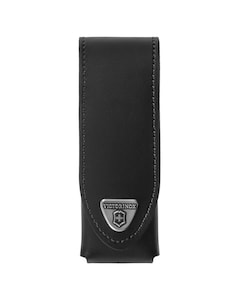

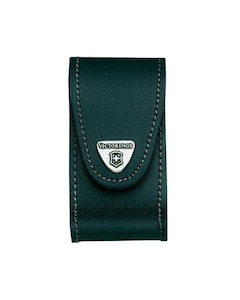


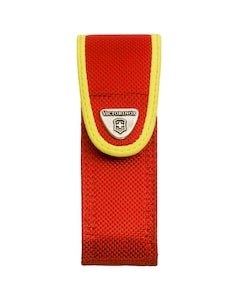

Models with a clip can be attached to a pocket edge, belt or piece of kit. The clip should hold the knife securely without interfering with a comfortable grip during use. In a rucksack, a dedicated pocket or organiser keeps it from shifting around among the rest of your gear. However you carry it, fold all tools fully before pocketing the knife — and after contact with water or dirt, clean and dry it thoroughly before putting it away.
Where to buy the best pocket knife — Victorinox and other brands at MILITARY
The MILITARY store carries both classic Victorinox Swiss Army knives and pocket knives from other manufacturers including Mil-Tec, Mikov, and Böker. The range spans small keychain EDC models, classic multifunction designs, and larger outdoor pocket knives for fieldwork.
The best pocket knife is not necessarily the one with the most tools — it is the one with the right tools for how you actually use it, in a size you will carry every day. Define those needs first, then compare models and specifications to find the right fit.