 Česká republika
  Deutschland
  United Kingdom
  Suomi
Suomi  France
  Magyarország
  Italia
  Polska
  România
  Україна
  Europe
How to choose hiking boots? complete guide
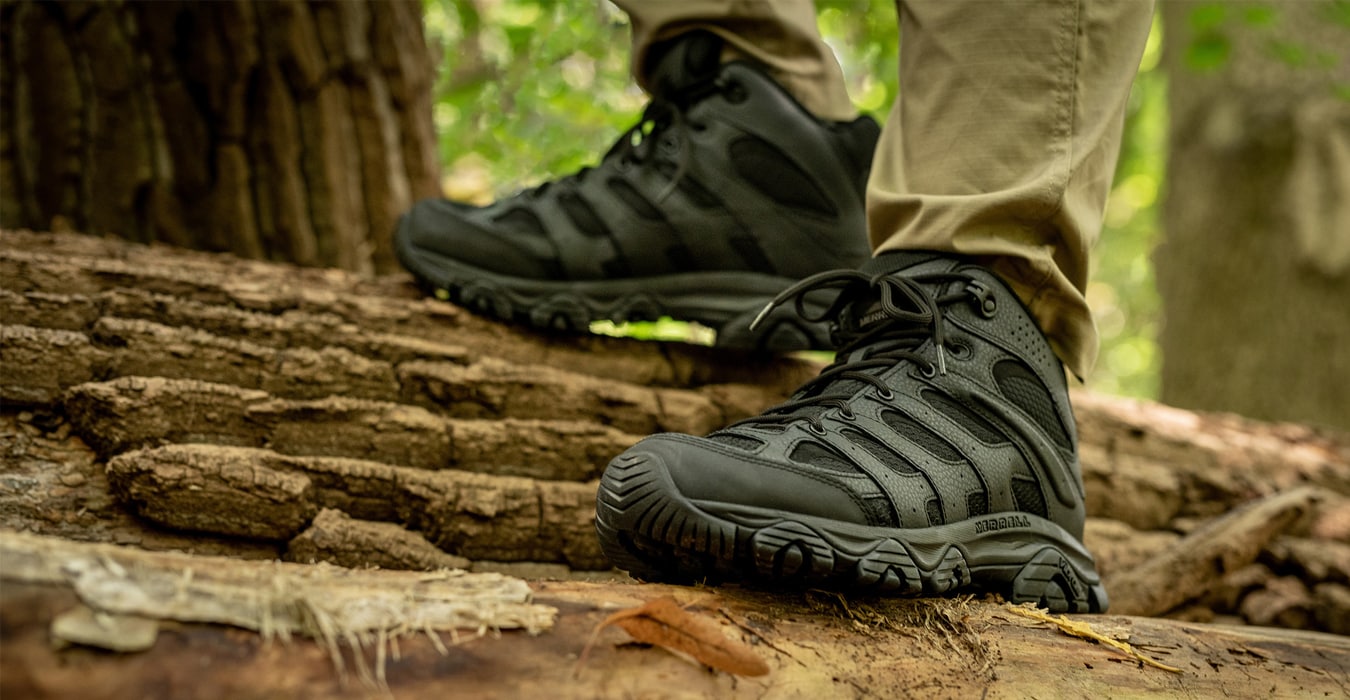
Hiking in the mountains, climbing or walking in the woods are great ideas for recreation and leisure activities. However, each of these activities requires the right footwear. Hiking boots play a key role when traversing the trails - they protect the feet and provide the right amount of walking comfort. However, there is no one-size-fits-all pair of hiking boots that will work at any time and in any place.
The outdoor market is highly developed and the variety of hiking boots available can make it difficult to choose. That is why, in this article, we take a look at the different types of hiking boots and give tips on how to choose hiking boots for the activity, terrain and season.
What to Consider When Choosing Hiking Boots?
Choosing the right hiking boots can seem quite difficult at first. It is important to choose a model that suits your foot and also your specific type of activity. On various discussion groups or forums, there are often questions about which hiking boots are recommended. Of course, the opinions of other users can be taken into account, but it is important to remember that every person is different and may have different requirements. So, what should you look for before buying hiking boots? It is worth looking at such aspects as:
Frequency of Use
It is worth considering how often the hiking boots will be used. If trips to the mountains are your weekend ritual, then all-purpose all-season boots with a high upper and membrane will be more practical. Such boots will work well in rain and snow, as well as in sunny, warm weather. On the other hand, if you go hiking several times a year in the warmer months, lightweight summer footwear may be a better choice.
Terrain Type
If you are looking for versatile footwear for varied terrain, classic hiking boots with a high upper are a good choice. For rocky trails, choose lightweight footwear with an adapted sole for the terrain - such as approach shoes. Winter excursions into more difficult mountain areas may require the use of crampons, so when planning such treks, it's worth choosing a model with a compatible sole on which crampons can be fixed.
Type of Activity
For standard trekking with a heavier backpack, classic hiking boots with a high upper would be a good choice, while for speed hiking (fast walking) a lower and lighter model would be a better choice. If you're planning a route with climbing sections, it's worth choosing lightweight approach shoes. And if you're going on a challenging winter trek in the mountains, equip yourself with crampon-compatible boots. For running, on the other hand, we recommend trail shoes.
Water Resistance and Breathability
If you travel during humid months or are not intimidated by trekking in the rain, opt for footwear with a membrane, as it is more versatile. On the other hand, if you scrupulously check weather forecasts and organize trips mainly when the risk of rainfall is very low or non-existent, a pair of shoes without a membrane and with inserts made of airy mesh, for example, will work better.
Upper Height
The choice of upper height is related to both the season and the type of activity.
Materials
Hiking boots can be made of natural leather, synthetic leather, textile materials or a combination of different materials. Hiking boots in each of these versions will have their advantages and disadvantages. For example, leather boots are more durable, while boots made of synthetic materials are lighter.
High or Low Hiking Boots?
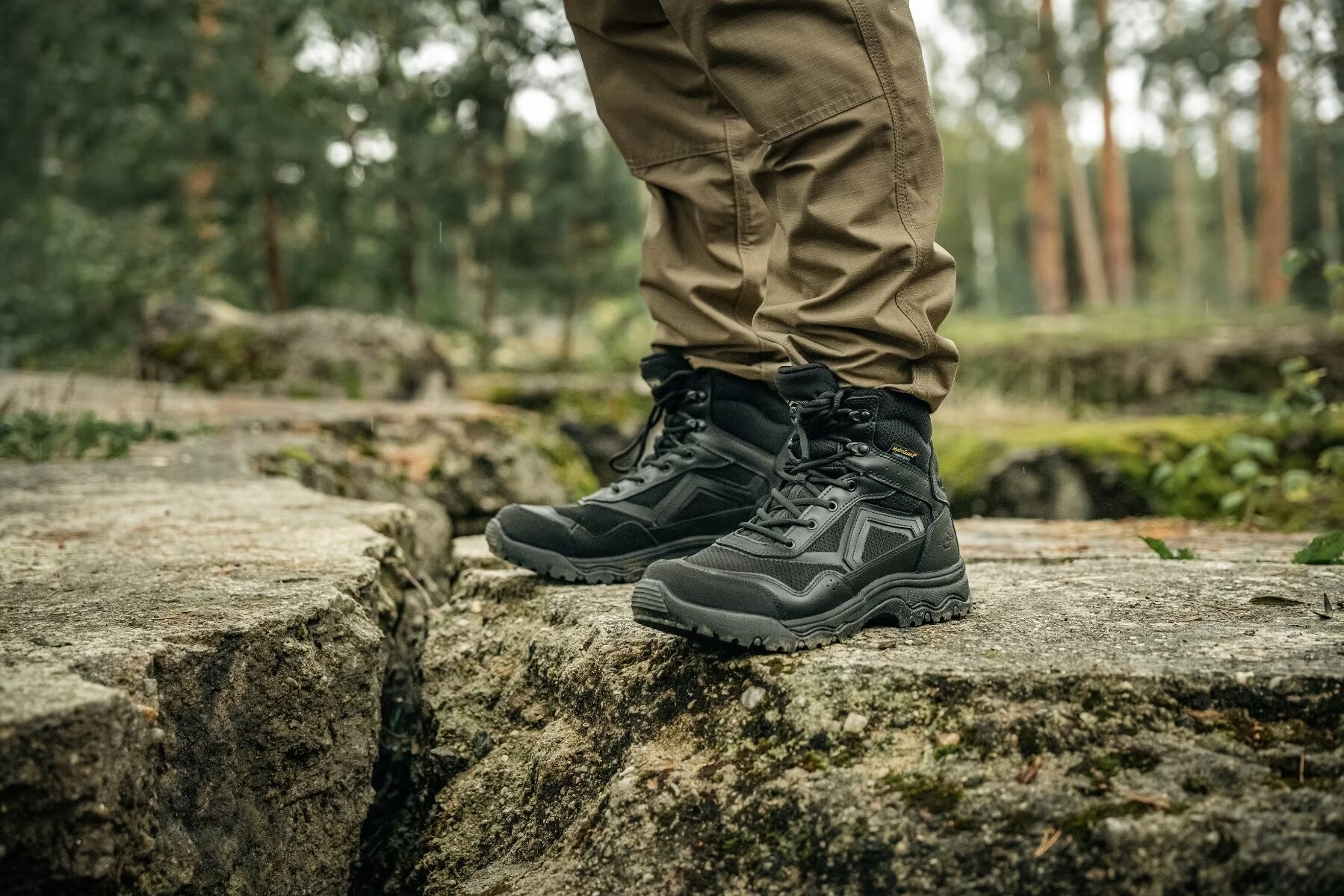
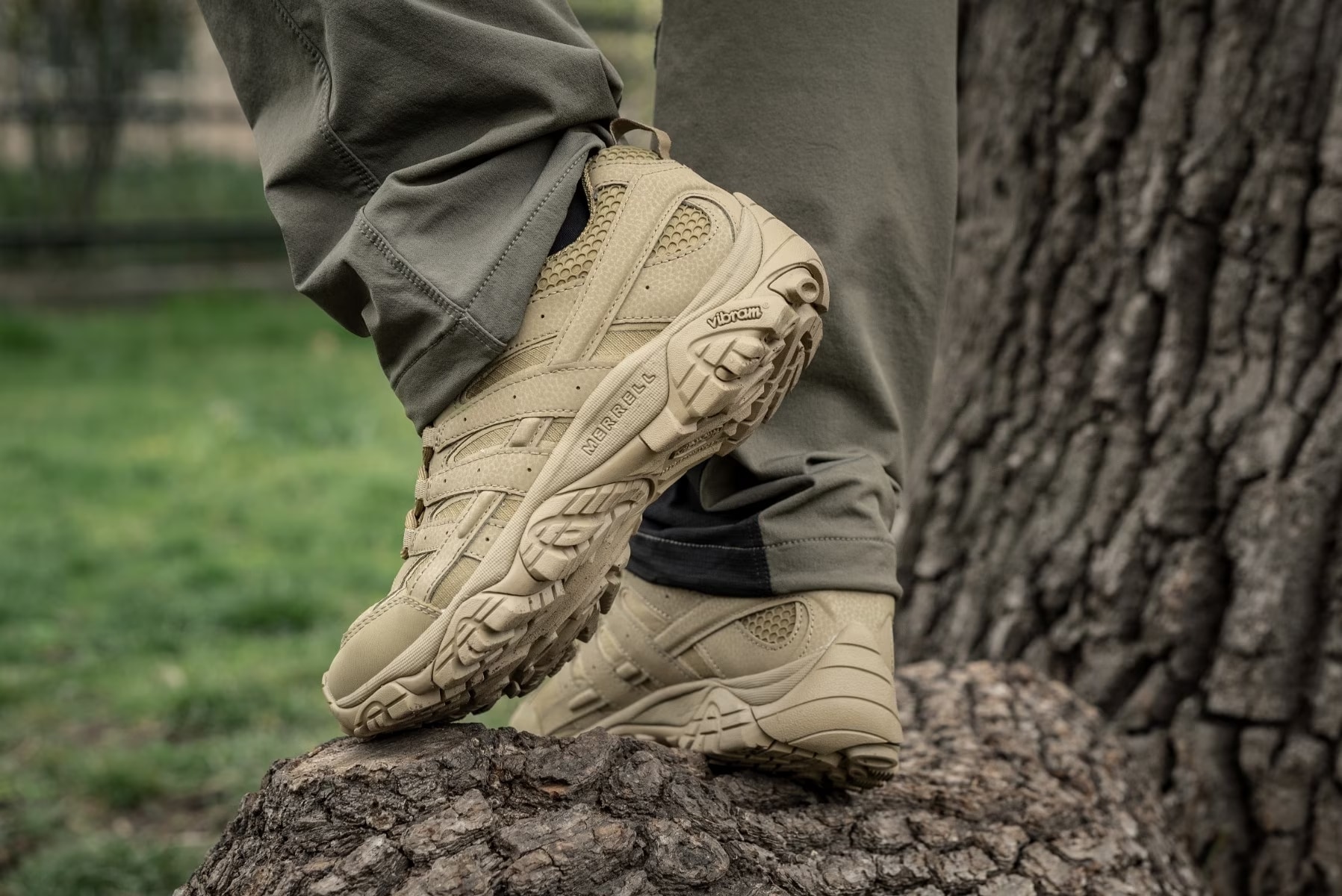
It is a very common opinion that hiking boots should be high. This opinion is justified by the stiffening of the ankle joint to prevent ankle sprains. However, it is worth knowing that a high upper in hiking boots is not completely rigid and does not fully protect against sprains. Ankle sprains can occur when wearing both high hiking boots and low shoes. The choice of upper height should be dictated by the type of activity and individual needs. You can find the differences between hiking boots with a low upper and a high upper in the table below.
| High upper hiking boots | Low upper hiking boots |
|---|---|
|
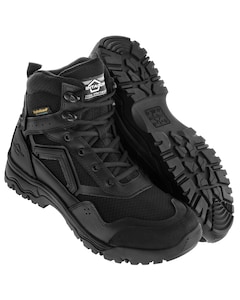
These are usually heavier models, but they protect the ankle better from impacts (such as single pebbles). The high upper also protects the feet from water, mud or snow. High boots can therefore be described as a universal model. Hiking boots with a high upper are very suitable for expeditions in varied terrain, as well as when taking a heavy backpack with you. The versatility of high boots allows you to fit gaiters without any problems. |
These are usually heavier models, but they protect the ankle better from impacts (such as single pebbles). The high upper also protects the feet from water, mud or snow. High boots can therefore be described as a universal model. Hiking boots with a high upper are very suitable for expeditions in varied terrain, as well as when taking a heavy backpack with you. The versatility of high boots allows you to fit gaiters without any problems. |
|
|
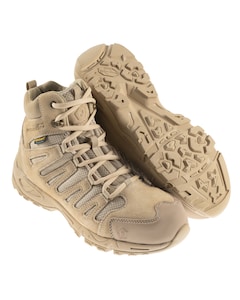
They are lightweight, comfortable and breathable shoes that are well suited to a particular activity. Low shoes are ideal for summer, but that's not their only advantage. If you are going on an expedition that involves short climbing sections, lightweight approach shoes may be the best choice. There are also types of mountain expeditions such as speed hiking and mountain running. Low-cut shoes are best for both activities.
Leather or Synthetic Hiking Boots?
The choice between leather boots and synthetic boots is really a matter of individual expectations. Leather hiking boots are mainly characterized by high strength and durability, but they are heavier than synthetic ones and generally less breathable. The question of water resistance depends on the type of leather used and the presence of a membrane, for example - a well-waterproofed grain leather footwear will give optimal water resistance, even without a membrane. In contrast, hiking boots made of velour, nubuck or synthetic material require the use of a membrane for waterproofness. Some manufacturers produce uppers made from a combination of leather and synthetic material, using their best features.
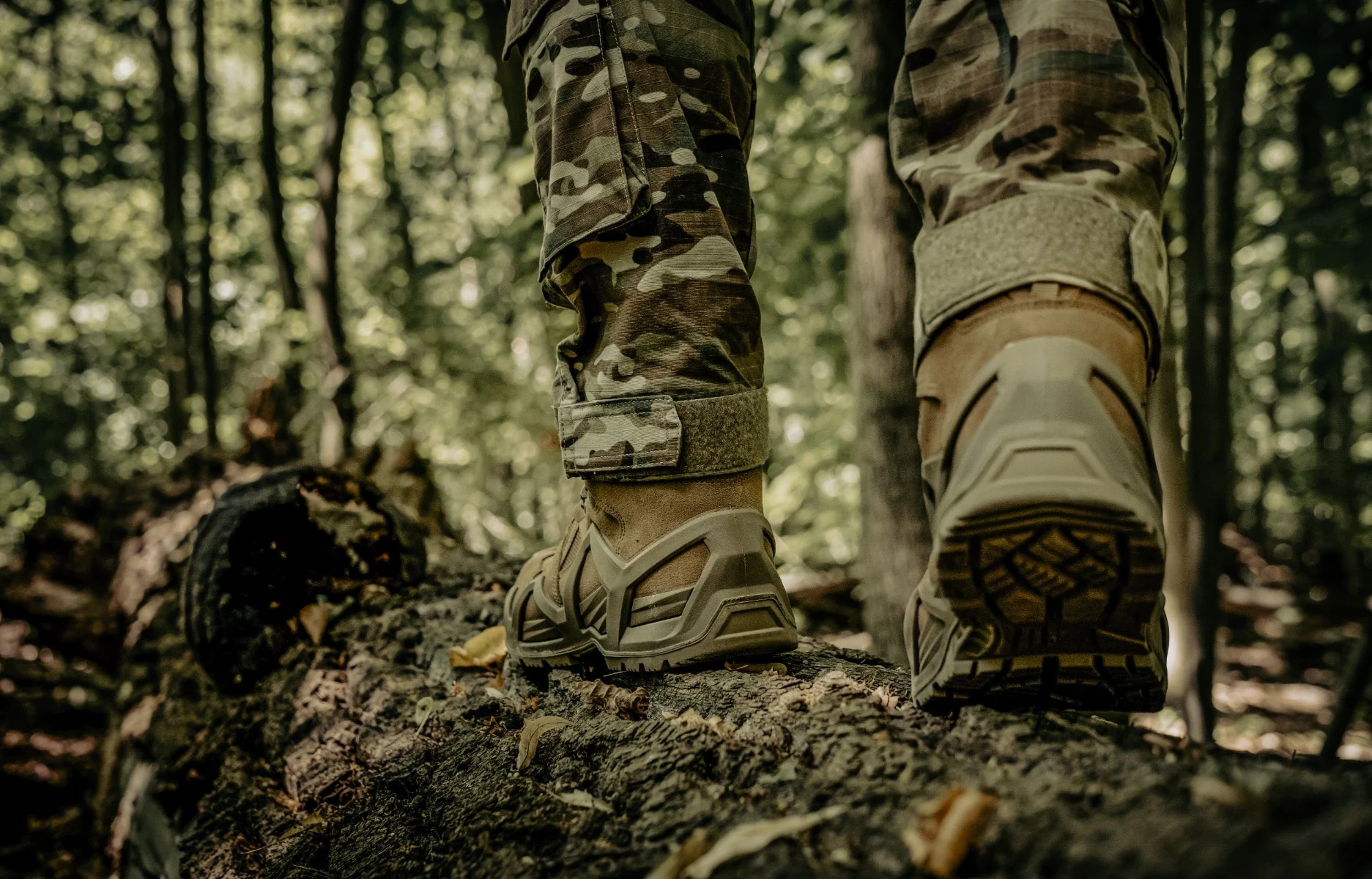
Waterproof Hiking Boots with Membrane
A membrane is a technological layer placed inside the boots to provide protection against moisture while maintaining adequate air permeability.
Hiking boots with a membrane are a very good choice for the colder months, when rain and snowfall are more common. They will also work well in the summer, but if you follow the forecast closely and choose warm, dry days for your treks, you can also look out for footwear without a membrane.
How to Clean and Waterproof Hiking Boots?
Cleaning and waterproofing hiking boots helps extend their life. When hiking boots are cleaned, contaminants that could deteriorate their properties are removed - for example, mud on boots with a membrane. The cleaning process itself is also preparing the boots for waterproofing.
Waterproofing hiking boots protects them from water, dirt and drying out (excessive drying is a common problem with leather shoes). The cleaned boots should be treated with agents suitable for the material, which create a protective coating on their surface.
Want to find out more and waterproof your footwear? Check out our advice How to waterproof your shoes and why should you do it?
How to Choose Hiking Boots?
Choosing good hiking boots is not the easiest thing to do. To make this decision easier, first consider issues such as where you will be using the boots, for what kind of activity, what conditions are most common at the expedition site. This will help you narrow down your search area. If you still have doubts, contact us! Our experts will give you expert advice and help you choose the best pair of hiking boots.