Česká republika
  Deutschland
  Österreich
  United Kingdom
  Suomi
Suomi  France
  Magyarország
  Italia
  Polska
  România
  Україна
  Europe
What is a multitool and what is it used for?
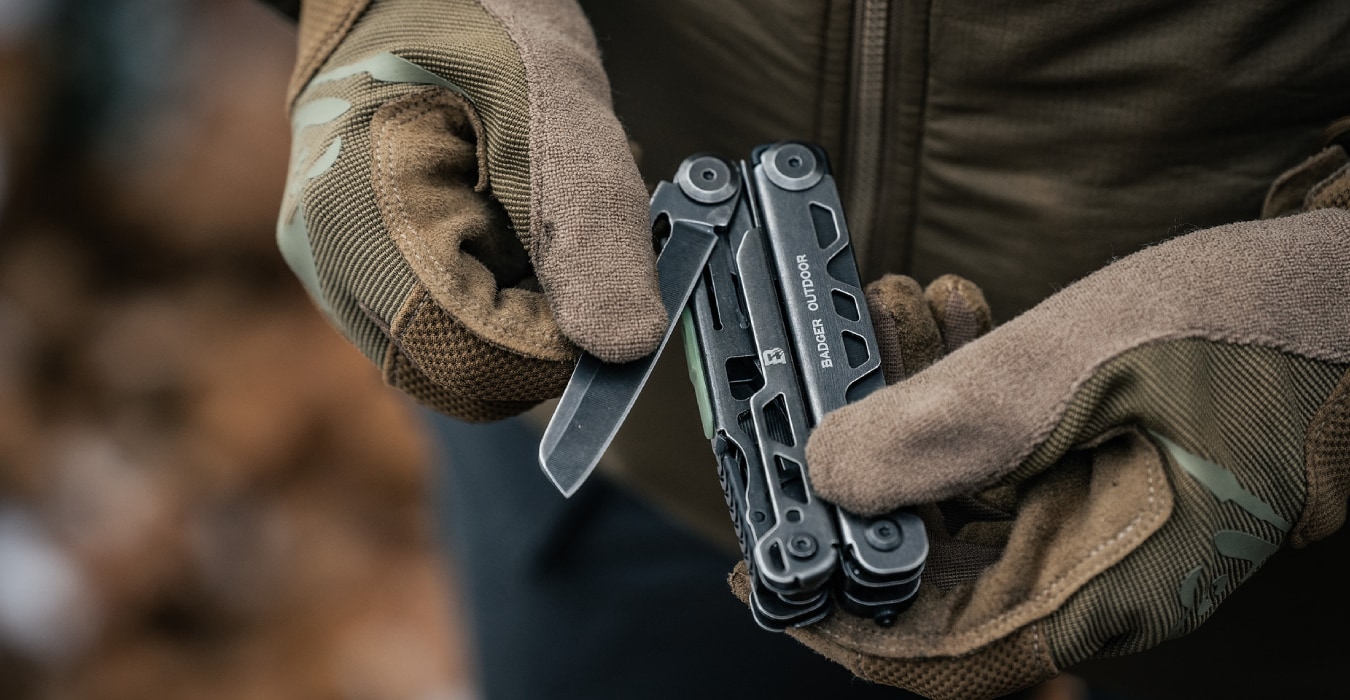
A multitool is a compact, multi-function hand tool that combines pliers, a knife, screwdrivers, a saw, and other practical accessories in a single design. Rather than carrying a full toolbox, you carry one pocket-sized device that handles a wide range of tasks — from field repairs and camping chores to everyday DIY and emergency situations.
In this guide, we explain what a multitool is, how it is built, which types are available on the market, what UK knife-carry rules you should be aware of, and what to look for when choosing the right model — whether you need a lightweight EDC multitool for everyday carry, a rugged tool for expeditions, or specialist kit for military and rescue use.
Quick Summary (TL;DR)
- Multitool – a compact multi-function hand tool combining pliers, a knife, screwdrivers, and other practical functions in one unit.
- History – the modern multitool was pioneered by Tim Leatherman in the 1970s, though folding multi-purpose tools date back to Roman times.
- Applications – equipment repairs, campcraft, DIY, rescue operations, military and tactical fieldwork.
- Types – pocket multitools, tactical models, EDC card tools, and specialist designs (e.g. for firearms maintenance or cycling).
- UK law – in England, Scotland and Wales you may carry a folding blade under 3 inches (7.62 cm) in public without a valid reason; a blade of any length requires a legitimate purpose (work, camping, etc.).
- Choosing – consider the functions you actually need, build quality, weight, locking mechanism, and how you plan to carry it.
- At MILITARY – browse multitools from Leatherman, Victorinox, Gerber, SOG, ROXON, Badger Outdoor, Mamba Tac, and Ganzo.
What Is a Multitool? — Definition and Brief History
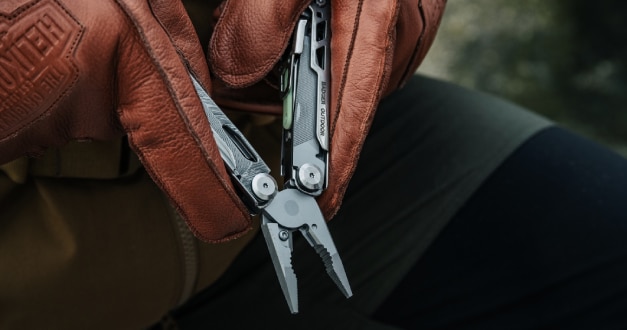
A multitool is a multifunctional hand tool that combines several — sometimes dozens — of useful functions in one compact body. The central element is typically a pair of pliers, around which additional tools such as knives, screwdrivers, files, saws, scissors, and openers fold into the handles. Thanks to its small size and robust stainless steel construction, a multitool can replace a basic toolkit in situations where portability and quick access matter: fieldwork, camping, outdoor adventures, or everyday repairs.
The history of the modern multitool began in the 1970s with Tim Leatherman. Travelling across Europe, he found that an ordinary penknife wasn't enough for roadside repairs, and spent several years designing a tool that combined pliers with the most commonly needed accessories. His first commercial model launched a whole product category that is now standard kit for soldiers, paramedics, technicians, and outdoor enthusiasts worldwide. It is worth noting that folding multi-purpose implements are actually far older — archaeologists have found Roman silver folding tools combining a spoon, fork, and spatula dating to the reign of Emperor Trajan.
What Does a Multitool Consist Of? — Construction and Key Components
Most multitools share a similar construction regardless of brand or price point. The core is a pair of pliers; all other tools fold into the handles on either side. The most common components found in a multitool are:
- Needle-nose or universal pliers – for gripping, holding, and bending
- Wire cutters – for cutting cord, wire, and light cable
- Multitool knife blade – for cutting rope, tape, packaging, or food outdoors
- Saw – useful for camp tasks and preparing firewood
- File – for smoothing metal, wood, or plastic edges
- Flat and Phillips screwdrivers – essential for minor equipment repairs
- Can and bottle openers – handy on camping and outdoor trips
- Scissors – for precise work and cutting light materials
Advanced multitools — particularly those aimed at outdoor, survival, and rescue users — may also include:
- Bit adapter for interchangeable screwdriver bits – greatly expands fastening capability
- Awl and reamer – for repairing webbing, leather, and gear
- Ferrocerium fire starter – for lighting fires in the field without matches
- Emergency whistle – for signalling position in rescue situations
- Seatbelt cutter – a key feature of rescue-oriented multitools
- Window breaker / glass punch – for emergency vehicle exit or aiding casualties
- Carabiner or belt clip – for attaching the tool to a pack, belt, or vest
- Miniature hammer – for camp tasks such as driving tent pegs
- Diamond sharpener – for touching up a blade edge in the field
More functions mean greater versatility, but also more weight and bulk. Before buying, consider the primary use case: everyday carry (EDC), outdoor activities, workshop tasks, or tactical and professional applications.
Types of Multitool — Pocket, EDC Card, and Tactical
Multitools fall into several main categories that differ in size, construction, and intended use. Choosing the right type is the first step towards finding a tool that will genuinely earn its place in your daily kit.
A pocket multitool is the smallest and lightest category. Often resembling an expanded penknife, it is designed for comfortable everyday carry. It typically offers a knife, screwdriver, file, opener, scissors, and tweezers. It handles simple tasks well — cutting string, tightening a small screw, opening packaging, or making a quick roadside fix — but its compact size means it is not suited to heavier work.
A tactical multitool is a more robust design built for demanding conditions. It is widely used by uniformed services, rescue teams, soldiers, and anyone who needs reliable gear in the field. These models typically feature a sturdier frame, tools that can be deployed one-handed, and additional functions suited to emergency situations — such as seatbelt cutters, window breakers, interchangeable blades, and bit adapters. Some tactical multitools are specifically configured for firearms maintenance, including screwdrivers for mounting screws, barrel wrenches, pin punches, and bore-cleaning scrapers. Tactical multitools are generally heavier and larger than simple EDC models but offer significantly greater durability under intensive use.
An EDC multitool card is a flat, credit-card-sized tool made of stamped stainless steel that slips into a wallet, organiser, or pocket. Its functions are simple — opener, screwdriver, ruler, scraper, and sometimes a small blade. It will not replace a full pliers-based multitool, but it makes a practical, barely noticeable addition to everyday carry when you want something to hand without the bulk.
Finally, specialist multitools are designed for specific applications. A rescue multitool typically includes a window breaker, seatbelt cutter, a sharp emergency blade, and an oxygen cylinder wrench. A cycling multitool combines hex keys, screwdrivers, a spoke wrench, a chain breaker, and tyre levers into one compact unit.
What Is a Multitool Used For? — Field, Professional, and Rescue Applications
A multitool comes into its own wherever a quick repair or technical task is needed without access to a full toolkit. By combining a multitool knife, saw, pliers, screwdrivers, and more in a single unit, it lets you solve many problems encountered outdoors, in the field, or in daily life.
Most common uses of a multitool:
- Cutting rope, paracord, or wire
- Tightening loose screws on equipment or furniture
- Repairing a tent, camping chair, or rucksack
- Preparing wood for a fire with a multitool saw
- Opening tinned and packaged food
- Trimming cable ties and tape
- Bending or gripping components with the pliers
- Minor repairs to a bicycle, vehicle, or outdoor gear
In the uniformed services, multitools are used for ongoing equipment maintenance, kit adjustments, and technical tasks in the field. Rescue models fitted with a seatbelt cutter and window breaker can be critical in life-saving operations. This ability to perform a wide range of tasks with a single compact tool has made the multitool one of the most enduring pieces of kit for outdoor, survival, and EDC enthusiasts.
The key practical takeaway: a non-locking pocket multitool with a blade under 3 inches is generally fine for everyday carry in the UK. If your multitool features a locking blade or a longer knife, carry it only when you have a clear, legitimate purpose — on a camping trip, at a worksite, or for a specific outdoor activity. When in doubt, leave it in your pack rather than your pocket.
What to Look for When Choosing a Multitool
The right multitool depends entirely on how you intend to use it. A compact EDC model suits city life; a heavy-duty pliers tool suits fieldwork; a specialist design suits cycling or rescue. Before purchasing, consider the following:
1. Functions and Tools
Choose a multitool with the functions you will actually use. For everyday tasks, a knife, screwdriver, bottle opener, scissors, and file cover most situations. For heavier work, look for pliers, a saw, wire cutters, and a bit adapter for interchangeable screwdriver bits.
2. Build Quality
A good multitool should feel solid, well-fitted, and free of play in the hinges. Look for durable stainless steel construction, stable pivots, and tools that resist bending under load. Reputable brands such as Leatherman and Victorinox carry long warranties precisely because their build quality backs it up.
3. Size and Weight
A small pocket multitool is easy to carry daily but may have limited capability. A larger, heavier model offers more functions but is less convenient in a trouser pocket. Think about whether the tool will live in a jacket pocket, a belt pouch, or the lid pocket of a rucksack — and size accordingly.
4. Tool Locking
A locking blade and locking tools are important for safety and comfort during harder tasks, as they prevent accidental folding under pressure. Bear in mind that a locking blade may carry additional legal considerations for everyday public carry in the UK (see the section above).
5. Carry Method
Check whether the multitool comes with a clip, nylon or leather pouch, keyring attachment, or MOLLE-compatible case. A good carry solution makes the tool far more likely to be with you when you need it.
In short, the best multitool is the one that matches your real-world needs. A compact, well-built model with the right functions will serve you better than the largest, most feature-packed option on the shelf — especially if the latter stays at home because it's too heavy to carry every day.
Multitool Brands Available at MILITARY
At MILITARY you will find multitools from trusted, well-regarded brands. The range spans compact EDC multitools for everyday carry, solid pliers-based models for work and DIY, and more advanced tools for outdoor, survival, and tactical applications.