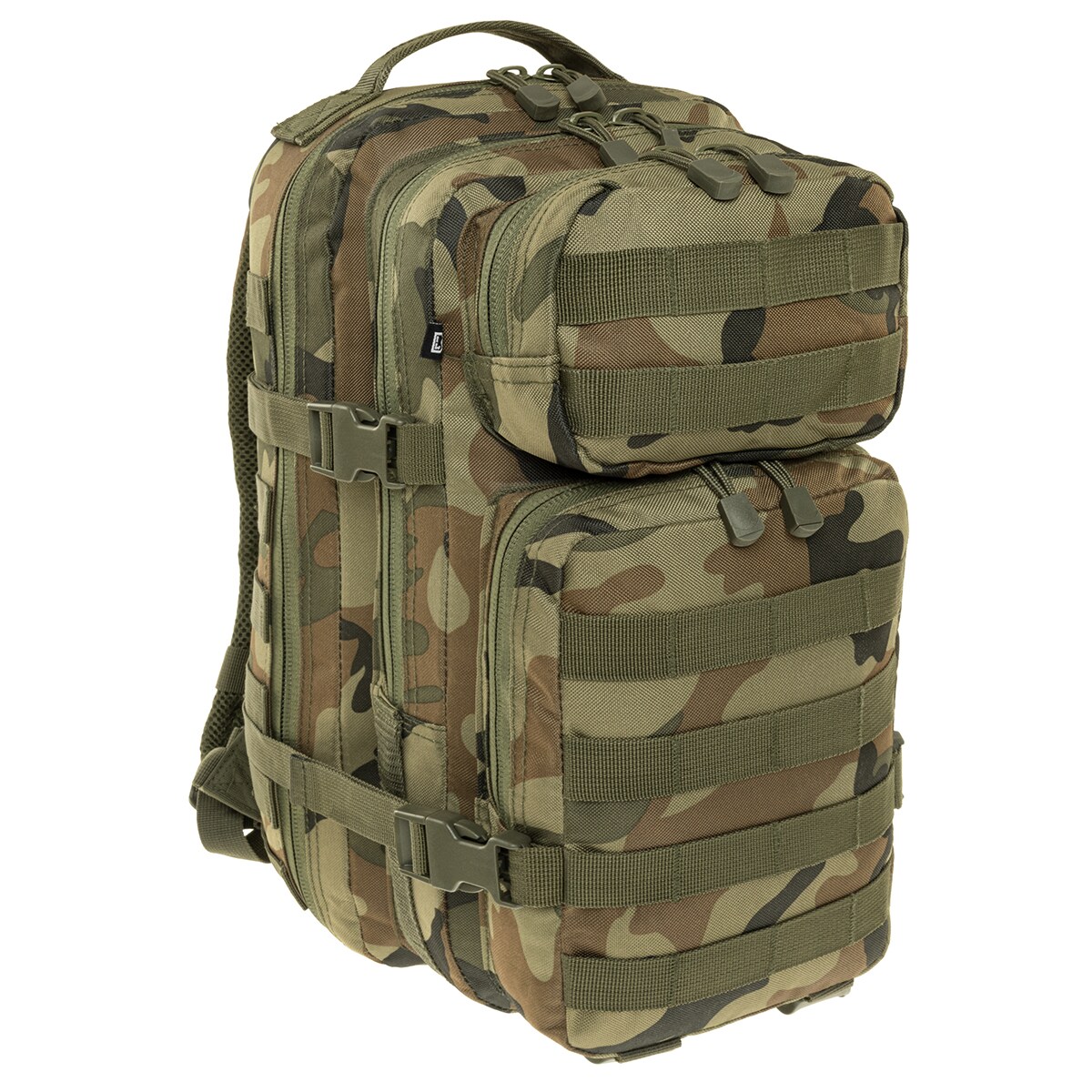
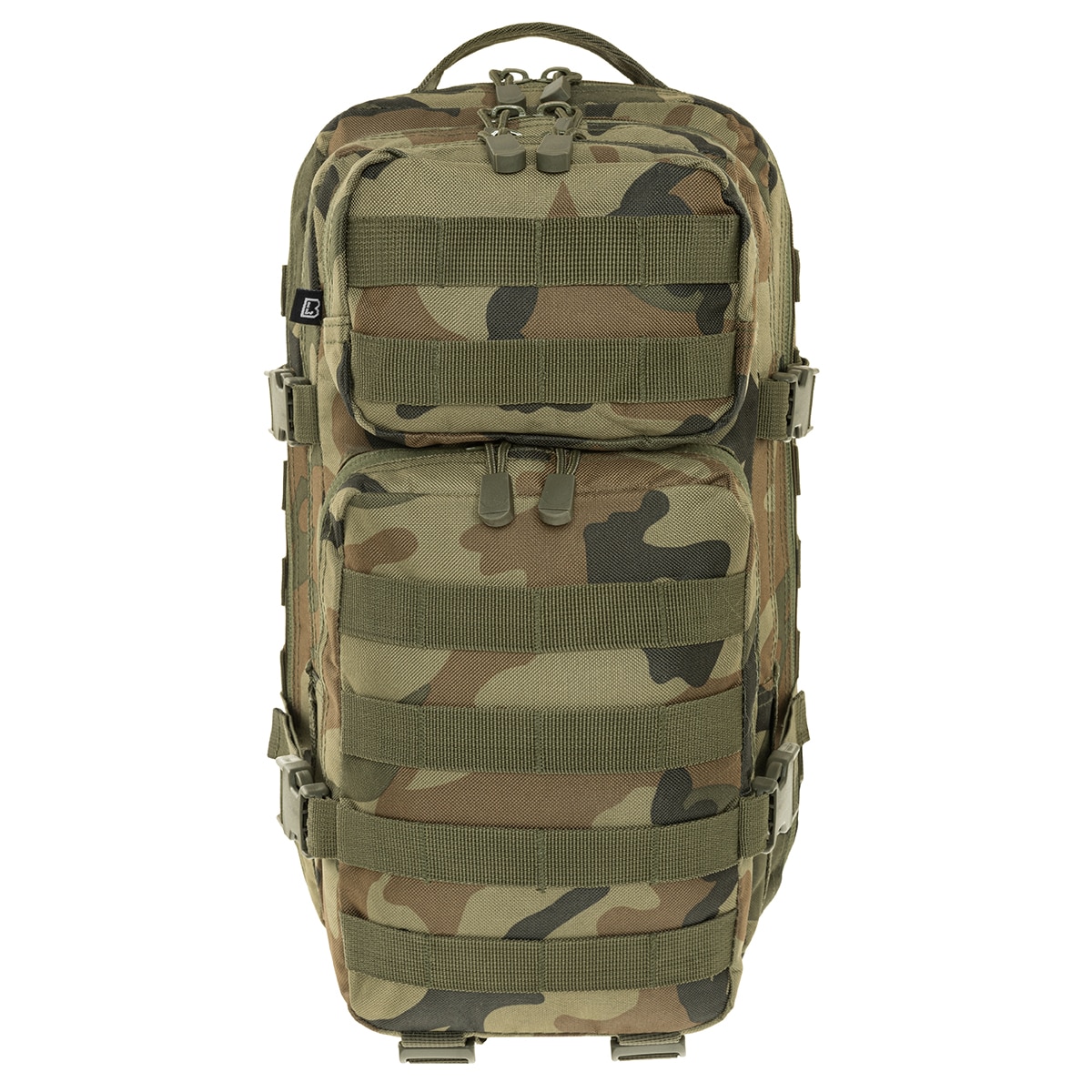
Tactical backpack with a 25-liter capacity – suitable for everyday use as well as single-day outdoor trips. Made from durable material resistant to tears and abrasion.
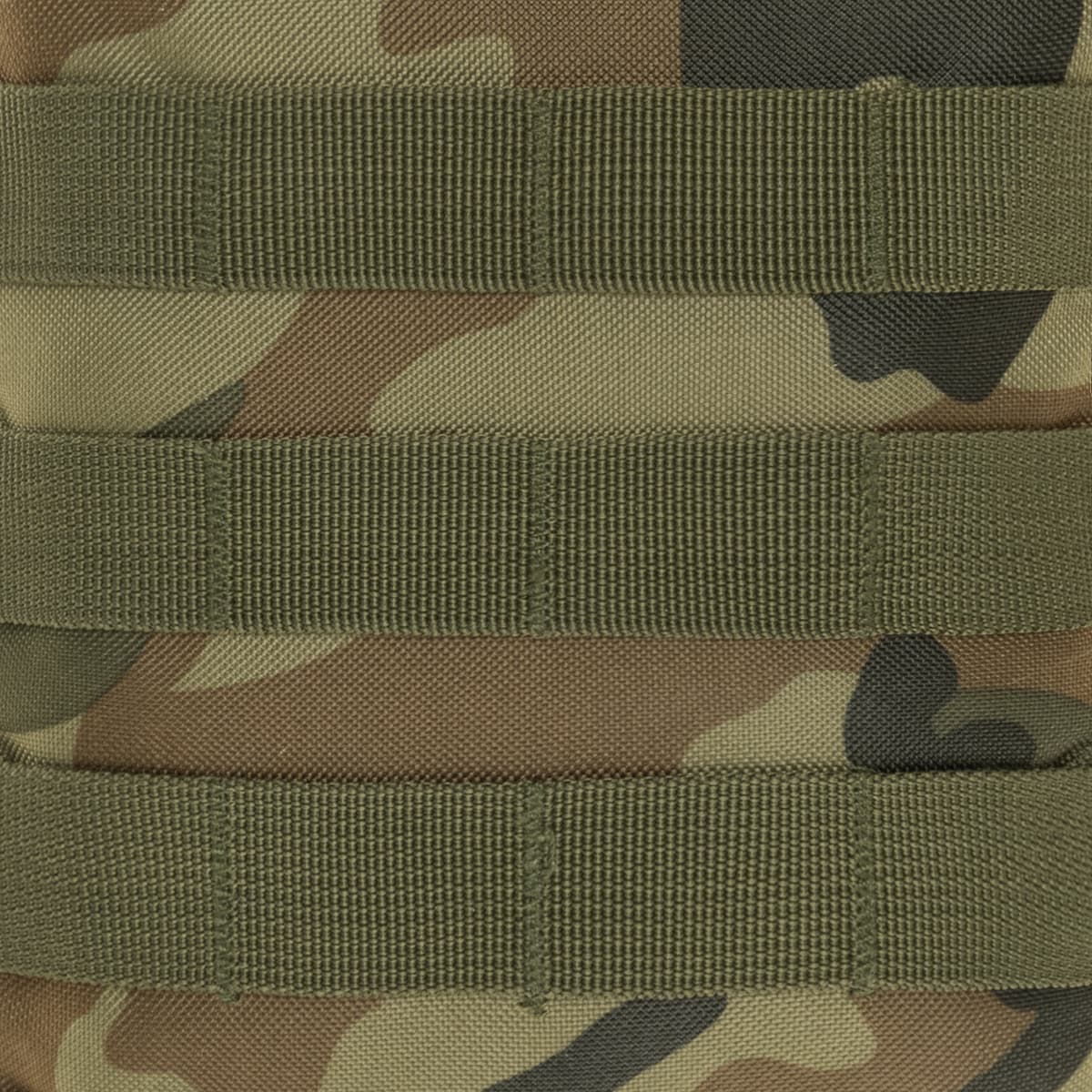
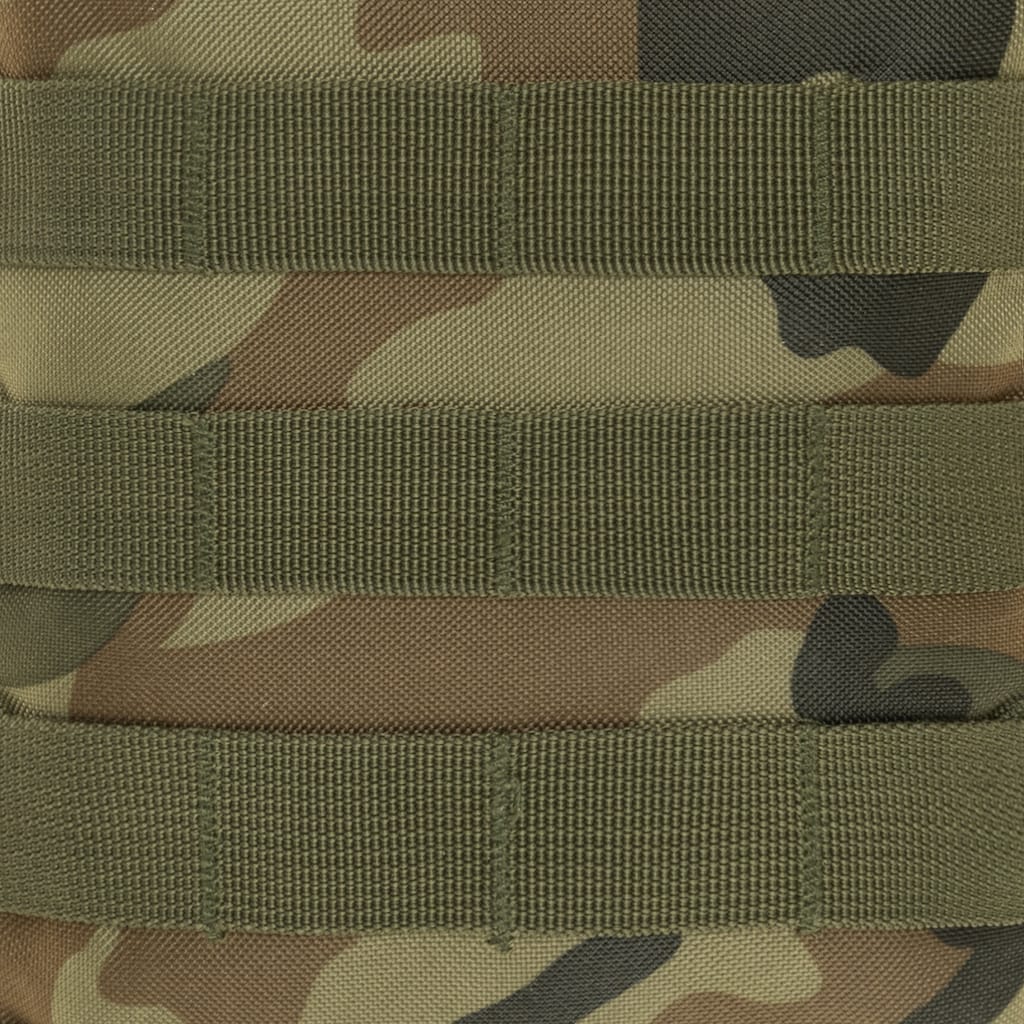
The front and sides of the backpack are covered with PALS webbing, allowing for the attachment of additional MOLLE-compatible gear. Compression straps also serve as mounting points for gear such as a sleeping mat or sleeping bag.
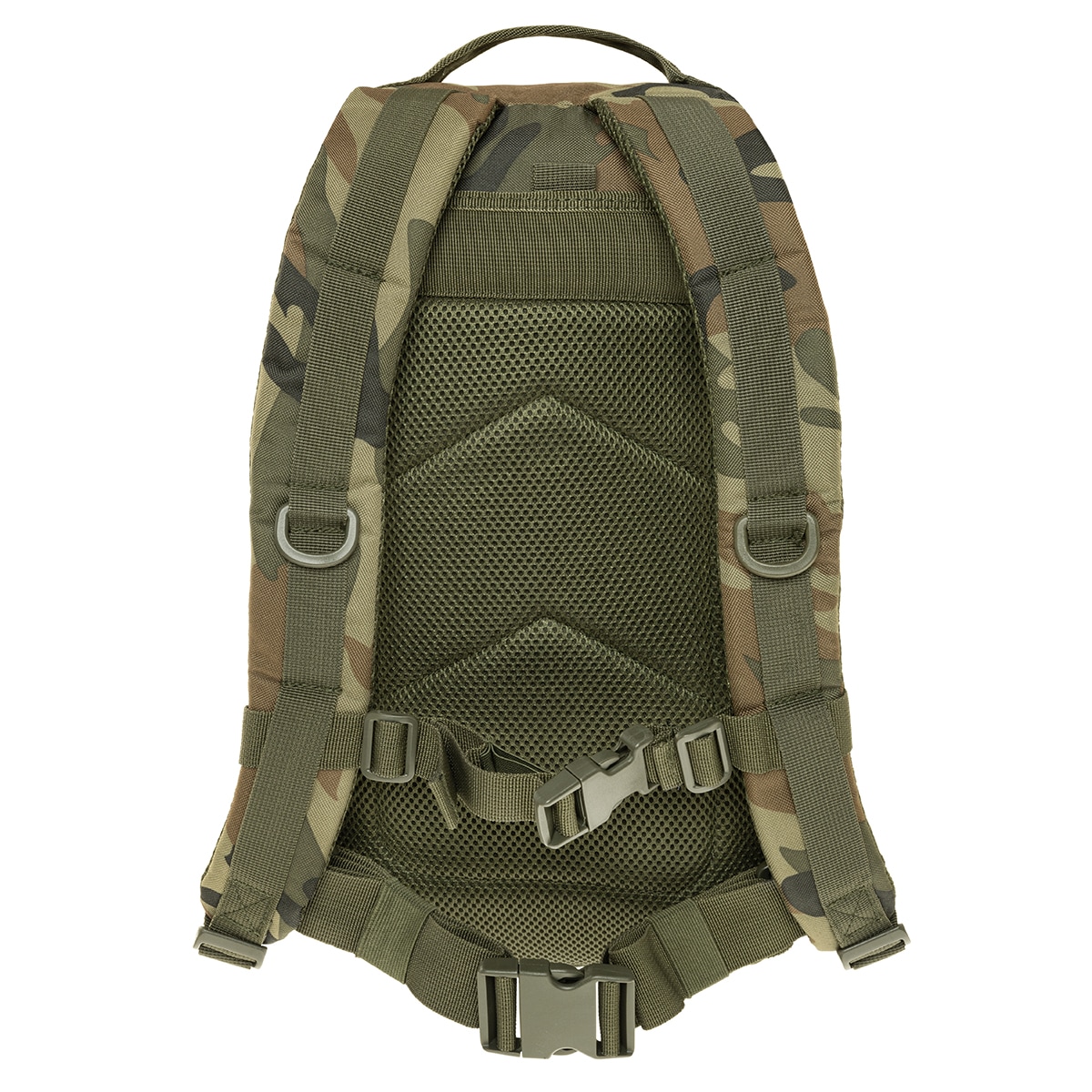
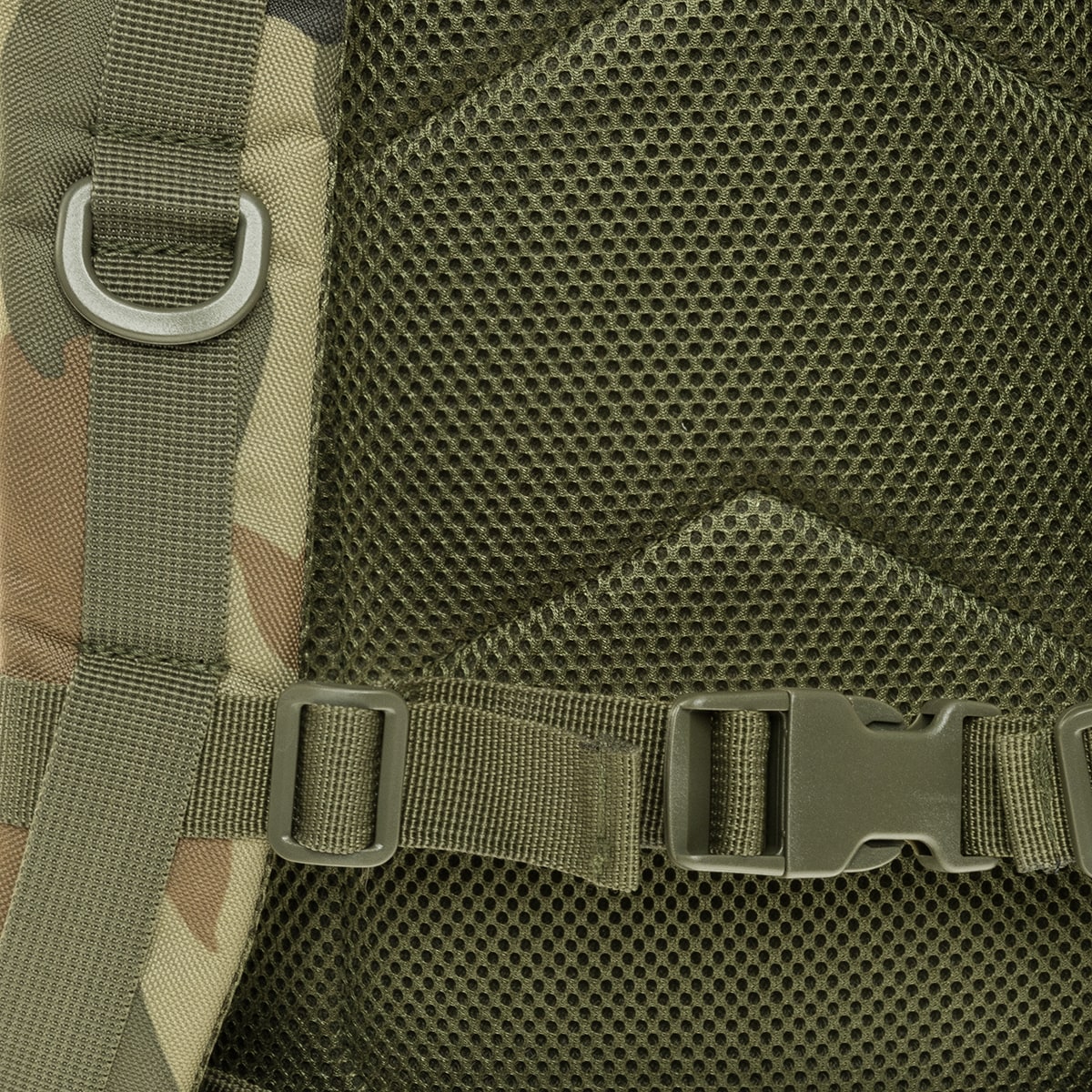
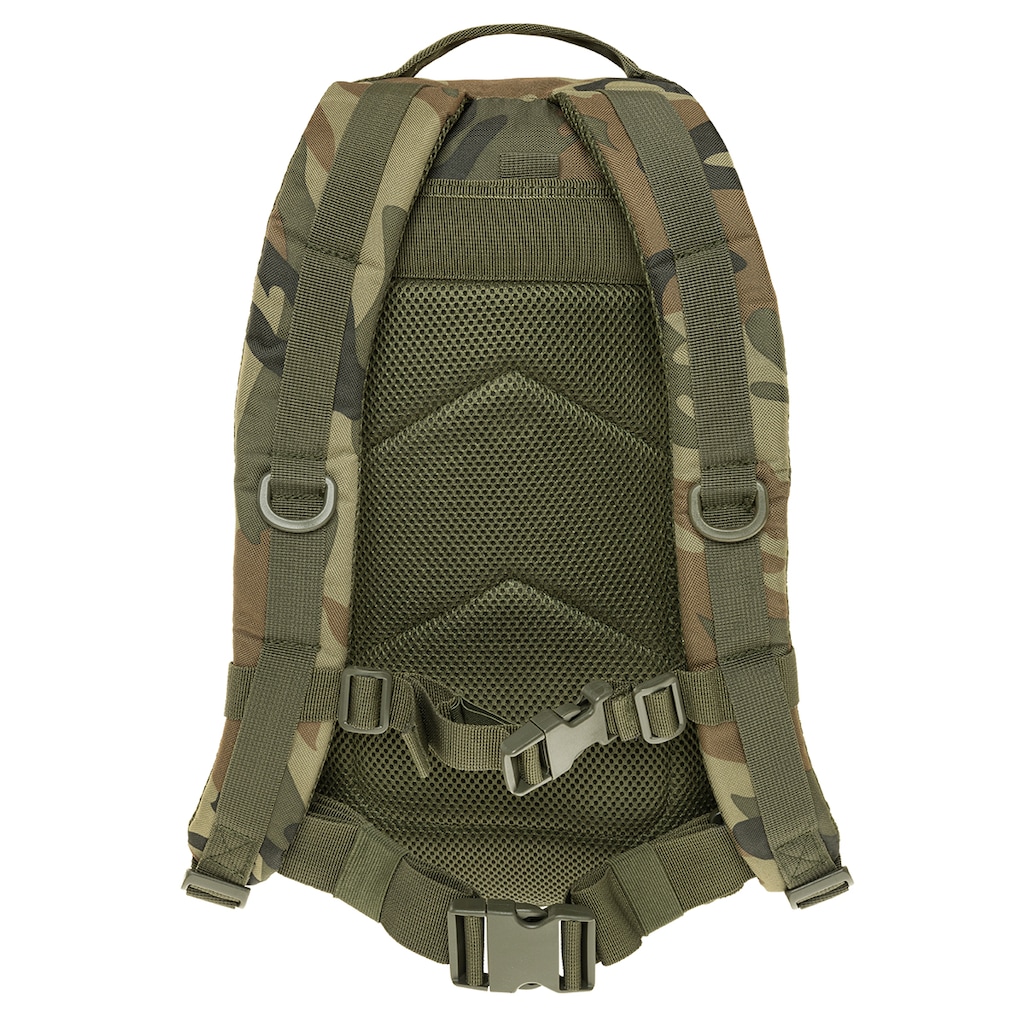
The adjustable hip belt, together with anatomically shaped shoulder straps and back panel, equipped with foam padding and breathable Mesh, provides high wearing comfort.
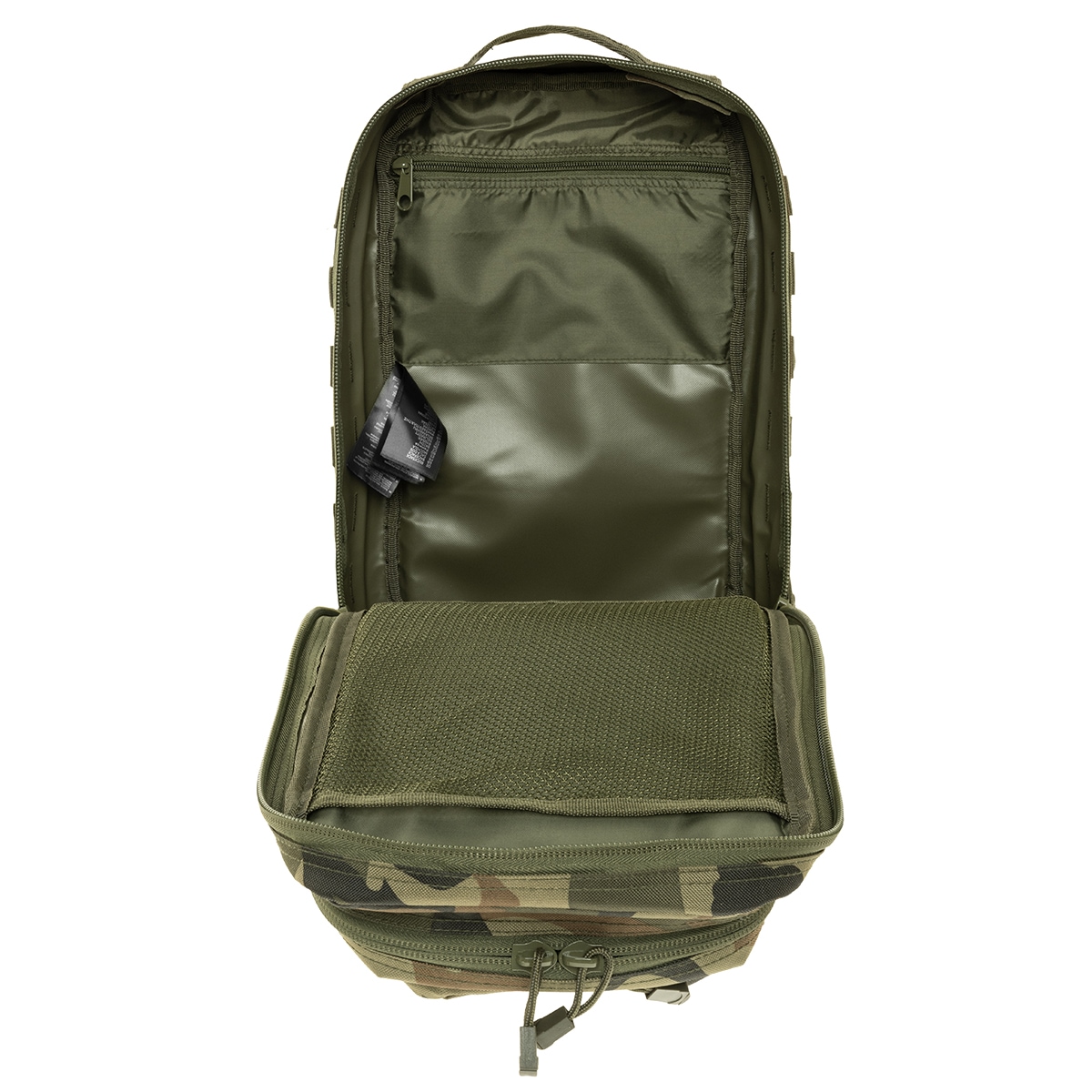
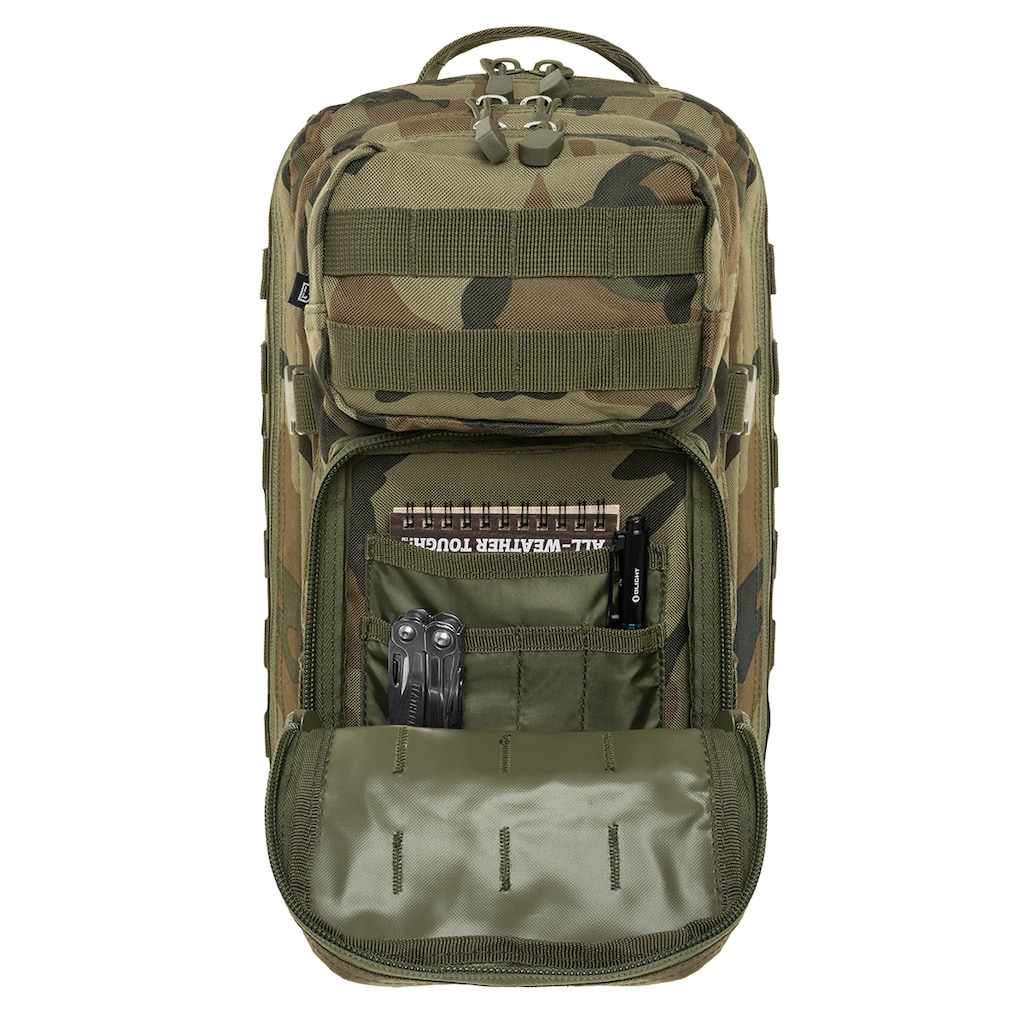
The backpack includes a hydration system pocket and 4 spacious compartments:
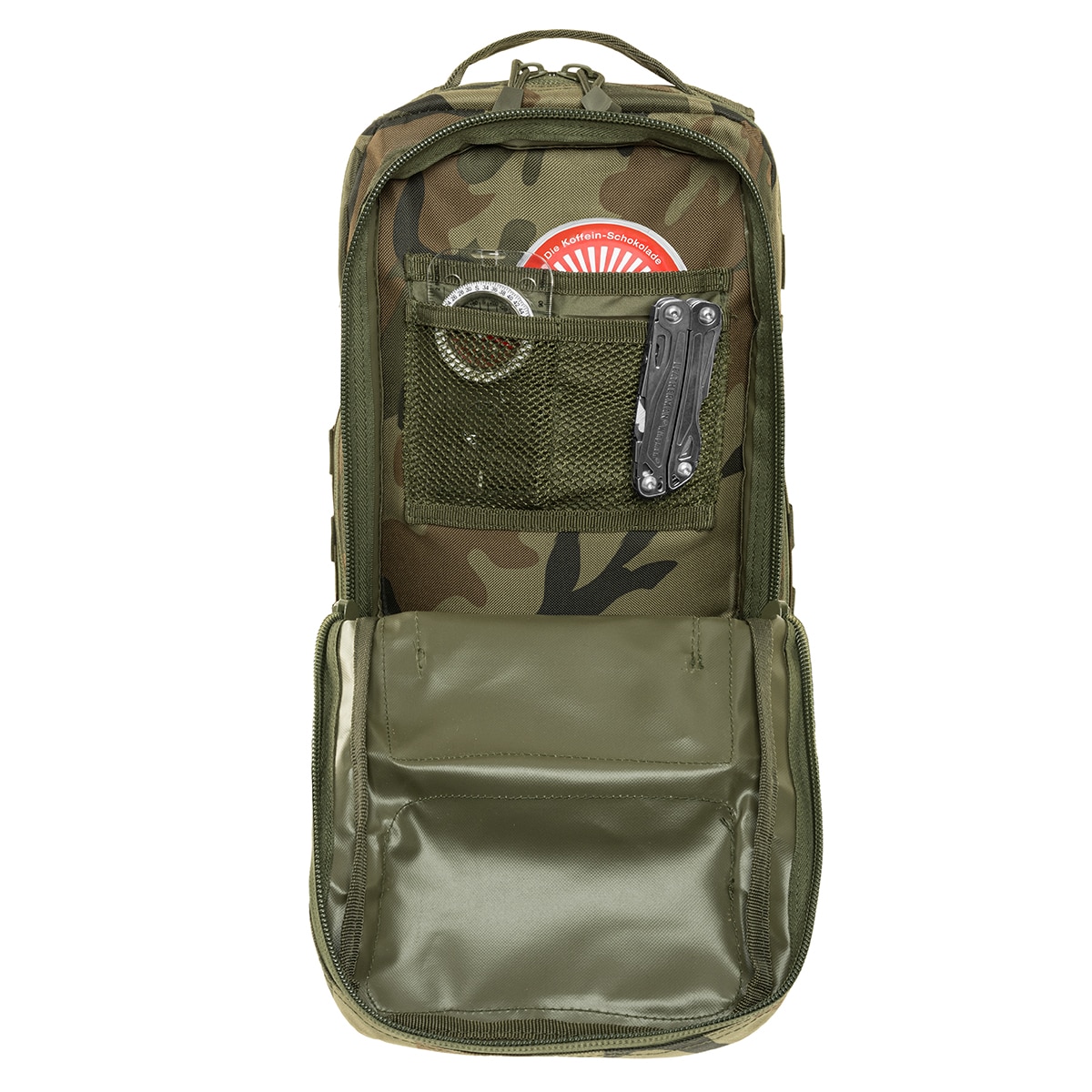
- main compartment with an additional zippered pocket and mesh divider for maps or notebooks
- middle compartment with multiple pockets of varying sizes
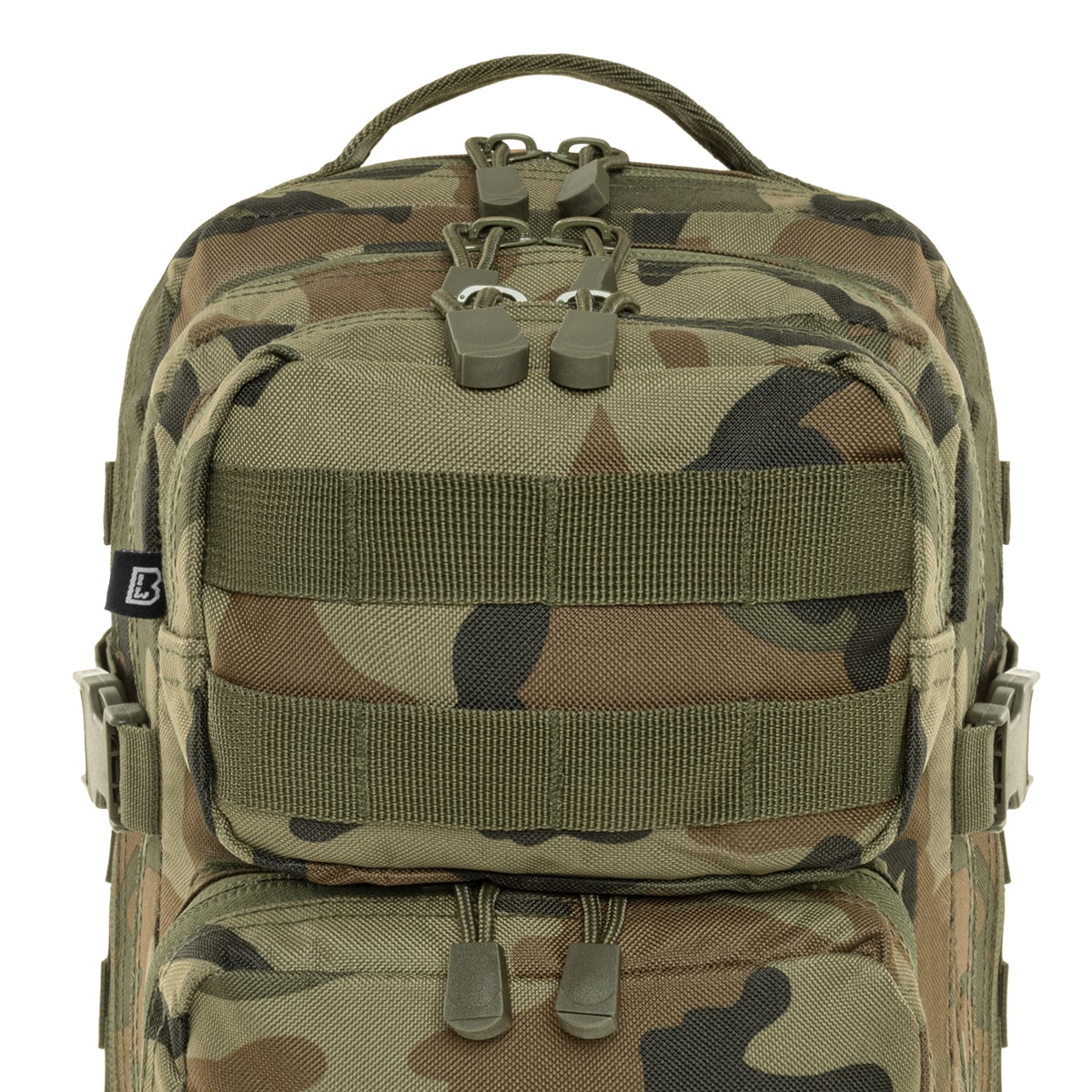
- small upper external compartment – ideal for handy accessories like a phone or GPS
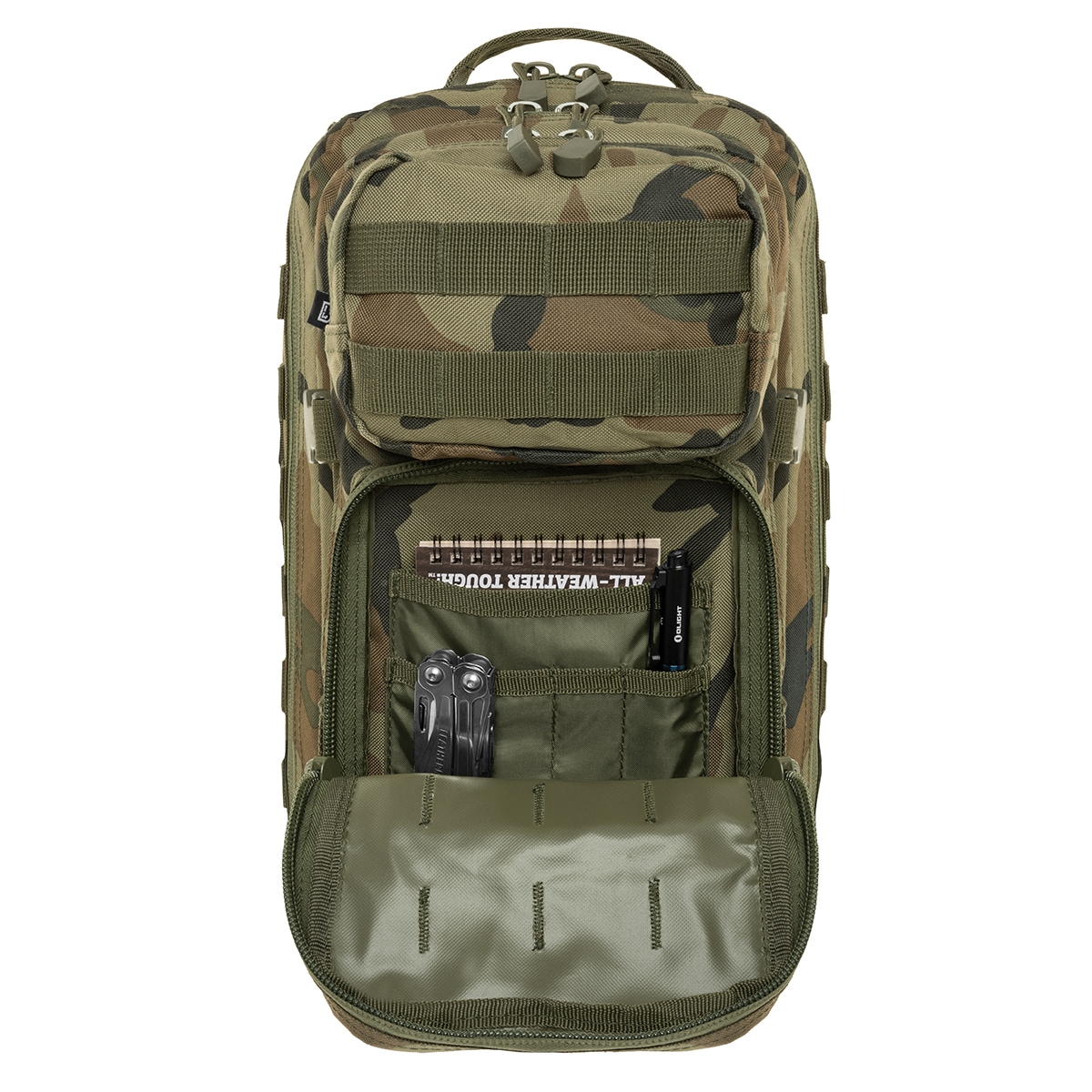
- large lower external compartment with built-in organizer
Camouflage: Woodland
Capacity: 25 liters
Material: 100% polyester
Dimensions: 45 x 24 x 26 cm
Manufacturer: Brandit, Germany
Woodland, also known as U.S. Woodland or M81, is a classic camouflage pattern introduced to the US Armed Forces in the early 1980s, based on the earlier ERDL camouflage. For over two decades, it remained the standard pattern used by the US military until the end of the first decade of the 21st century. It is characterized by large, irregular patches in shades of green, brown, beige, and black, which provide good camouflage and deformation properties, especially in wooded areas. Thanks to its effectiveness and global recognition, it has spawned numerous variations that have found their way into over 60 uniform formations around the world. The pattern has also had a huge impact on popular culture, shifting from military applications to everyday fashion.
Woodland, also known as U.S. Woodland or M81, is a classic camouflage pattern introduced to the US Armed Forces in the early 1980s, based on the earlier ERDL camouflage. For over two decades, it remained the standard pattern used by the US military until the end of the first decade of the 21st century. It is characterized by large, irregular patches in shades of green, brown, beige, and black, which provide good camouflage and deformation properties, especially in wooded areas. Thanks to its effectiveness and global recognition, it has spawned numerous variations that have found their way into over 60 uniform formations around the world. The pattern has also had a huge impact on popular culture, shifting from military applications to everyday fashion.
 Česká republika
  Deutschland
  Österreich
  United Kingdom
  Suomi
Suomi  France
  Magyarország
  Italia
  Polska
  România
  Україна
  Europe