 Česká republika
  Deutschland
  Austria
  United Kingdom
  Suomi
Suomi  France
  Magyarország
  Italia
  Polska
  România
  Україна
  Europe
The rule of threes – the most important survival rules you need to know
The majority of people lose their lives in crisis situations not due to a lack of resources but because of wrong priorities. The rule of threes eliminates this threat as it provides a clear hierarchy of survival actions based on how long a person can survive without certain elements. These rules are used by the military and experienced survivalists around the world. Read this article and find out what the rule of threes is to increase your chances of surviving in critical moments.
What Are the "Rule of Threes" and How Do They Help in Survival Situations?
The rule of threes is a key survival rule that helps to establish priorities in crisis situations. It specifies approximate time intervals for how long a person can survive without the most important resources. Thanks to it, it is easier to make the right decisions under pressure by first focusing on immediate threats and only later on less urgent needs.
Although these values are approximate and depend on both individual predispositions (such as age, fitness, or acclimatisation) and environmental conditions, they well reflect the actual sensitivity of the human body to successive, increasing threats.
In its most comprehensive version, the rule of threes states that a person can survive:
- 3 seconds – if they make a wrong decision in a stressful situation
- 3 minutes – without oxygen or in extremely cold water
- 3 hours – without shelter, fire, or appropriate clothing in difficult conditions
- 3 days – without water
- 3 weeks – without food
- 3 months – without contact with people
It is worth remembering the above points by heart and adapting to them in a threat situation, as it can contribute to saving a life. In the further part of the article, we will discuss in detail the four main elements of the rule of threes.
Three Minutes Without Oxygen
The human body needs a constant supply of oxygen to the most important organs. When oxygen ceases to reach the tissues, hypoxia develops very quickly. Loss of consciousness usually occurs after 30–180 seconds, nerve cells begin to die already after a minute, and serious damage appears after approximately three minutes. The situation can be further worsened by immersion in icy water, causing rapid breaths, hyperventilation, and muscle paralysis, often leading to drowning within minutes.
It is very important to remain calm and avoid panic in situations where access to oxygen is limited, as stress causes the body to consume oxygen faster, significantly shortening survival time. Survival time without oxygen also depends on age, health condition, and level of physical activity.


Three Hours Without Shelter
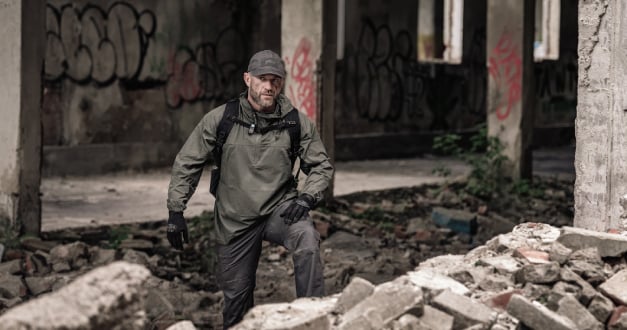
This is the second most important rule of threes, even before ensuring water and food. Why? Extreme weather conditions kill faster than thirst. At temperatures below 10°C, with rain and wind, the body begins to lose heat faster than it can produce it. Wet clothing ceases to insulate, wind penetrates every layer of clothing, and hypothermia can develop within three hours. First, shivering occurs, then disorientation, eventually loss of consciousness.
On the opposite end, we have heat. When the ambient temperature exceeds 35°C, the brain begins to malfunction, hallucinations can occur, and the body enters a critical state. Without immediate cooling and hydration, multiorgan failure threatens, occurring in a time similar to the development of hypothermia.
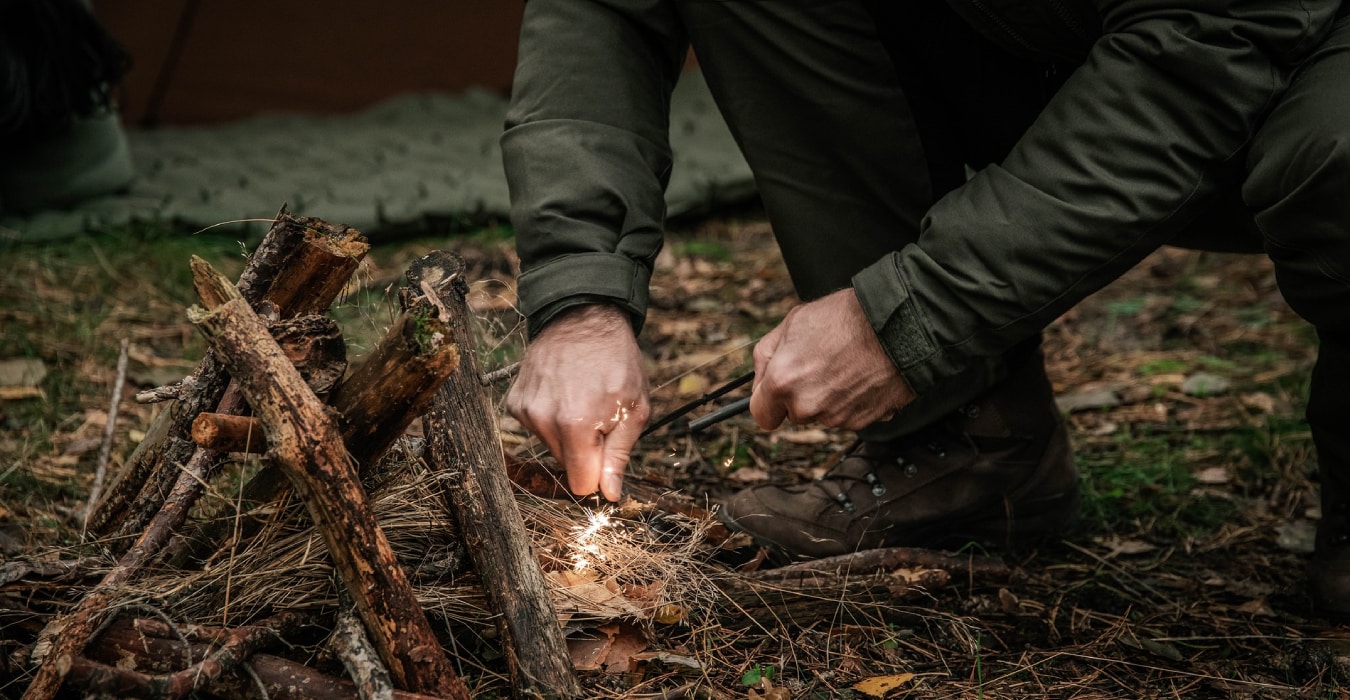
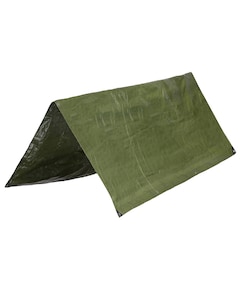
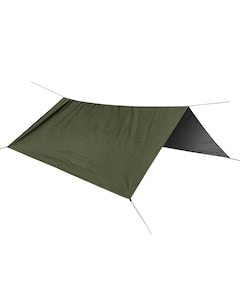
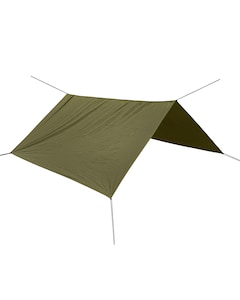
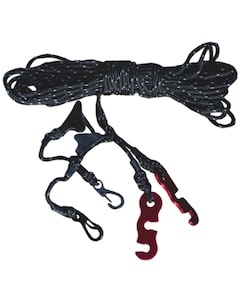
In a critical situation outside the city, the priority is the immediate creation of shelter. Do not wait until the first symptoms of hypothermia or heatstroke appear. In the cold, even a simple roof made of branches, leaves, moss, or bark can save a life. If you have additional clothing, a tarp, or thermal foil with you – use them as protection from the wind and rain, then build a fire. The process will be much faster if you have EDC items like a fire starter or a lighter.
In the heat, protect yourself from the sun and high temperatures. Seek shade under trees, in terrain depressions, or near rocks. If natural shelter is lacking, build a makeshift roof from branches, leaves, or stretch a sheet between trees, every square metre of shade counts.


Three Days Without Water
Symptoms of dehydration usually appear within the first 24 hours without water intake. Initially, there are mild signs such as dry mouth, intense thirst, and decreased urine output, which can intensify with the progress of dehydration to dizziness, weakness, and headaches. Further lack of hydration leads to organ failure, depending on the body, which can result in death. Survival limits depend on conditions. There have been cases where a person survived without water for up to 18 days — the Guinness World Records case is Andreas Mihavecz, an Austrian who was accidentally left in a holding cell in 1979 and survived by licking condensation from the walls, which shows just how much of an extreme outlier this is rather than something to plan around.
When looking for water in the wilderness, use common sense because not all water is safe to drink, even if it looks clean. Absolutely avoid stagnant water such as puddles or ponds, water near dead animals or faeces, and water with an intense smell, unusual colour, or covered with foam and algae. A lack of vegetation around the reservoir often indicates contamination or excessive salinity of the area.
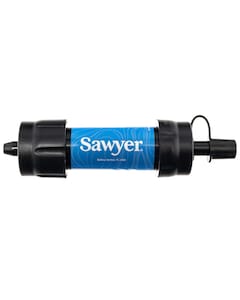
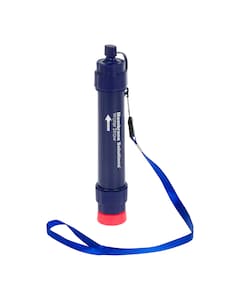
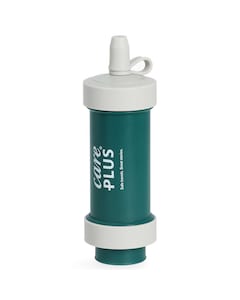
It is always good to have an EDC bag with a travel filter, but if you do not have one, choose clean, flowing water as it is less prone to accumulating contamination than still water. However, this still does not guarantee safety, and drinking such water may cause stomach issues, so it is best to purify it, at least by boiling.



Three Weeks Without Food
Without food, a person can survive even several weeks (on average up to 3 weeks, with retained hydration, but sometimes even longer). First, the body uses glycogen, then fat, and only later proteins from muscles. Prolonged hunger leads to weakness, decreased immunity, and muscle wasting, but thanks to metabolic adaptations, one can survive much longer than without water. In most short-term crisis situations, obtaining food is not the most important thing. It is better to focus on conserving energy, building shelter, acquiring water, and sending rescue signals.
What if rescue does not come for a week, a month, or even longer? It is definitely worth mastering food acquisition skills in advance. Learn to recognise edible plants in your region and get to know safe mushroom species. Also, find out which insects are suitable for consumption. Master basic fishing techniques without modern equipment, using a spear, stone trap, or primitive net made of branches.
Of course, it is best to have previously prepared, for example, freeze-dried food for such situations, so that in times of danger, you can simply take it from home. However, it is known that this is not always possible.


Survival-Related Product Offerings at MILITARY
When it comes to crisis situations you might find yourself in, it is always worth considering and practising different scenarios in advance. You can do this independently, learning from manuals or enrolling in survival courses.
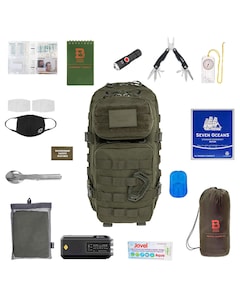
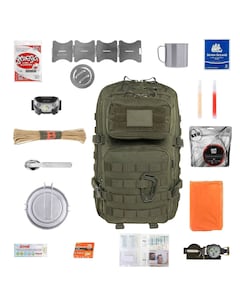
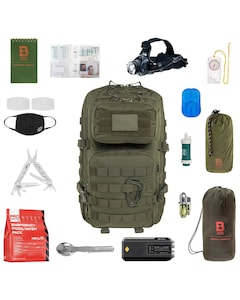
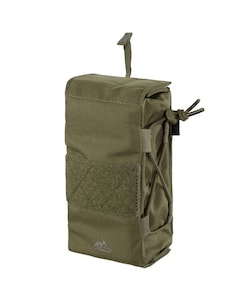
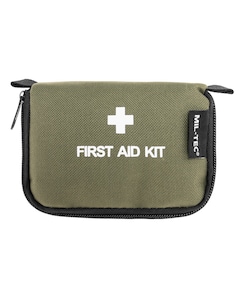
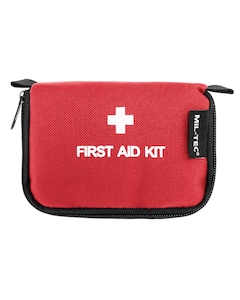
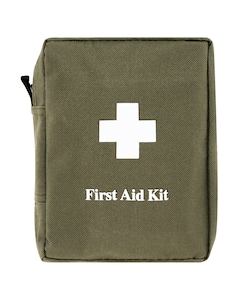
It is also worth knowing that having a bug-out bag at home is always a good idea. It should contain items that will allow you to survive in different crisis situations. Ready-made survival backpacks can be purchased from the MILITARY store – they usually include a first aid kit, travel filters, food, drinking water, and various tools that allow survival in an emergency. You can also visit our site, where you can find outdoor survival products.