 Česká republika
  Deutschland
  United Kingdom
  France
  Magyarország
  Polska
  România
  Україна
  Europe


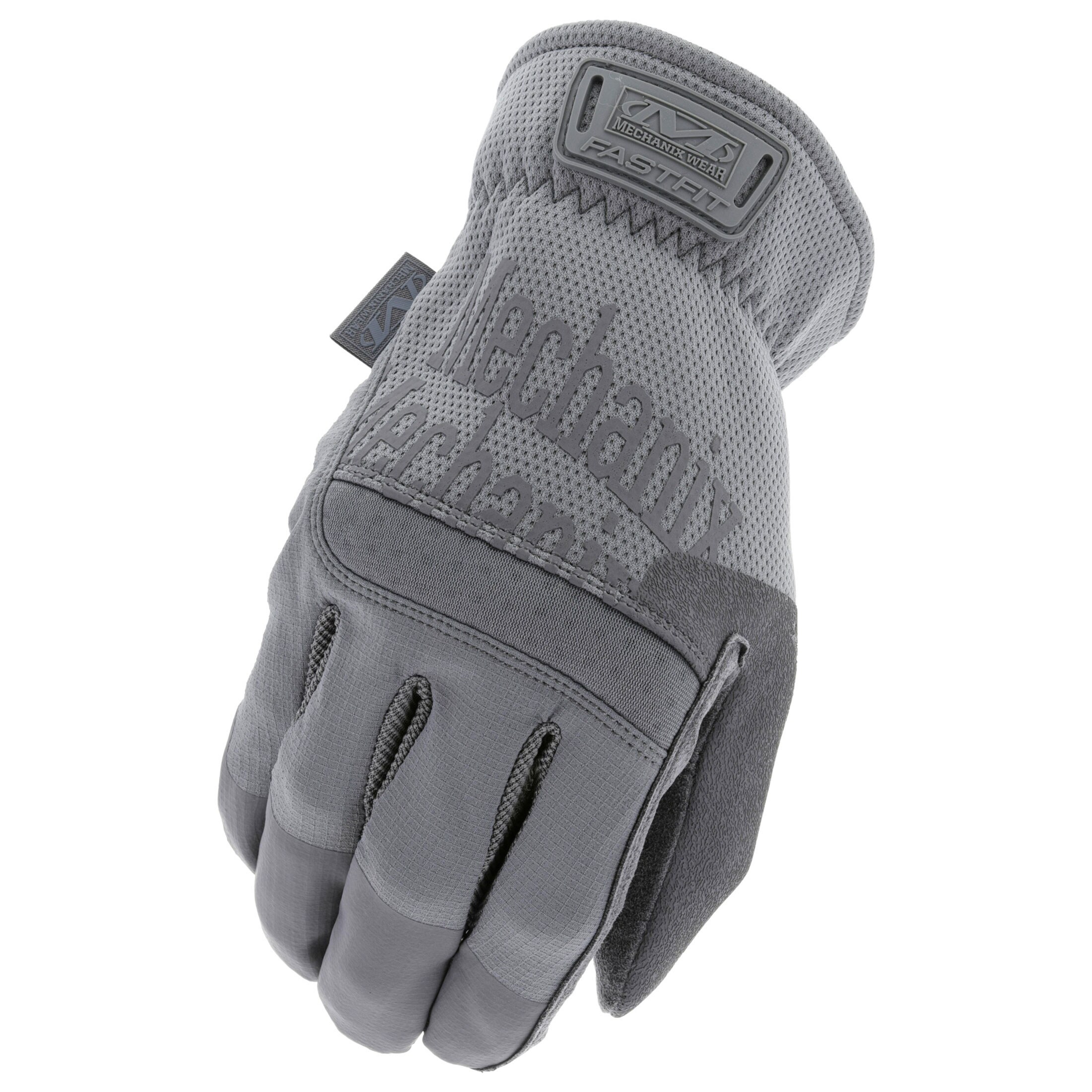




In the tactical gloves category, the FastFit by Mechanix is already a classic choice. They don’t have unnecessary reinforcements or protectors – they are simply solid gloves. On the inside, you find synthetic leather, and on the outside, a breathable material, making them perfect for summer. They fit well, so compared to wider models like the M-Pact or Original, I recommend considering a larger size for those with bigger hands.
Mechanix Wear FastFit Core 3 Tactical Gloves - Wolf Grey

Shipping: Immediately
£16.95
- description
- technical data
- features and technologies
- Reviews
- Goes well with

£16.95

Mechanix Wear FastFit Core 3 Tactical Gloves - Wolf Grey
Versatile durable gloves designed to provide basic mechanical protection. Their optimal fit guarantees full grip control, allowing you to perform precise tasks without restrictions. Ideal for uniformed services, military personnel, shooting sports enthusiasts, as well as for survival expeditions, car repair work, DIY, and airsoft games.

Breathable CoolPlus fabric, Rip-Stop weave, touchscreen compatibility, Lock Ring technology
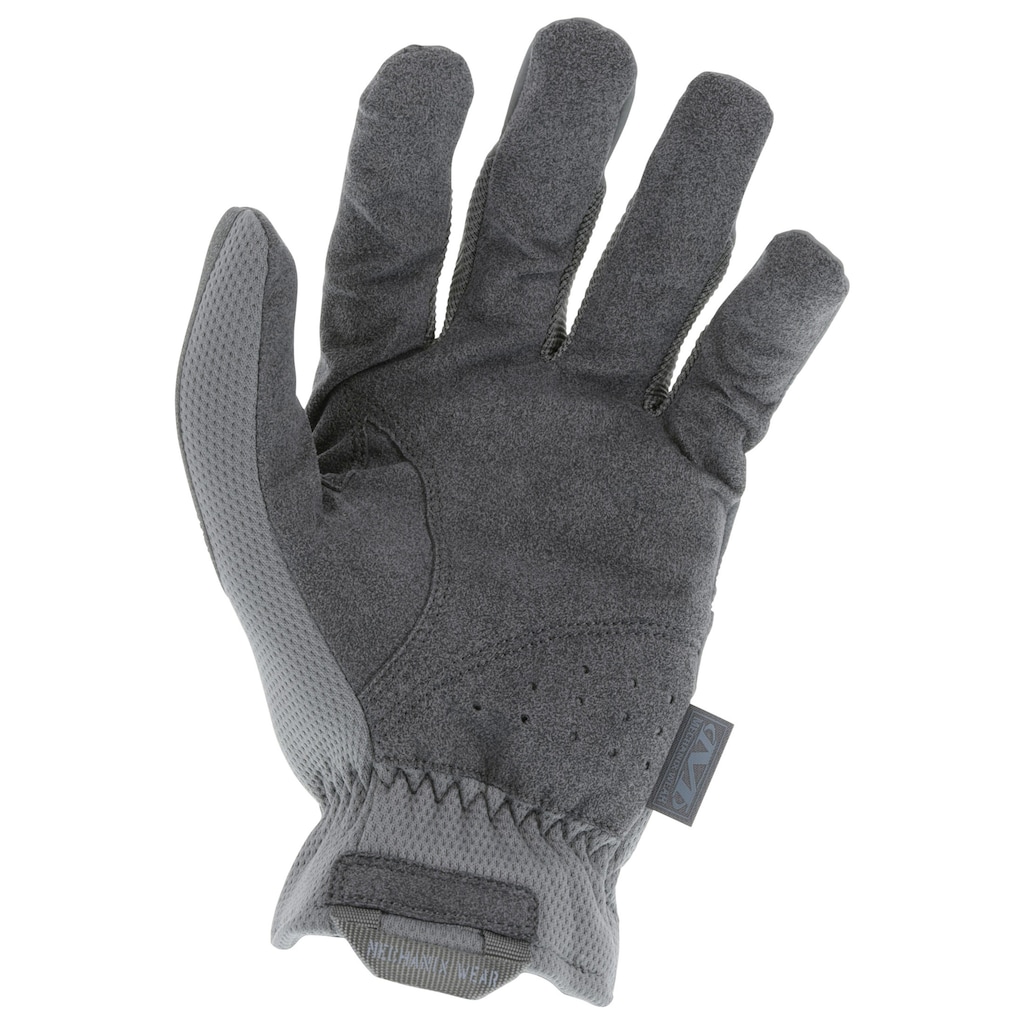
The outer layer of the gloves is made of lightweight, breathable CoolPlus fabric, which effectively wicks moisture away and promotes air circulation. The outer side of the fingers is made of Rip-Stop fabric, which increases tear resistance and reduces fraying even in case of local damage. The gripping area is made of durable 0.6 mm thick synthetic leather, which ensures a secure grip, precise feel and allows the use of touchscreens without removing the gloves. The foldable Lock Ring panel reinforces the critical area around the thumb, improving the glove's durability while reducing the number of seams that are particularly prone to damage.

stretch-elastic cuff, 2-piece palm design
The wide stretch-elastic cuff increases protection and keeps the gloves securely on the wrist. A large opening makes the gloves easy to put on. The two-piece palm construction minimises material wrinkling for a better fit. The lower part of the palm is equipped with ventilated padding that improves air circulation and protects against injuries.

norm: ANSI/ISEA 105-3XX and EN388-2121X
The gloves meet the American protective standard ANSI/ISEA 105 at level 3XX in terms of resistance to cutting, abrasion, and puncture, which means:
- 3: abrasion resistance (on a scale from 1 to 6)
- X: cut resistance (on a scale from A1 to A9)
- X: puncture resistance (on a scale from 0 to 5)
The gloves meet the protective standard EN388 at level 2121X in terms of resistance to mechanical risks, which means:
- 2: abrasion resistance (on a scale of 0–4)
- 1: cut resistance (on a scale of 0–5)
- 2: tear resistance (on a scale of 0–4)
- 1: puncture resistance (on a scale of 0–4)
- X: cut resistance – TDM test (ISO 13997) (on a scale of A–F)
In the ANSI/ISEA 105 standard, abrasion resistance is rated on a scale from 1 to 6 and refers to the number of cycles a material can withstand before wearing out. Cut resistance is classified on a scale from A1 to A9 (from the lowest to the highest level of protection). Puncture resistance is rated on a scale from 0 to 5 and indicates the force required to puncture the glove surface with a sharp probe (does not apply to needle puncture).
The scales specified in the EN388 standard define the level of glove protection: a value of 0 indicates no protection, while the highest values (4, 5) indicate the maximum level of resistance.
When testing using the TDM method (ISO 13997), letter markings are used, where A indicates the lowest level of protection and F the highest.
The X marking indicates that the given parameter was not tested or is not applicable.

Main features
- durable synthetic leather
- breathable and lightweight CoolPlus fabric
- touchscreen compatible
- reinforced thumb area with Lock Ring technology
- Rip-Stop material on the outside of the fingers
- ventilated lining in the lower palm area
- wide stretch-elastic cuff
- norm: ANSI/ISEA 105-3XX and EN388-2121X
MILITARY is the official distributor of Mechanix Wear.
Mechanix Wear is a renowned American manufacturer, known worldwide for its exceptional quality protective gloves. Since its founding in 1991, the brand has earned acclaim for its unmatched durability, precise fit and cutting-edge technologies that protect hands. The manufacturing process uses innovative materials such as Armortex® leather, flexible and breathable TrekDry® and shock-absorbing D3O® reinforcements, which together provide superior comfort, grip confidence and resistance to damage. Mechanix gloves provide reliable protection for soldiers, uniformed services, shooters and outdoor enthusiasts.
| Color/camouflage | Gray hue |
|---|---|
| Insulation | No |
| Touchscreen capable | Yes |
| Material type | Synthetic |
| Type/purpose | Protective |
| Main material | synthetic leather |
| Main color | Wolf Grey |
| Gender | Men's |
| Manufacturer code | FFTAB-88 |
| Brand | Mechanix Wear |
| EAN |

Rip-Stop
Rip-Stop weave protects the fabric from abrasions and tears. It is characterized by additional threads woven in at regular intervals, forming a mesh-like pattern. It provides high strength to the fabric, increases resistance to mechanical damage, especially tears.

CoolPlus
CoolPlus is a technology used in gloves designed for high-temperature work. It involves the use of breathable mesh fabric that effectively wicks away heat and moisture. It provides better ventilation and increases wearing comfort during intense exertion. This solution works well in environments with higher temperatures and humidity.

Lock Ring
Lock Ring is a technology that reinforces the thumb area of the gloves through a welded panel without seams. It increases resistance to abrasion and mechanical damage. Elimination of seams reduces the risk of tearing in sensitive areas. As a result, the gloves are more durable and perform better in harsh working conditions.
Reviews with photos

Review summary
Automatically prepared based on reviews
Number of reviews: 33
-
-
Ł... Review confirmed by purchase

The gloves are very comfortable for everyday use – they are lightweight, fit the hand well, and are easy to put on thanks to the flexible cuff. The materials are a definite plus – they provide a secure grip and allow for precise work, even on a phone, without having to take them off. They work well both at the shooting range, outdoors, and when working in the garage. It should be remembered that they are intended more for light tasks – with heavier work they may wear out more quickly. However, for this price they are truly a worthwhile option, so they can definitely be recommended.
-
A... Review confirmed by purchase
Apart from getting the wrong colour and the updated version they're a solid choice for a basic glove. I don't mind the darker brown rather than coyote but it was a surprise. I've used FastFit as my "go too glove" for many years and they usually wear out in a season (bushcrafting/hiking/dog sports). Fair prize for a fair product.

-
A... Review confirmed by purchase
The gloves are comfortable and fit the hands quite well. As for durability, it all depends on our expectations. They are great for the shooting range, but I wouldn't choose them for duty as they are too thin and prone to punctures. However, the price is also very reasonable.
-
These gloves work great for bushcraft or similar activities, mainly thanks to the durable artificial leather on the inside. It's a pity, however, that real leather was not used. The outer material does not provide good ventilation, even on hot days, and it also does not protect against sparks or similar hazards. However, they fit the hands very well and are comfortable to wear.
-
M... Review confirmed by purchase
Very nice, lightweight glove. I use a total of five pairs in different colours and I am very satisfied with each one. They fit very well and are compatibly designed for touchscreens. Not really suitable for harsh winter, but otherwise a truly great glove with excellent value for money.
-
W... Review confirmed by purchase
Mechanix is synonymous with high quality – the company produces solid, durable gloves that perform excellently both at the shooting range and during tactical operations. The material is resistant and dries quickly. I definitely recommend them.
-
b... Review confirmed by purchase
These are my first gloves, but I am somewhat disappointed, they do not fit perfectly even though the size is correct. The lack of a Velcro strap is also disappointing, it feels like they could slip off. I don't think they will last very long.
-
k... Review confirmed by purchase
They look great and are very easy to put on and take off. However, I do not recommend them for heavy-duty tasks – I used them for about a month and a half working with furniture delivery, and unfortunately, holes already appeared in five fingers. I would rather recommend them for lighter duties.
-
K... Review confirmed by purchase
The shoes fit the foot perfectly, the colour matches my expectations, and when kept in the waist bag they work perfectly as part of the gear. At this promotional price, they are definitely worth buying. I highly recommend this model.
-
m... Review confirmed by purchase
Putting these shoes on and taking them off is extremely easy. The quality of the materials and workmanship immediately make an impression and inspire confidence. I already own other shoes from this brand, but this is the first time I've tried the FastFit model and from now on I will only buy this version, because they are exceptionally comfortable.
-
B... Review confirmed by purchase
In my opinion, these gloves work great for basic tasks at a forest campsite, provide some warmth in winter, and their material allows you to operate a touchscreen with any finger, not just the thumb and index finger – although typing in them is rather out of the question.
-
Z... Review confirmed by purchase
The Mechanix Wear FastFit in Olive Drab are comfortable, fairly thin gloves. They provide a good grip, but I wouldn't choose them for handling firearms.
-
R... Review confirmed by purchase
For the first time, I decided to buy Mechanix gloves (having previously read opinions about durability-to-price ratio), choosing them along with the Original model. Interestingly, although they are thinner than the Original, they turned out to be better at protecting my hands from the cold during a walk with the dog at -5°C.
-
F... Review confirmed by purchase
This is already the third pair of these types of gloves I have bought. They work great for moderate outdoor activities such as walking the dog or hiking in the forest. I definitely recommend them!
No reviews
