 Česká republika
  Deutschland
  United Kingdom
  France
  Magyarország
  Polska
  România
  Україна
  Europe
Which headlamp should you choose for the mountains? – tips
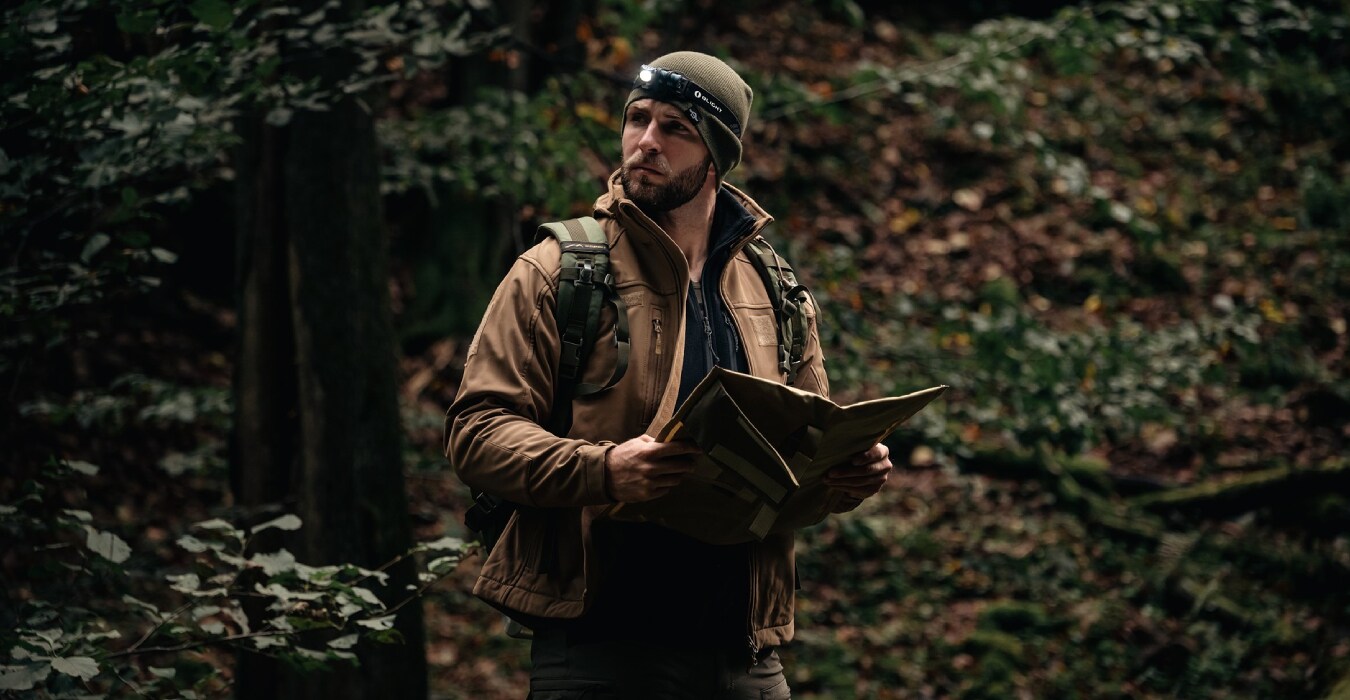
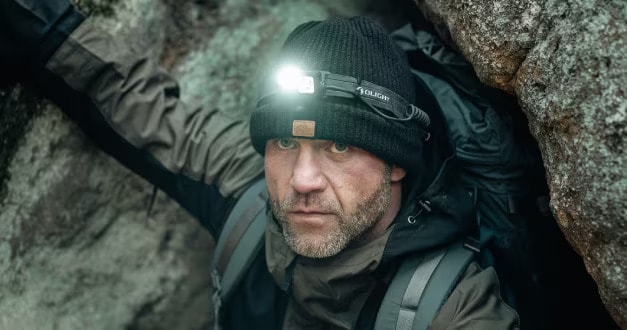
When heading to the mountains, always bring a good flashlight with you — it's the foundation of a safe trip. A headlamp is a good choice because it allows you to have free hands and the light always follows the movement of your head.
Don't know which headlamp to choose for the mountains? Read our article and find out how important factors such as power source, number of lumens, lighting modes, and additional features are when choosing a headlamp. Also, learn why it's definitely worth bringing a headlamp to the mountains!
Headlamp for mountains – what to consider before buying?
You will find a large selection of headlamps both online and in physical stores. The different models vary in appearance, features, purpose, and price. So how do you choose the best headlamp for the mountains? It's worth paying attention to a few key factors:
- type of power source,
- number of lumens,
- lighting modes,
- water resistance and durability,
- weight of the headlamp,
- additional features,
- reviews.
Below, we will describe each of these parameters in detail to help you choose the right headlamp for mountain hiking.
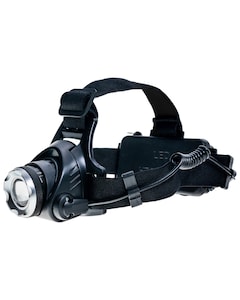
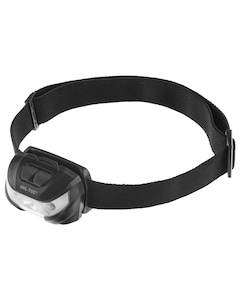
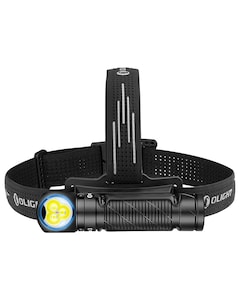
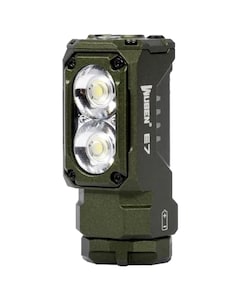
Type of power source - batteries or rechargeable?
This is a very important issue to consider first, as both disposable batteries and rechargeable batteries have their pros and cons. The advantage of headlamps powered by disposable batteries is that they are widely available and easy to borrow or buy from almost any store. However, keep in mind the higher operating costs associated with regularly buying new batteries. Additionally, alkaline batteries have a shorter lifespan than modern lithium-ion rechargeable batteries.
On the other hand, headlamps powered by lithium-ion rechargeable batteries offer longer working time on a single charge and lower operating costs in the long run. Thanks to the possibility of multiple recharging, they are more environmentally friendly. The downside might be the need for access to a power source to recharge, which can be challenging in the field, so it's always worth having a power bank with you.
There are also headlamps available that can be powered by both disposable batteries and rechargeable batteries. This gives you greater freedom of use – you can use rechargeable batteries for everyday trips and disposable batteries in emergencies.
Number of lumens
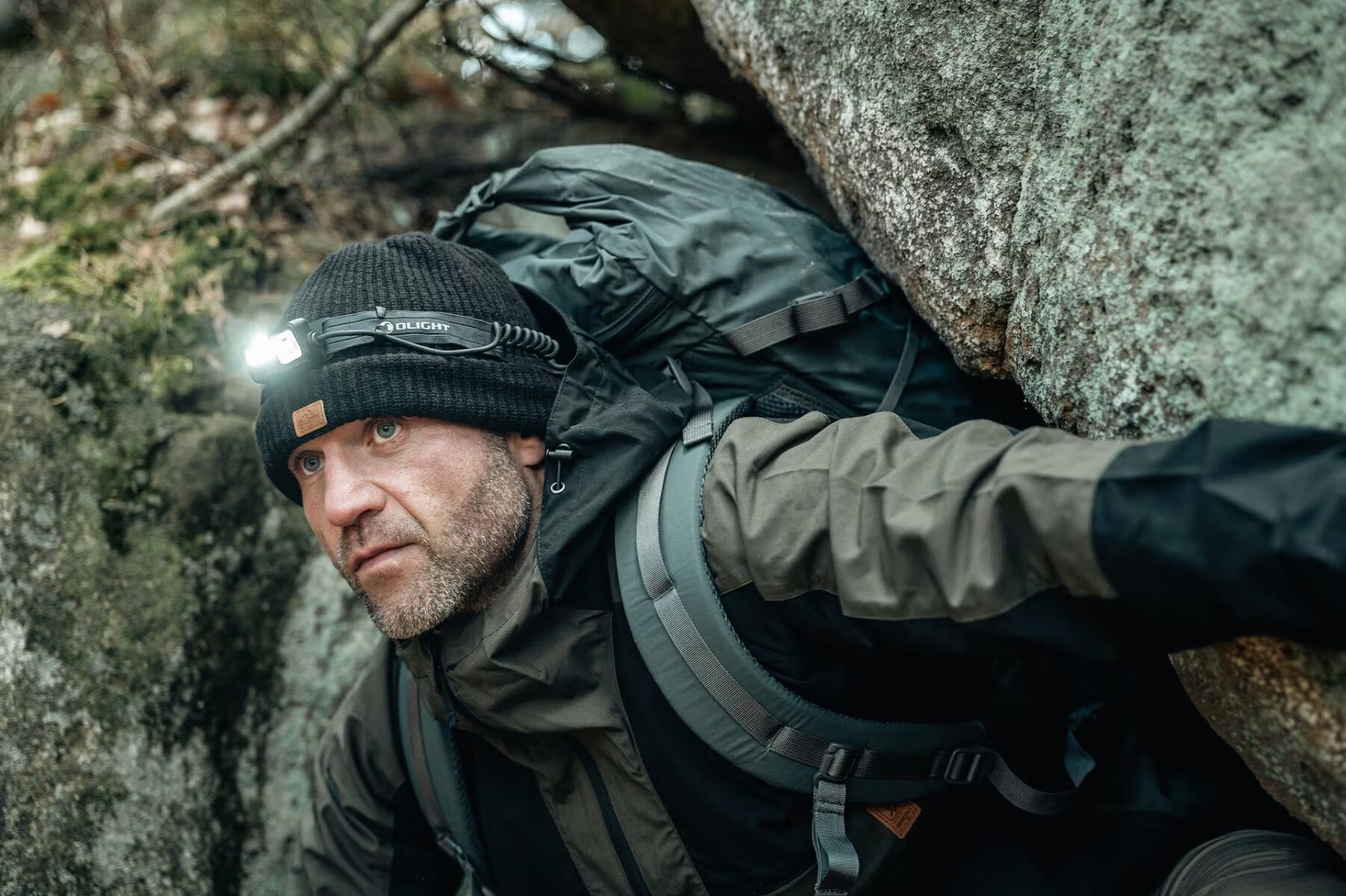
The higher the number of lumens, the stronger and brighter the light the flashlight generates. There are headlamps available on the market with very high power – even several thousand lumens. However, for regular mountain hiking, a model with a power of about 200 lumens is sufficient, providing good path illumination and safety. However, if you plan more demanding activities, such as climbing or running in the mountains, it's worth choosing a flashlight with a power of at least 500 lumens.
Lighting modes
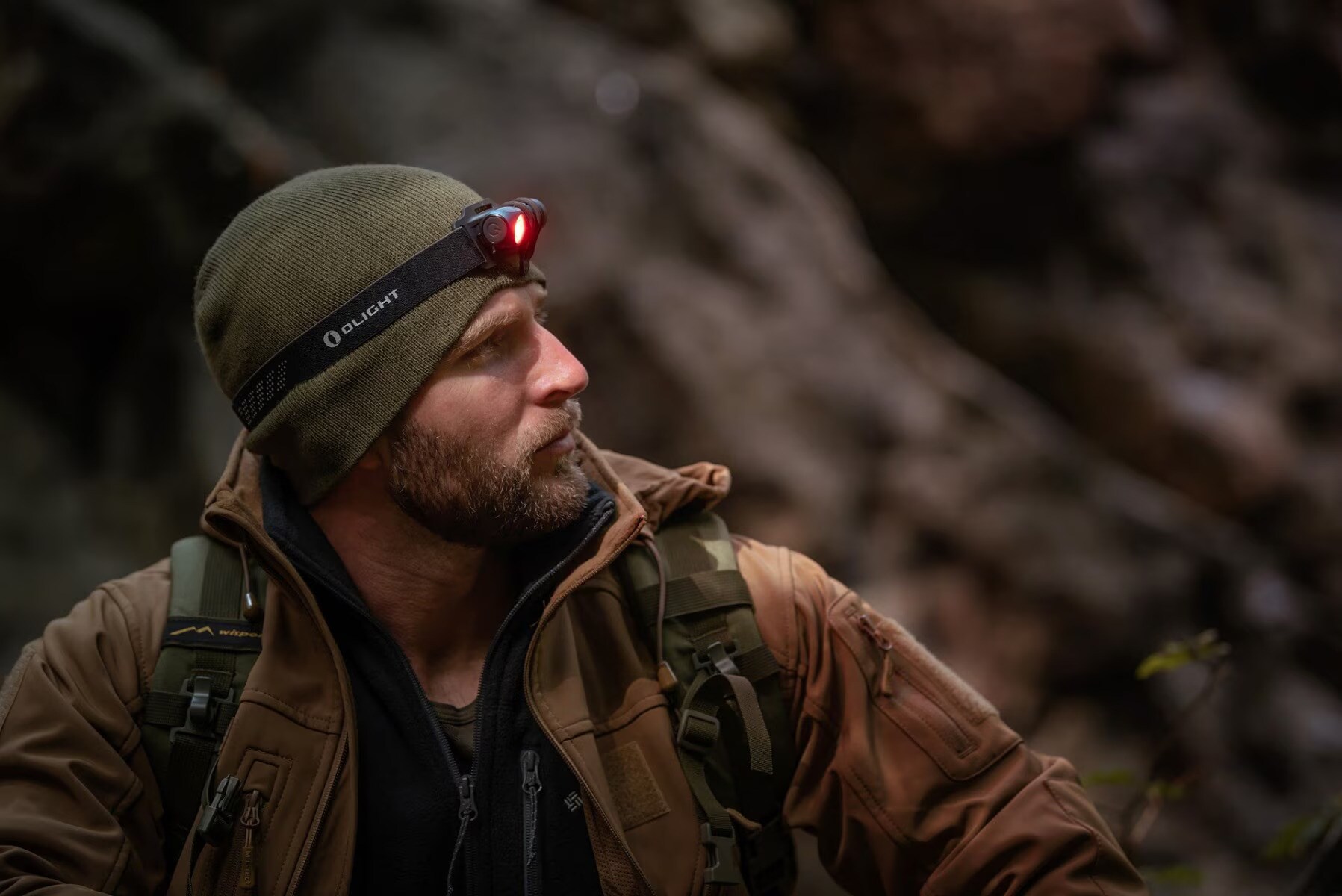
When buying a headlamp for the mountains, it's worth checking what lighting modes it offers. The SOS flashing light function can be invaluable in emergency situations. The low mode helps save battery during calm sections of the track, while the high mode provides full lighting power when you need maximum visibility.
Some headlamps also feature a strobe function, which is a rapidly flashing and distinct light that attracts the attention of others. Others are equipped with a beacon mode — regular, rhythmic flashes that make it easier to locate a person lost in the terrain.
Water resistance and durability
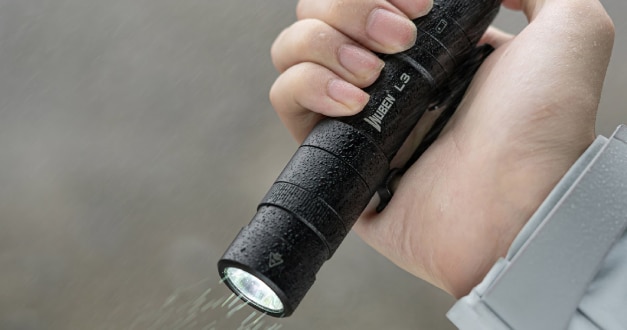
When purchasing a headlamp for the mountains, it's worth choosing a waterproof model because you never know when it might start raining or snowing on the trail. Check if the flashlight has a designation such as IPX4, which allows it to be used without fear, even during heavy rainfall.
The material the flashlight is made of also matters. We recommend, for example, models made of anodized aluminum or titanium alloy, which are highly resistant to wear, abrasion, and falling from heights.
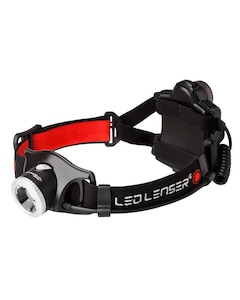
Weight of the flashlight and mounting system
You can still find headlamps on the market that are quite heavy — it's best to avoid these, as too heavy equipment can cause discomfort when worn on the head. This is especially important for those planning to run in the mountains with the flashlight.
Also, pay attention to the type of strap in the headlamp. It should be pleasant to the touch — for example, made of elastic, nylon fabric. In the case of light flashlights, one band is usually sufficient, but there are also models with two bands that connect the front and back of the strap, helping to better distribute the weight on the head.
Additional features
If you are buying a headlamp, it's also worth paying attention to additional features that are not so obvious but sometimes significantly facilitate the use of the flashlight:
- Battery level indicator – informs about the current charge status, making it easier to plan charging and avoid sudden depletion in the field.
- Switch lock – protects against accidental activation of the flashlight, e.g., in a backpack, preventing unnecessary energy consumption.
- Adjustable head angle – allows you to direct the light precisely where needed, e.g., on the road, map, or equipment.
- Heat regulation system – automatically adjusts brightness when the flashlight overheats, protecting electronics and extending the lifespan of components.
- Bluetooth – allows remote control of the flashlight via a smartphone app and monitoring of energy consumption and mode adjustments.
Why is it worth bringing a headlamp to the mountains?
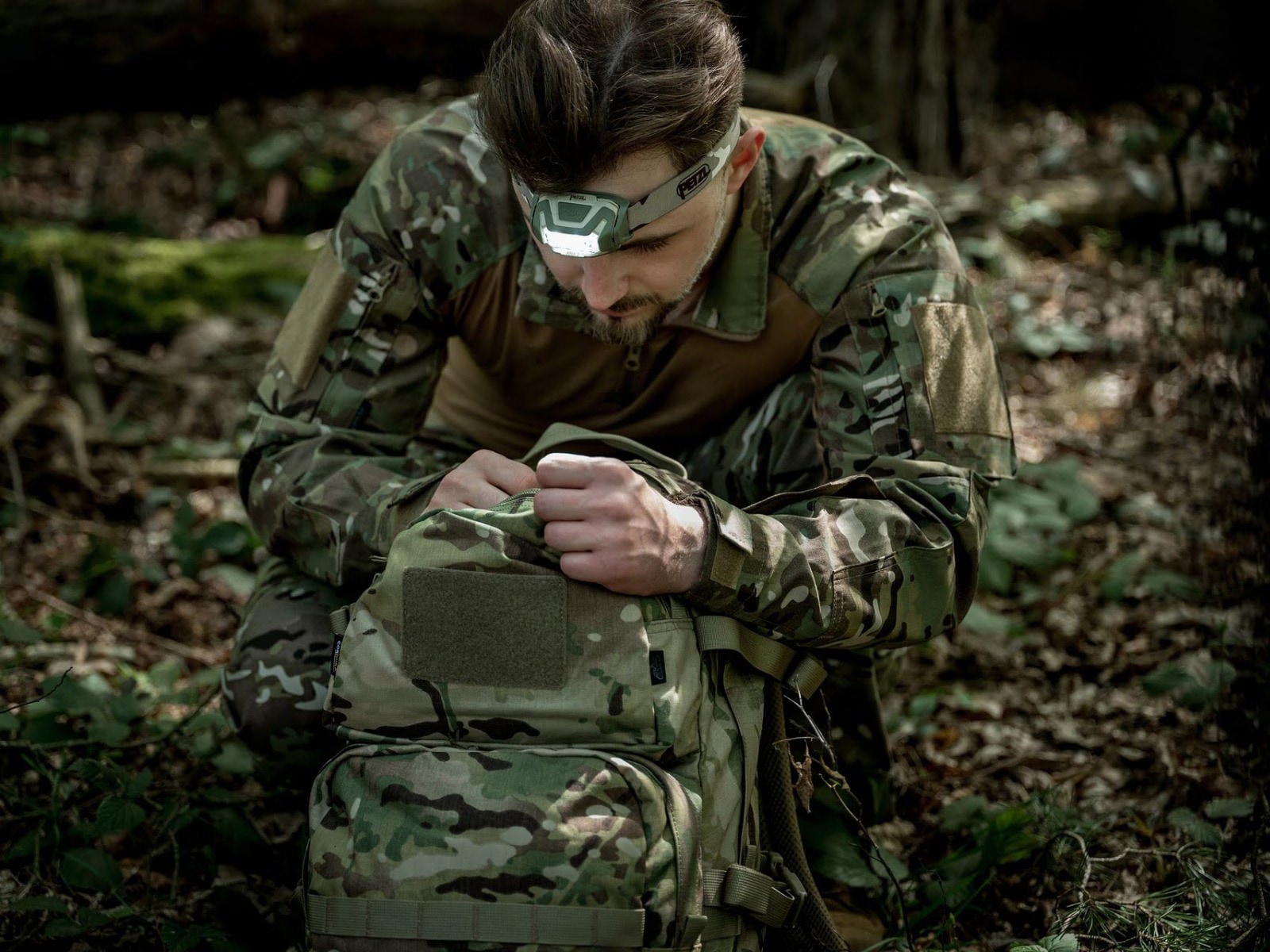
It's worth having a headlamp with you in the mountains, primarily for safety reasons. For example, if your hike extends and nightfall surprises you, the strong light of the headlamp will help you safely return to the trail. Remember, the flashlight on your phone often turns out to be too weak in such conditions. The main reasons to bring a headlamp to the mountains:
- Safety – in the mountains, especially after dark or in poor visibility, proper lighting is key for safe movement. A headlamp allows you to see obstacles and potential hazards, significantly reducing the risk of accidents.
- Free hands – thanks to the headlamp, your hands are free, which is very important in the mountains. This allows you to use trekking poles, secure yourself on rocks, or reach into your backpack for necessary items without holding a flashlight in your hand.
- Comfort – a headlamp makes it easier to perform various activities after dark or in low light, such as setting up a tent, cooking, reading a map, or preparing for sleep.
- Signaling – in emergencies, a headlamp can be used to call for help or signal your presence, increasing the chances of being quickly found by rescuers.
Headlamps, handheld, and angle lights available at MILITARY.EU
The offer at MILITARY.EU includes headlamps, angle lights, and handheld lights from brands such as Olight, XRG, Mactronic, and Nitecore. Many models offer diverse work modes, impressive amounts of lumens, and additional features. Most of them are durable devices that work great in challenging terrains — they are resistant to falls from even great heights. Often these are models recommended by specialists, such as rescuers or uniformed service representatives, who need reliable equipment during their work.