Česká republika
  Deutschland
  Österreich
  United Kingdom
  Suomi
Suomi  France
  Magyarország
  Italia
  Polska
  România
  Україна
  Europe
Best head torch UK – how to choose the right model
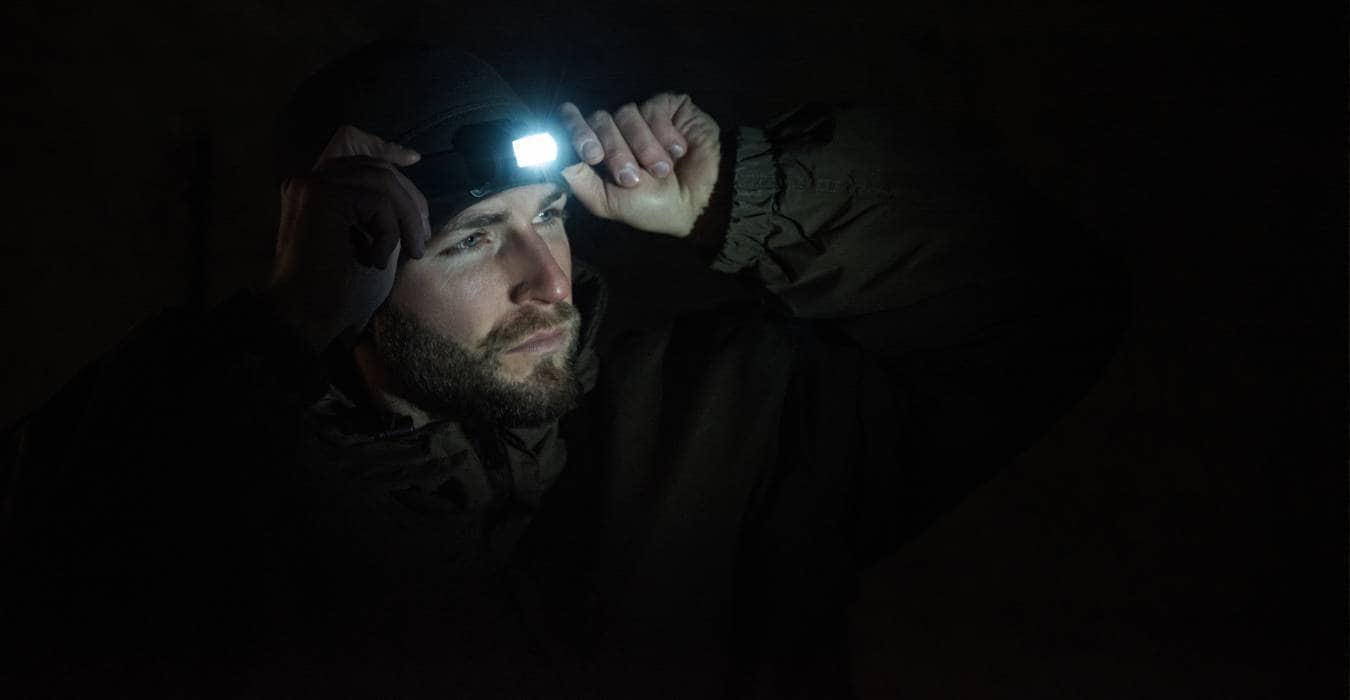
Walk into any outdoor shop and the head torch wall looks identical at first glance: a row of small plastic units, each claiming a bigger lumen number than the last. The number on the box tells you almost nothing useful on its own. What actually matters is how that brightness is delivered, how long it lasts, how comfortable the unit feels three hours into a night walk, and whether it's genuinely matched to what you're using it for. This guide breaks down the factors that actually separate a head torch that earns a permanent place in your pack from one that gets replaced after a single disappointing trip.
In short (TL;DR)
- Lumens measure brightness, not range — a high-lumen torch with a narrow beam can throw light further than a brighter unit with a wide flood. Always check beam distance alongside the lumen figure.
- Match lumens to activity: 60–150 for camp tasks and familiar paths, 200–500 for night hiking and navigation, 500+ for trail running, mountaineering and technical terrain.
- Beam type matters as much as brightness — flood beams suit close-up tasks like cooking and map reading; spot beams pick out distant features. Many torches let you switch or blend the two.
- Rechargeable lithium-ion is now the standard for good reason: cheaper to run, more sustainable, and USB-C models recharge fast. Disposable AAA batteries remain useful as backup or for remote multi-day trips without charging access.
- Weight under 100g is the comfort threshold for most people on longer outings — heavier units can cause neck strain or bounce annoyingly on rough trail.
- Red light mode preserves night vision and is kinder to other people's eyes in a shared campsite — but it can make contour lines and certain map colours hard to distinguish.
- A lock function stops the torch switching itself on inside your pack, which is one of the most common ways people discover a dead battery at the worst possible moment.
Lumens: what the brightness number actually tells you
Head torch brightness is measured in lumens — a unit describing how much visible light the unit produces. It's the headline figure on every product page, and it's also the most commonly misunderstood. A higher lumen rating does not automatically mean the light reaches further, lights a wider area, or performs better for your specific task. It only tells you total output.
How many lumens do you actually need?
Most people buy more brightness than they'll ever use. Matching lumens to your actual activity saves weight, money and battery life:
| Activity | Lumens | Typical beam distance |
|---|---|---|
| Close-up tasks (cooking, reading, pitching a tent) | 10–60 | Not relevant — flood light only |
| Camp and casual use on familiar paths | 60–150 | 10–30m |
| Night hiking and navigation | 150–500 | 50–100m |
| Trail running, off-road night running | 200–500 | 50–100m |
| Mountaineering, skiing, technical terrain | 500–1000+ | 100–200m |
For the vast majority of hillwalking, 200–300 lumens with a beam reaching 75–100 metres is genuinely sufficient — many experienced testers note that even this level of brightness goes unused most of the time. Reserve higher outputs for genuinely technical night navigation, fast-moving activities, or situations where you need to scan a wide area or distant terrain features.
Beam type: flood, spot, and adjustable
How the light is delivered matters as much as how much of it there is. Flood beams spread light wide and evenly, which works well for close-up tasks like reading a map, cooking, or general camp use — you see everything immediately in front of you rather than a narrow cone. Spot beams focus the same brightness into a tighter area, throwing light further and making it easier to pick out distant features, trail markers, or navigation points.
Many modern head torches let you switch between the two with a button press, or blend them using a focus adjuster that lets you dial in exactly the beam width you want. A beam somewhere in the middle often works best for walking over rough terrain, where you need to scout the whole width of the trail rather than a narrow point ahead. Some higher-end models use light-reactive sensors that automatically adjust brightness and beam focus based on what you're looking at — dimming when you glance down at a map, brightening when you look up into the distance.
Battery type: rechargeable lithium vs disposable
Rechargeable lithium-ion batteries are now the standard in head torches, and for good reason: they're cheaper to run over time, more sustainable, and most charge via USB — meaning you can top them up from a car, a power bank, a café socket, or a solar panel almost anywhere. The trade-off is dependency on a power source; in genuinely remote settings without charging access, this matters.
- USB-C charging is now the norm on newer models and tends to charge significantly faster than older micro-USB connections — some torches now offer rapid recharge, gaining an hour of full-beam runtime from just a few minutes plugged in.
- Disposable AAA or AA batteries remain genuinely useful for multi-day trips without charging access, and as an emergency backup. They're more widely available in remote areas than a working power outlet.
- Hybrid systems — torches that accept either a proprietary rechargeable pack or standard disposable batteries — offer useful flexibility for longer expeditions. Worth noting: on some hybrid models, maximum lumen output is lower when running on disposable AAAs than on the torch's own battery pack, so check this if peak brightness matters to you.
Weight and fit
A head torch you barely notice you're wearing is far more useful than one with an extra 50 lumens but a headband that slips or a unit heavy enough to cause neck strain after a few hours. Most head torches weigh somewhere between 50 and 150 grams; for longer hikes, runs, or any activity where comfort over time matters, look for something at or below 100 grams.
- Trail running and fast-paced activities: prioritise sub-100g models with a secure, low-bounce fit — comfort and stability matter more than raw brightness here.
- Mountaineering and multi-hour use: a slightly heavier torch (100–150g) with a padded, wider headband often proves more comfortable over a full night than an ultralight unit, because the weight is better distributed.
- Multi-day treks: balance brightness against weight — a moderate-lumen torch with good battery life and the option of spare batteries often outperforms a short-lived ultra-bright unit in practice.
Try a torch on with the rest of your kit before committing if you can — a helmet-compatible mount matters for cycling or mountaineering, and a torch that sits comfortably bare-headed may behave differently over a hood or hat.
Water resistance and IP ratings
IP (Ingress Protection) ratings tell you how well a torch resists water and dust, expressed as two digits — the first for solid particles, the second for liquid. IPX4 handles splashing rain, which covers most UK hillwalking conditions. For activities involving sustained water exposure — kayaking, caving, or genuinely heavy and prolonged rain — look for IPX7 or IPX8, which indicate resistance to temporary or extended submersion. Match the rating to what you'll actually encounter; a higher rating sometimes adds bulk or cost you don't need for typical use.
Useful extra features
Red light mode
A secondary red LED preserves your night vision far better than white light, makes you less disruptive to others in a shared campsite or tent, and is generally considered less likely to disturb wildlife. It's a genuinely useful mode for stargazing, late-night camp tasks, or simply not blinding your tent-mate. One practical downside worth knowing: red light can make certain map colours — particularly the yellow contour shading on many OS-style maps — difficult to distinguish, so it's not ideal for detailed night navigation work.
Lock function
A surprisingly common annoyance: pulling a head torch out of your pack to discover the battery has drained because it switched on accidentally during transit. A lock function disables the button temporarily, preventing exactly this. It's a small feature, but one of the most practically useful when you actually need the torch to work.
Battery level indicator
Knowing roughly how much charge remains lets you plan ahead — switch to a lower setting, swap batteries, or simply know you need to charge before your next outing — rather than discovering you're out of power mid-activity.
Motion sensors and hands-free operation
Some torches include motion or proximity sensors that let you trigger functions with a wave of the hand, useful when wearing gloves or when your hands are occupied with cooking or kit.
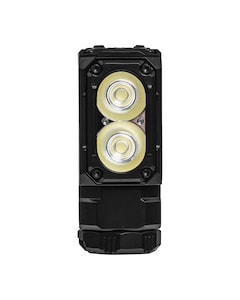
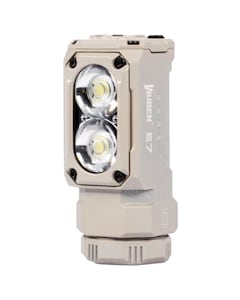
A well-chosen head torch pairs naturally with the rest of your lighting and navigation kit — most experienced hikers carry a head torch as their primary light, with a compact hand torch as backup for spotting detail or signalling.

FAQ
What's a good all-round lumen rating for hiking?
For most UK hillwalking and night hiking, 200–300 lumens with a beam reaching
75–100 metres covers the vast majority of situations comfortably. Reserve
anything above 500 lumens for technical mountaineering, fast trail running on
rough terrain, or situations requiring you to scan distant features.
Is a higher lumen count always better?
No. Higher lumen output drains batteries faster and often means a heavier unit
with a bigger battery. A torch with more brightness than you need adds weight
and cost without practical benefit — match the rating to your actual activity
rather than buying the highest number available.
Should I buy a rechargeable or battery-powered head torch?
Rechargeable lithium-ion is the better choice for most regular users — cheaper
over time, more sustainable, and quick to top up via USB. If you're heading
somewhere remote for multiple days without charging access, either carry a
power bank, choose a hybrid model that also accepts disposable batteries, or
pack spare standard batteries as backup.
What does IPX4 mean and is it enough?
IPX4 indicates resistance to splashing water from any direction — sufficient
for rain encountered on typical UK hikes. For activities involving full
submersion, such as kayaking or caving, look for a higher rating such as IPX7
or IPX8.
Does a red light mode actually matter?
Yes, for specific situations. It preserves your night vision better than white
light, is less disruptive to others nearby, and is gentler on wildlife. The
trade-off is that red light makes certain map colours hard to read, so it's
better suited to general camp tasks and stargazing than detailed navigation.