 Česká republika
 Deutschland
 Österreich
 United Kingdom
 Suomi
 France
 Magyarország
 Italia
 Polska
 România
 Україна
 Europe

Which camping stove to choose?

A camping stove is a portable appliance that comes in handy on all kinds of expeditions. It allows you not only to prepare a nutritious meal in the field, but also to heat up a drink, melt snow for drinking water or provide a pleasant atmosphere during outdoor trips.
In this article, we will advise, among other things: which camping stove to choose, what to look for when buying one and whether to choose a ceramic or regular stove.
Types of Camping Stoves
Many types of stoves can be found on the market. They differ, for example, in construction, size, weight or type of fuel used. The selection of the right camping stove is determined primarily by the individual needs of the user. Below we will discuss stoves by the type of fuel used.
Gas Camping Stoves
The biggest advantage of gas stoves is that they can be started quickly and easily. Once the gas cartridge is in place, all you have to do is unscrew the gas valve and apply the fire source. The following are best suited for this lighter, which produces a strong and wind-resistant flame. Alternatively, you can reach for matches or flint, which is effective even in adverse weather conditions.
Some gas stove models are equipped with a built-in piezo igniter, which generates a spark and facilitates the ignition of the gas. This is particularly convenient as it does not require an additional fire source. However, even when using a stove with a built-in igniter, it is still a good idea to carry a spare lighter, matches or a flint just in case.
It is worth mentioning that piezo lighters and some lighters, such as incandescent, may not work at altitudes above 3,000 metres above sea level, so if you plan to camp at such altitudes, be sure to bring a flint or storm matches.
There are larger gas stove models with several burners that are suitable for camping. However, if you are planning a backpacking trip, consider choosing a smaller model with a single burner.

Both stoves consisting of just a burner, for which you will need to buy a pot and a possible wind shield separately, and cooking sets such as the one pictured below are available for sale.
It is still worth mentioning at this point that gas camping stoves can be less efficient in extreme weather conditions. A drop in atmospheric pressure and low temperatures, especially at high altitudes, can adversely affect the performance of the appliance.
It is also worth bearing in mind the safety regulations for carrying gas stoves. You can take a gas stove on the plane, but without a cartouche, so to use it later, gas must be purchased on the spot.


Solid Fuel Backpacking Stoves
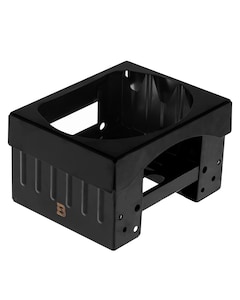
Solid fuel stoves are lightweight and economical. They can be transported in folded form, so they take up very little space. The appliance itself is simply pieces of metal that we fold up to form a stove.

To use such a stove you need wood or a special tourism fuel, such as tablets or gels. In addition, the following can also be used: conifers, leaves, bark, cones, dry reeds, grass, straw or paper.


Liquid Fuel Camping Stoves
Stoves using liquid fuel are a good choice for trips to the mountains where temperatures are very cold. Unlike gas stoves, which can have difficulty igniting or operating in frigid climates, liquid fuel stoves maintain their performance even in extreme conditions. Depending on the model, they can run on petrol, paraffin or oil. There are also multi-fuel stoves.
Despite these advantages, there are some disadvantages associated with using liquid fuel stoves. They can be more demanding to operate. They also sometimes give off an unpleasant fuel smell when cooking. In addition, there is a risk that liquid fuel can leave stains on the cookware.




What to Look for When Choosing a Camping Stove?
When choosing a camping stove, it is worth considering not only the type of fuel, but also other important parameters. Above all, the design of the backpacking stove is important. For hiking, where every gram counts, it is advisable to choose a stove with a simple, lightweight design. Less elaborate models weigh around 70-80 grams, but this is the weight of the burner alone, and to this must be added the weight of the pot and the fuel. More advanced stoves, on the other hand, with numerous components, can reach a weight of around 600 grams. For beginners in particular, it is worth opting for a device that is easy to use, simple to clean and fault-tolerant.

There is no denying that weather conditions can change suddenly, especially in the mountains where the wind can pick up unexpectedly. For this reason, it is worth paying attention to whether the stove is equipped with a wind shield. These are often included with appliances, but are also available separately, such as aluminium covers, which can greatly improve the stability and efficiency of cooking in difficult conditions.
Camping Stove - Ceramic or Regular?
Not sure whether to choose a ceramic or regular camping stove? The choice between the two depends on the circumstances in which the equipment will be used. Regular camping stoves are generally lighter and more compact than ceramic ones. This makes them easier to carry when hiking or cycling. You can easily prepare dinner or boil water on them. Their simple design makes them easy to use. In addition, ordinary camping stoves are usually less expensive than their ceramic counterparts.
Ceramic stoves are slightly heavier and larger, making them a good choice for those travelling by car.
What to Choose - a Cartridge or Petrol Camping Stove?
Are you unsure whether to choose a cartridge or petrol camping stove? In this case, we hint at the outset that gas is, above all, a safer fuel than petrol. Carrying petrol in a rucksack can make our belongings smell unpleasant later, and there is also the risk of it spilling out. In addition, petrol stoves can get clogged, especially if we do not have access to good quality fuel.

And what are the advantages of a petrol stove? First of all, this type of stove will be more suitable for people who are going on difficult expeditions, as there is no problem for it to work in the high cold with low pressure. If you are planning a winter expedition to the mountains and the temperature is likely to drop well below -10 degrees C, it is worth considering buying a petrol camping stove. Frosty temperatures significantly reduce the pressure in the cartridges, so the gas flows out very slowly during cooking. At temperatures as low as -20 deg C or even -30 deg C, gas models are virtually useless. Importantly, buying gas cartridges can be problematic in some countries, while petrol can be bought almost anywhere.
Camping Stoves on Offer at MILITARY.EU
At MILITARY.EU, you will find many types of camping stoves. Gas camping stoves are available, which are not only lightweight but also handy, making them great for travelling.
If you prefer solid fuel, reliable backpacking stoves will be your best option. Their compact size when folded up allows them to be easily portable, without burdening you with unnecessary luggage. What's more, our solid fuel stoves are made of lightweight yet durable materials, which will allow you to enjoy their usefulness for many seasons.
If you care about ecology and would like to take care of the environment, we also have eco-friendly pine cone stoves for you. Their unique properties will allow you to create a real campfire, which will not only create a special atmosphere, but also allow you to prepare delicious meals in a way that is close to nature.
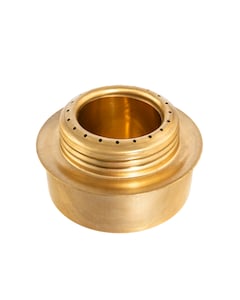
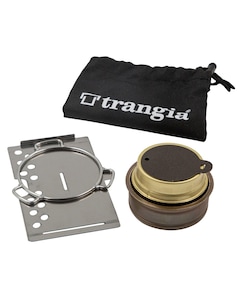
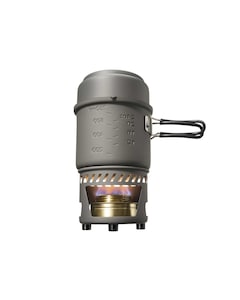
Our spirit stoves are another option that will surprise you with their efficiency and ease of use. Thanks to the flame obtained when the hygroscopic fabric is soaked in alcohol, you can enjoy a hot meal without having to take a large supply of fuel with you.


