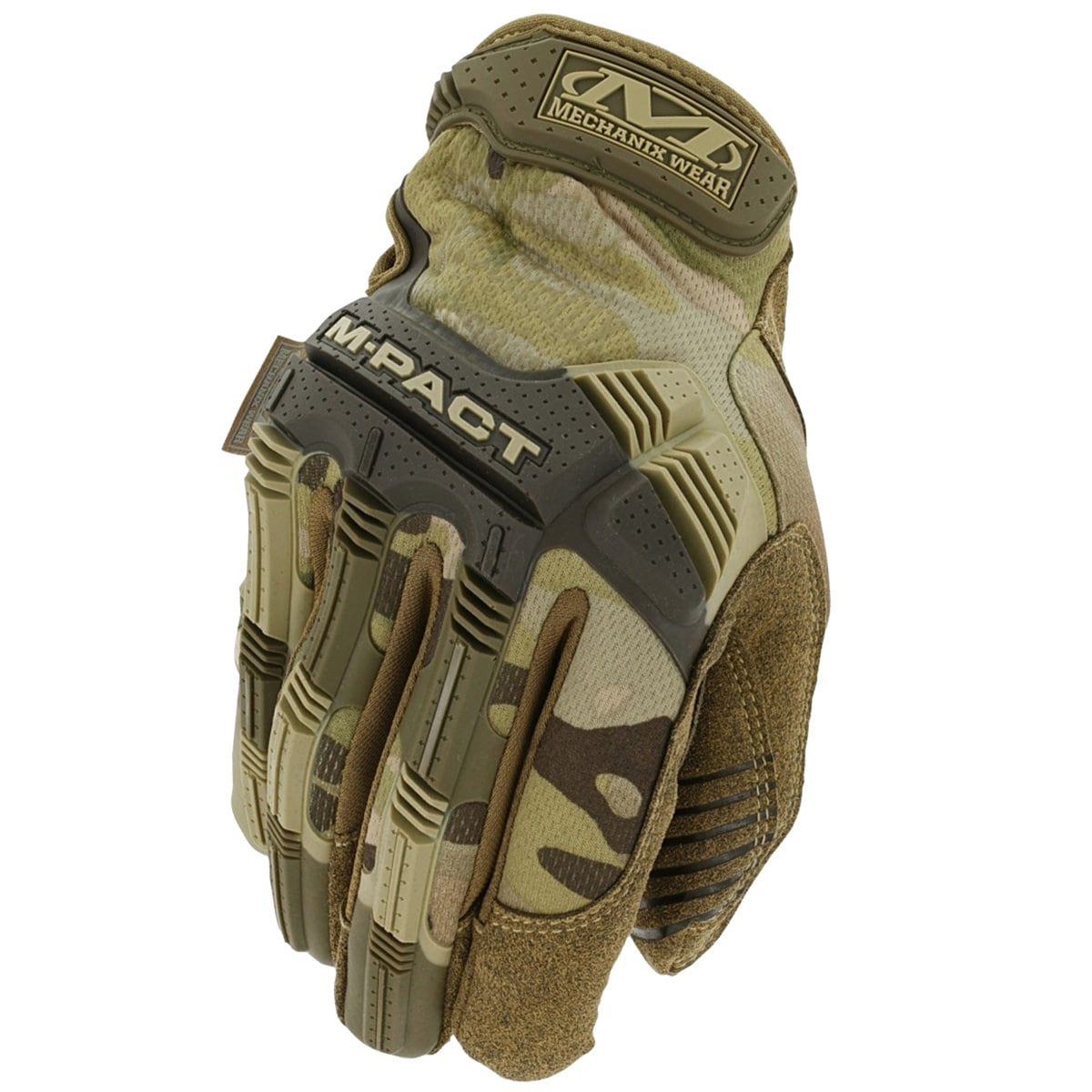
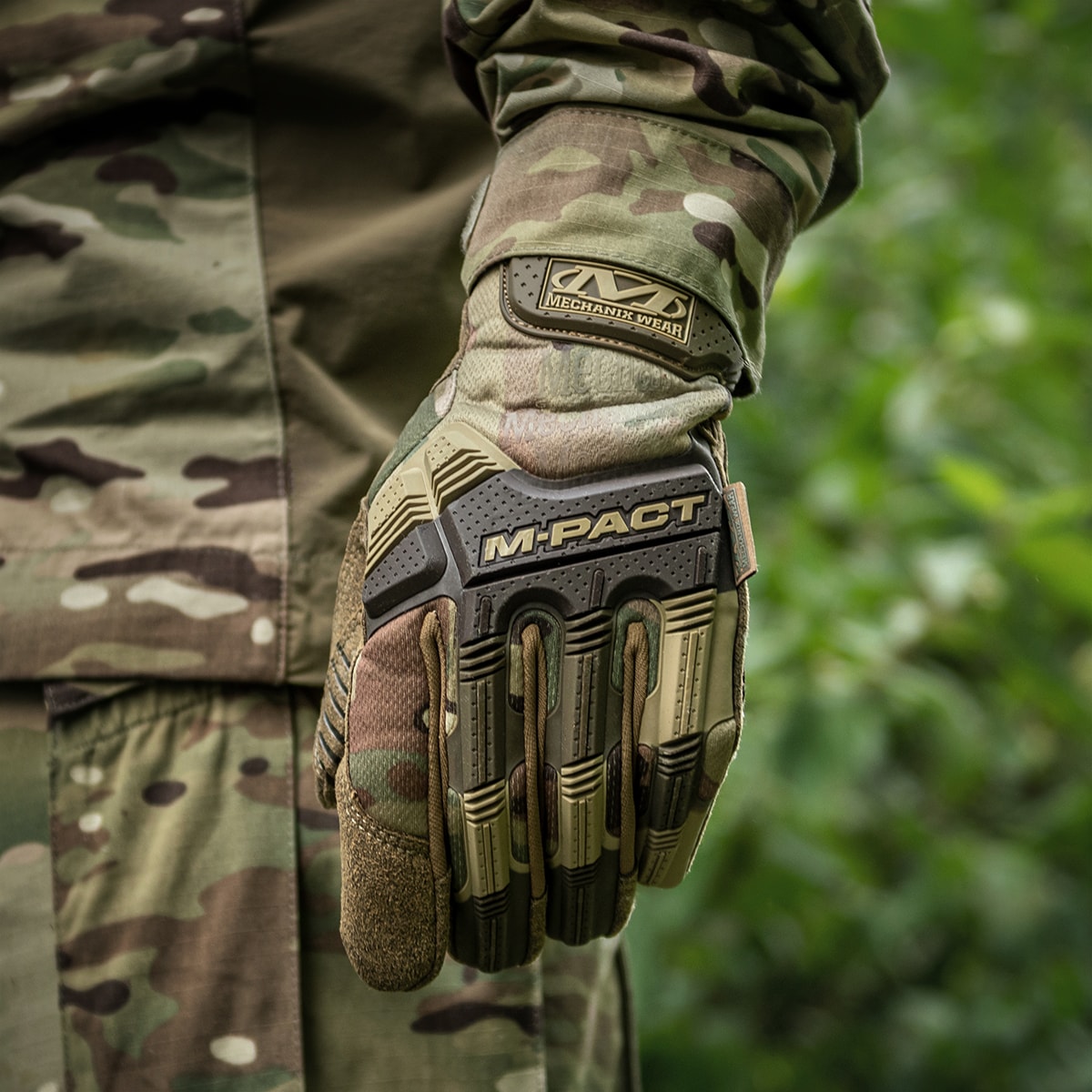
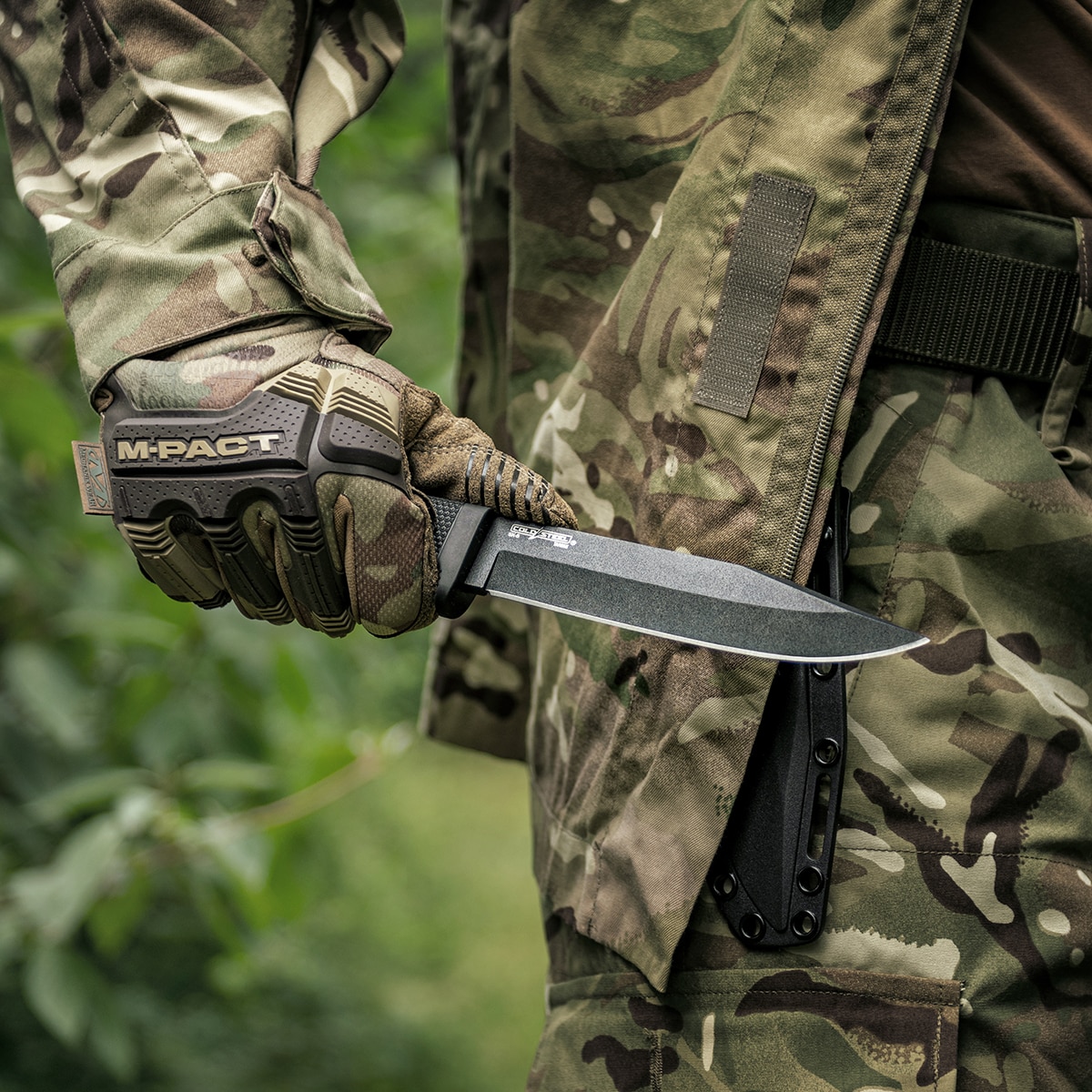
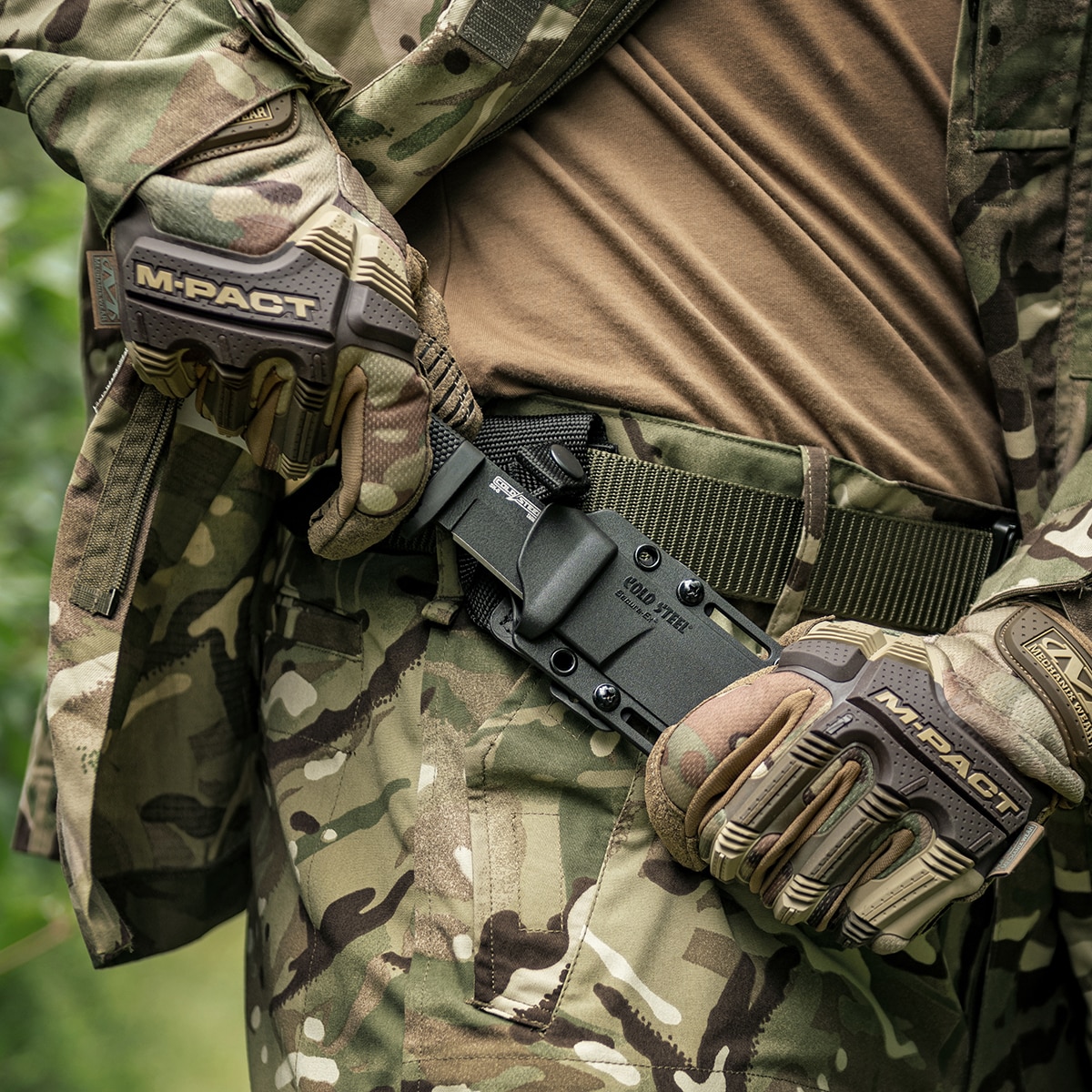
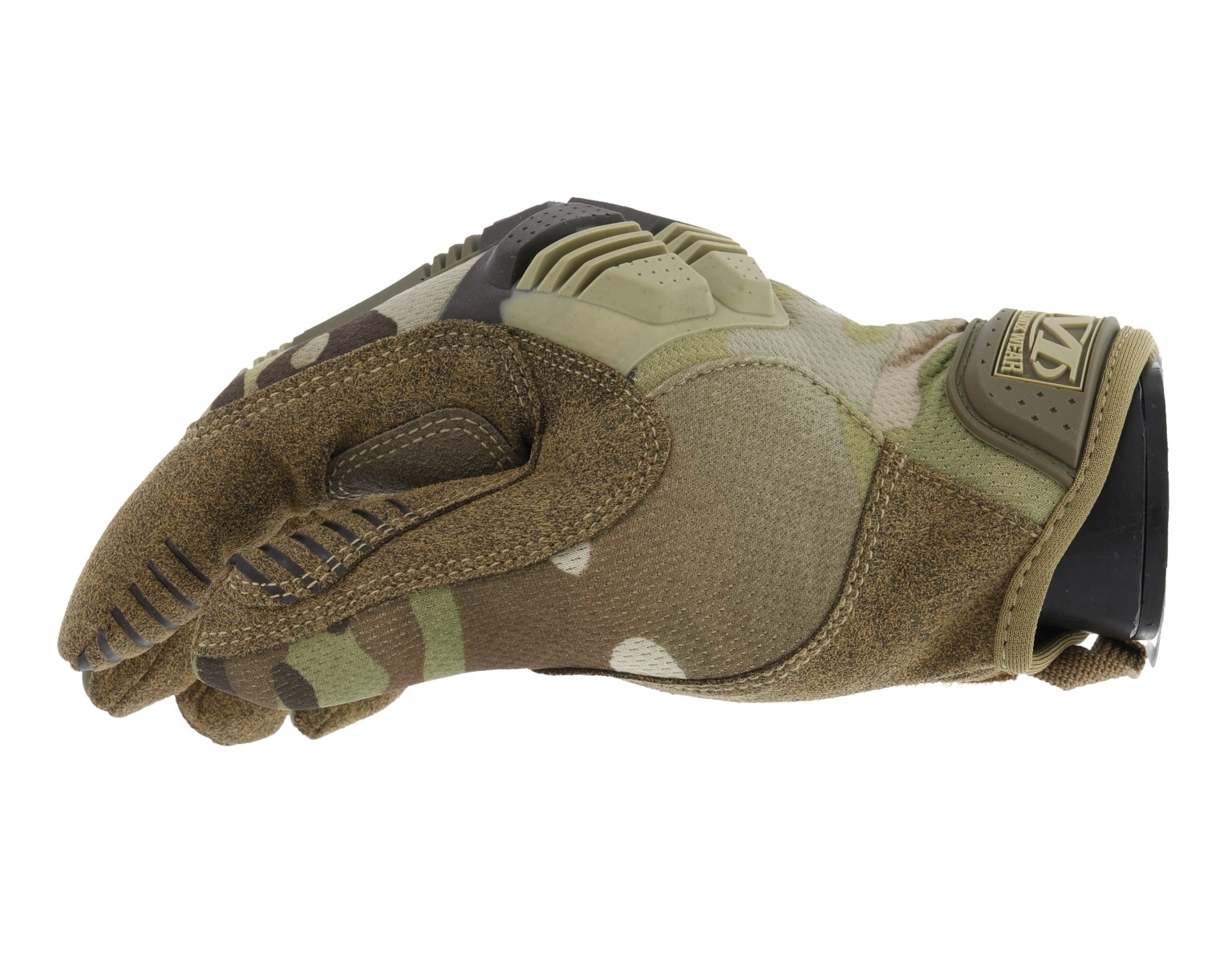
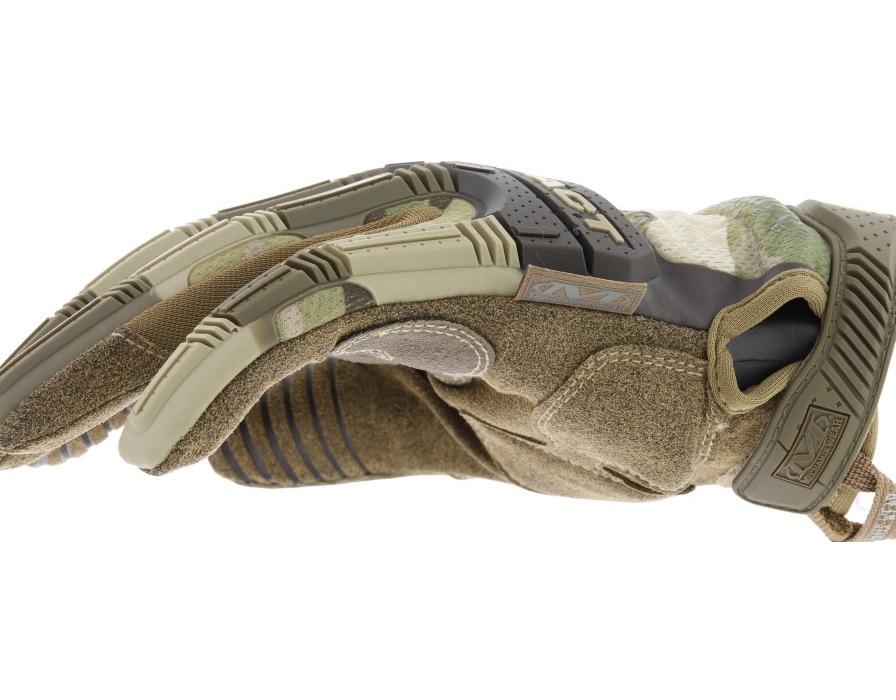
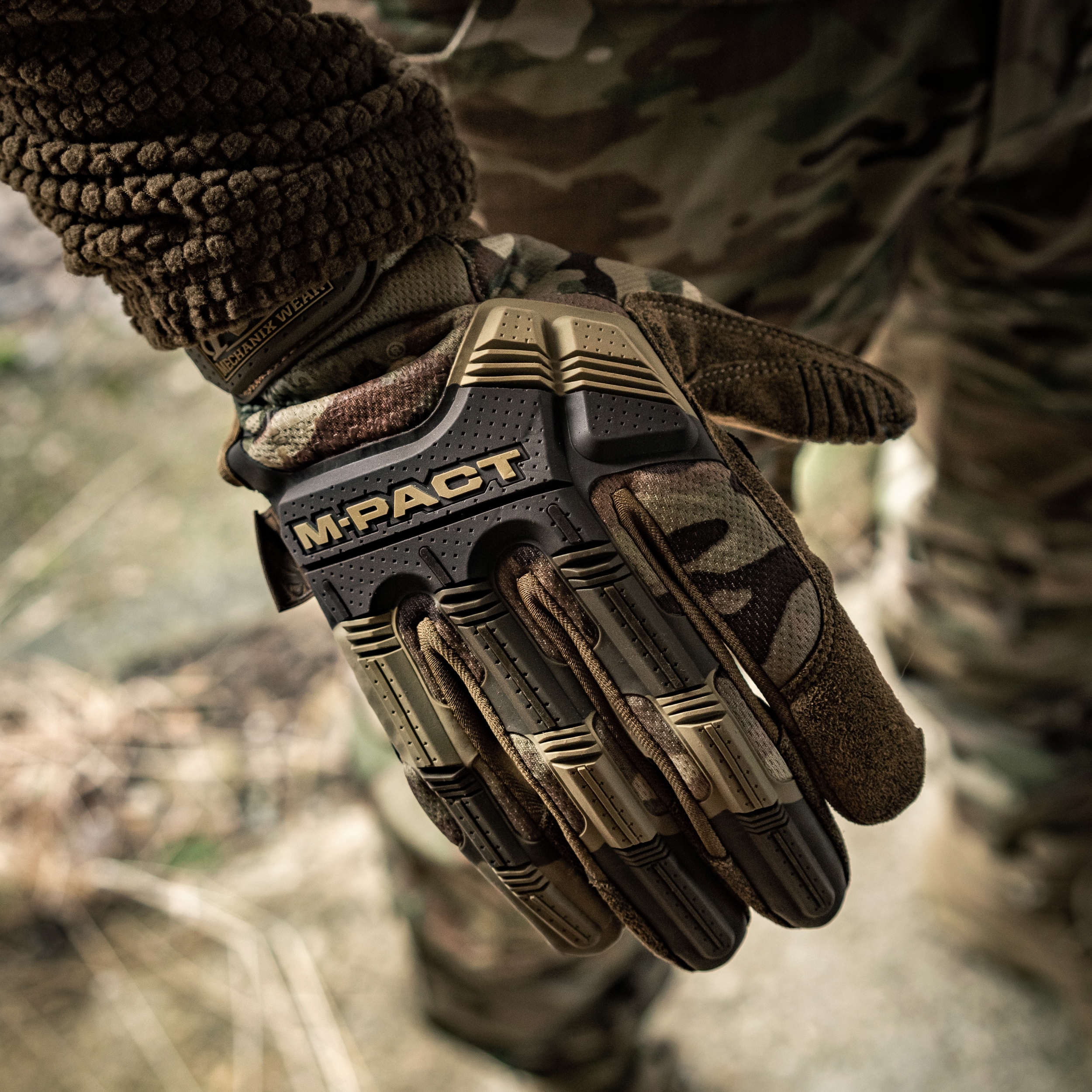
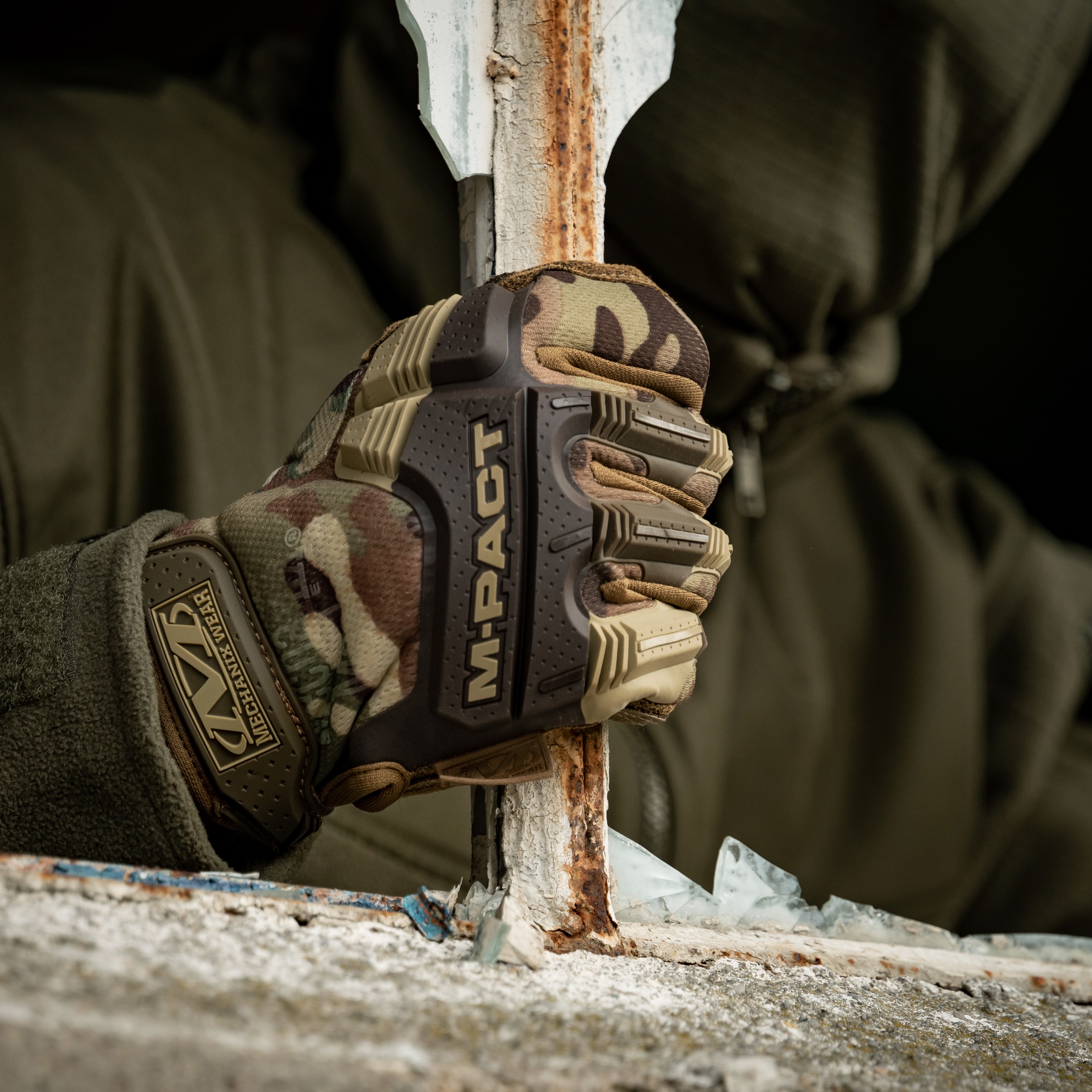
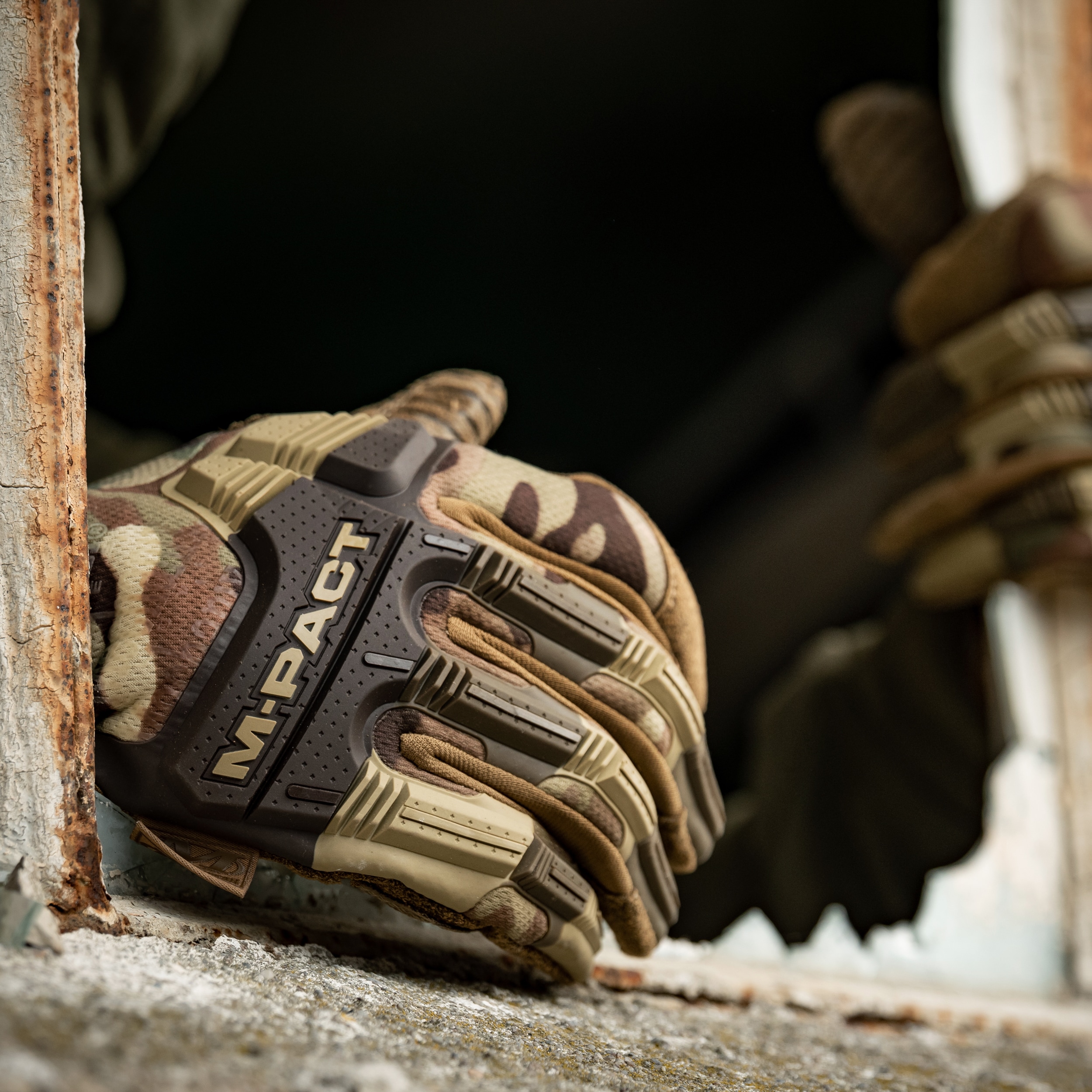
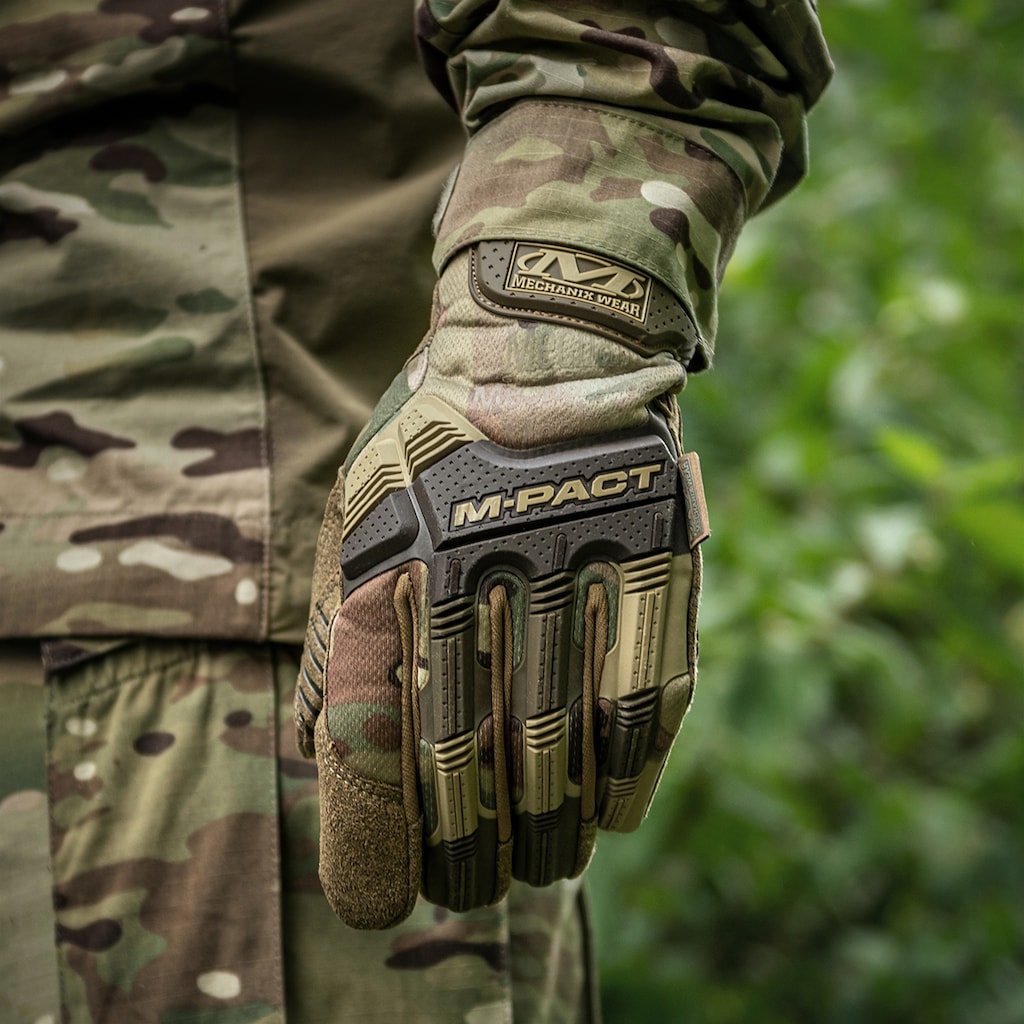
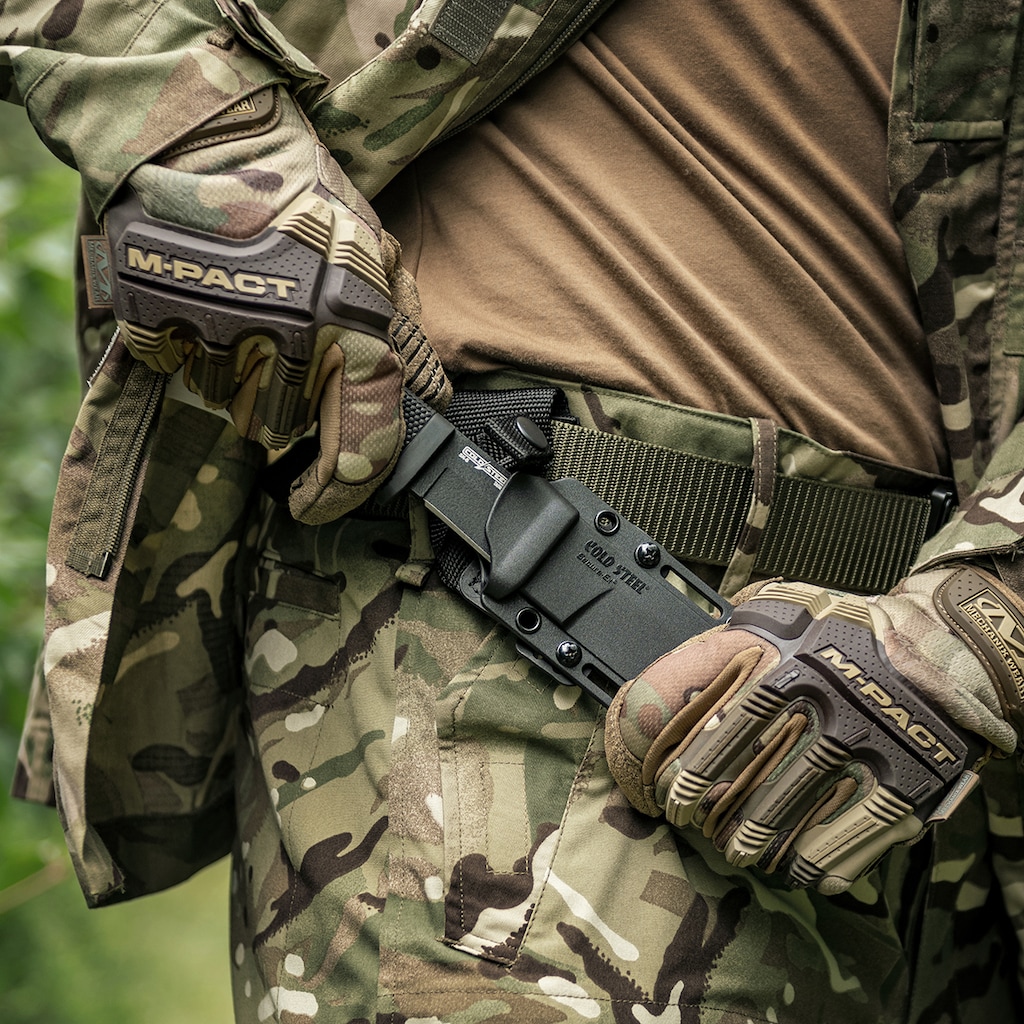
Durable tactical gloves designed for essential mechanical hand protection. Thanks to their precise fit, they ensure full grip control, enabling tasks that require high precision. Perfect for uniformed services, military personnel, shooting sports enthusiasts, as well as for survival, workshop work, DIY projects, and ASG games.
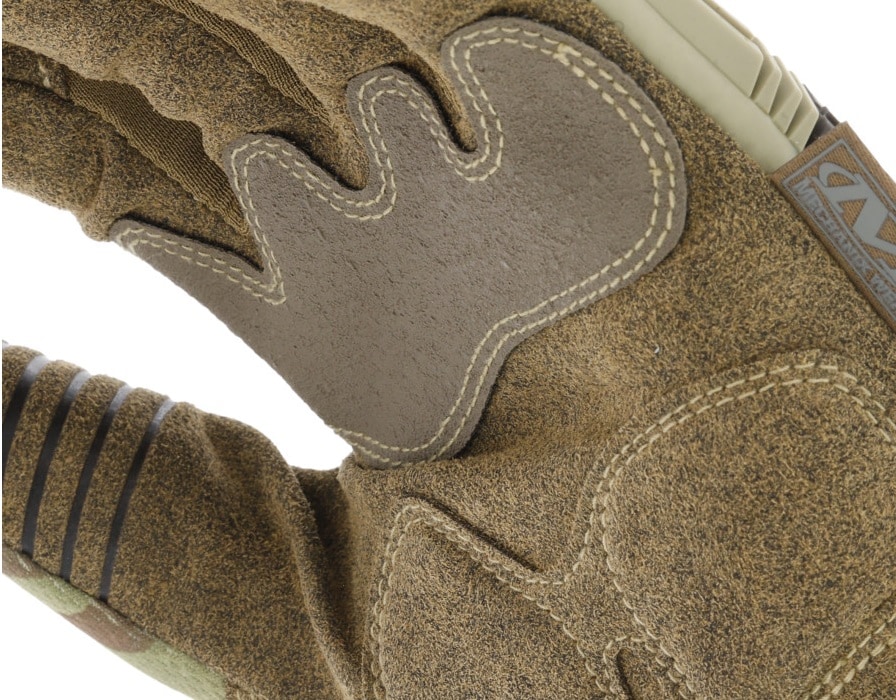
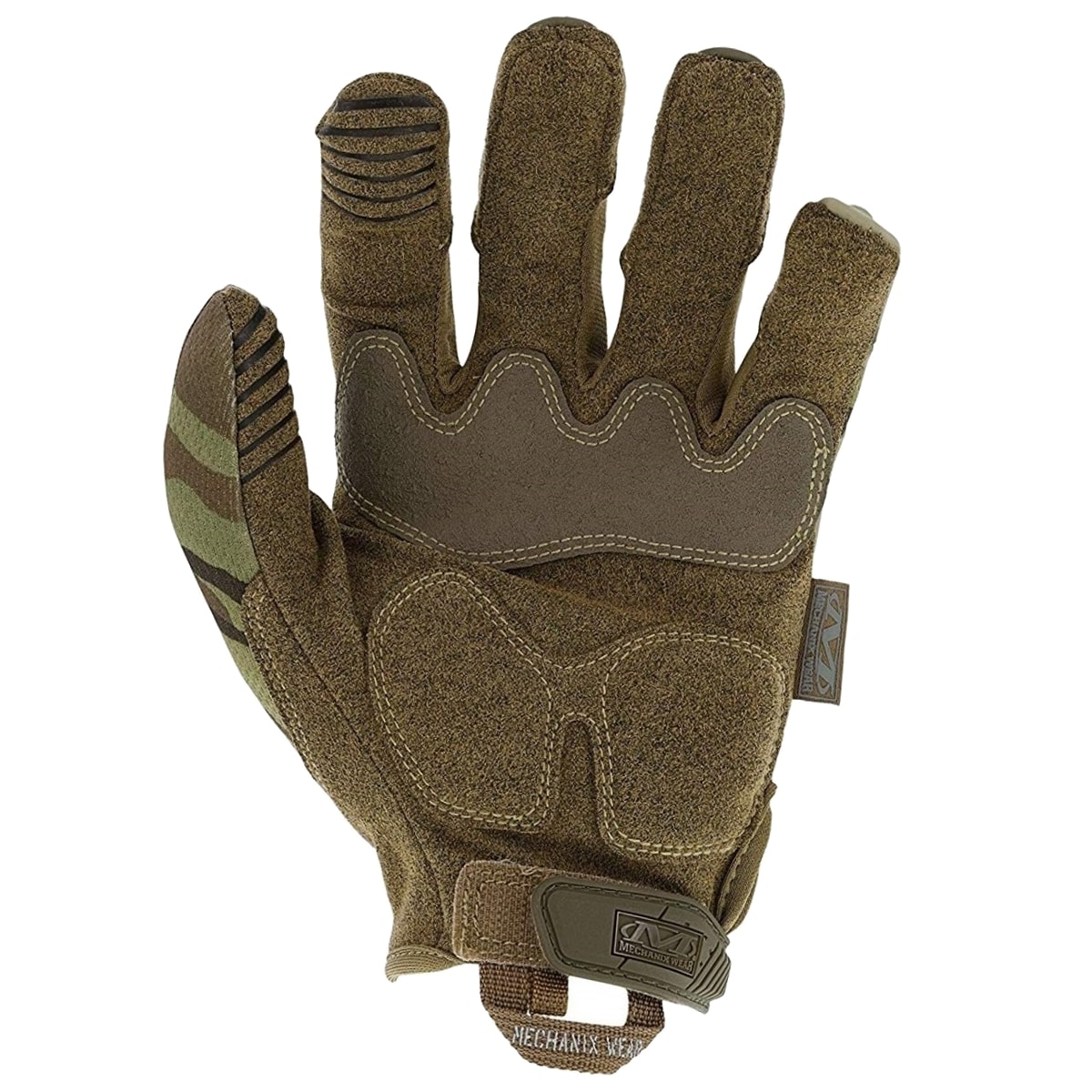
The gloves are made from durable Armortex fabric and synthetic leather, providing a secure grip and minimizing slip risk on smooth surfaces. The upper part is crafted from lightweight, breathable TrekDry material, which reduces hand perspiration. The cuff fastens with a velcro strap for easy adjustment. Synthetic leather inserts on the index finger and thumb allow for touchscreen operation without removing the gloves.
The external part of the gloves features durable panels made from TPR (Thermal Plastic Rubber, compliant with EN 13594), protecting hands from abrasions and impacts with the environment – ideal in confined spaces and CQB operations. The segmented panel layout allows free finger flexion. The palm area has D3O inserts that absorb impact energy and vibrations in the metacarpal region.
The gloves meet the protective standard EN388 level 2121XP in terms of mechanical resistance, which means:
- 2: abrasion resistance (scale 0-4)
- 1: cut resistance (scale 0-5)
- 2: tear resistance (scale 0-4)
- 1: puncture resistance (scale 0-4)
- X: cut resistance - TDM test (ISO 13997) (scale A-F)
- P: impact protection (test passed)
The scales provided in the EN388 standard define the level of protection of the gloves: the value 0 means no protection, while the highest values (4, 5) indicate the maximum level of resistance.
When testing with the TDM method (ISO 13997), letter markings are used, where A represents the lowest protection, and F represents the highest protection.
The marking X indicates that the given parameter was not tested or does not apply. The marking P indicates that the glove meets the impact protection requirements.
MultiCam is a state-of-the-art camouflage pattern developed in 2002 by US company Crye Precision in cooperation with the United States Army Soldier Systems Center (Natick Labs) as part of the Objective Force Warrior program. Its goal was to create a versatile camouflage pattern that is effective in varied terrain and changing environmental conditions. The MultiCam pattern consists of seven colors, creating gradient transitions between shades of green, brown and beige. As a result, it dynamically adapts to the background, adopting shades of green in forested areas or browns and beiges in desert regions - in Central and Eastern European environments, it works particularly well in autumn and among dry vegetation. MultiCam has gained worldwide recognition and is used by numerous armed forces and special units. In 2010, the camouflage was officially adopted by the US Army as the camouflage pattern for soldiers stationed in Afghanistan, replacing the earlier Universal Camouflage Pattern (UCP). The pattern is also available to civilian users, making it a popular choice among military or airsoft enthusiasts.
 Czechia
  Germany
  United Kingdom
  France
  Hungary
  Poland
  Romania
  Ukraine
  Europe